As usual, January witnessed major home furnishing fairs, Heimtextil, Domotex and Maison & Objet wherein more than 700 exporters from India participated. Though their experience at these events was mixed on issue of buyers’ footfall, there was unanimity on the fact that Europe has still not shown any major recovery sign. Another point that stood out strongly was the increased focus of Indian companies on product development as most of the participants with whom Apparel Online talked presented collections with unique designs/blends in their products.
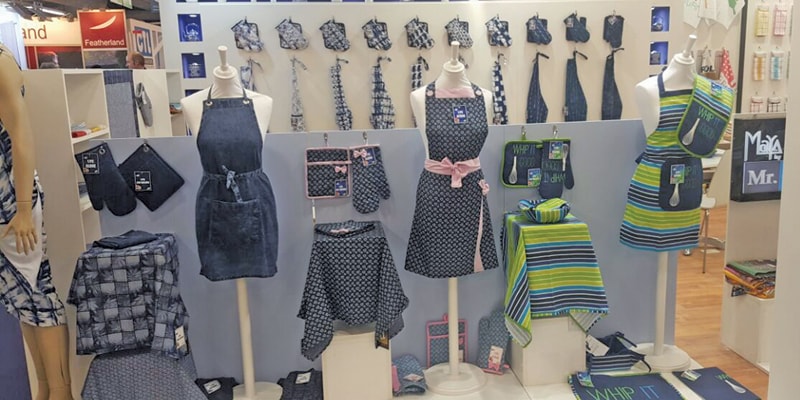
As per the organizers of Heimtextil, despite snowfall and storm, on the first and last day of the event, it witnessed almost 70,000 visitors that is a little higher compared to last year (2016: 68,277). Similarly, this year there were 2,963 exhibitors from 67 countries as against 2,864 in 2016. One of the nearly 350 participants from India, Amber Home, Mumbai continuing its focus on sustainability, displayed a wide range of products made from sustainable dope dyed yarn (80 per cent cotton and 20 per cent polyester). Its products were selected for display at the trend area of the show. The company has a goal of sustaining the future with sustainable products by adding functionality to them with added special finishes, and make it hydrophilic and antimicrobial with fragrance added to it. The company’s inclusion in green directory with green leaf accreditation itself is proof of its achievements in this area. The company also created new theme of ‘denimology’ bringing denim philosophy into home textiles, adding to it batik and tie & dye effect using 3D concept, besides fragrance and antimicrobial finish.
‘Sleeping’ is emerging as a lifestyle and combination of bed linen with accessories (lamps, baskets), and this was highly appreciated at Heimtextil. Many innovations were seen in the bed segment like Mediflow from Hamburg, displayed an improved version of its water pillow capable of full adjustments for firmness and supportive effect.
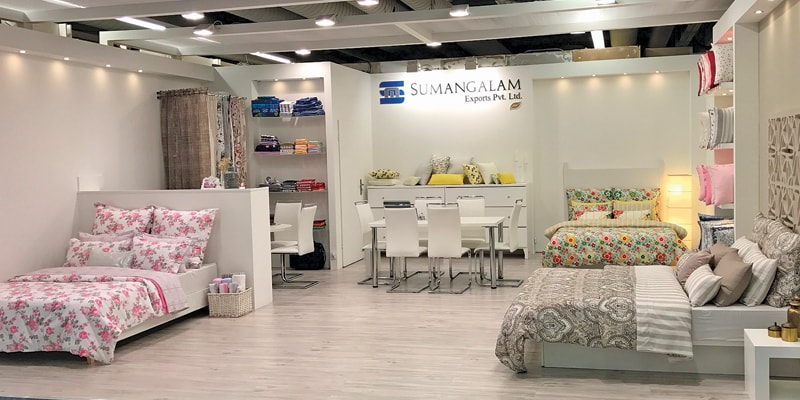
According to Pranav Ghelani, Marketing Director, Sumangalam Exports, Mumbai, Heimtextil 2017 had a higher number of exhibitors but the same number of trade visitors as last year. “At the beginning of the fair, the Pakistan Government announced an additional 6 per cent subsidy for the textile made-ups sector. This enthused the Pakistani companies but added to the price pressures that Indian companies already face on account of zero duty imports in EU from Pakistan and Bangladesh. The volume, price-sensitive business has moved to Pakistan and Bangladesh. India is reliable in terms of deliveries and quality so in those terms we have moved up the value chain,” said Pranav. Apart from having meetings with regular customers he made some good contacts in non-traditional markets of Eastern Europe, South America and Australia. “Presentation of good, trendy designs and value prices attracted customers to our booth,” he added.
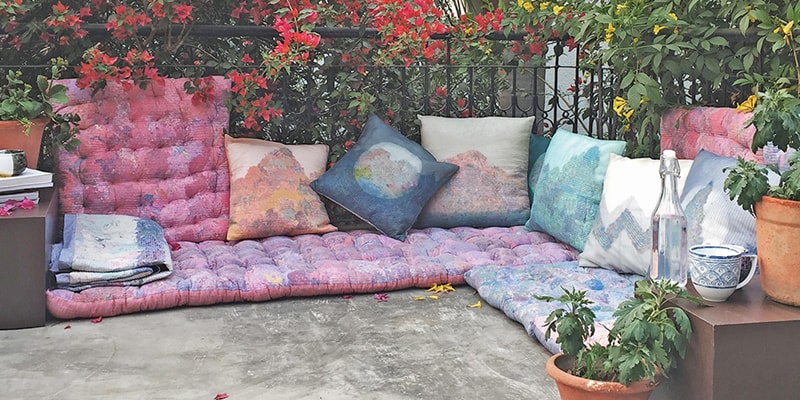
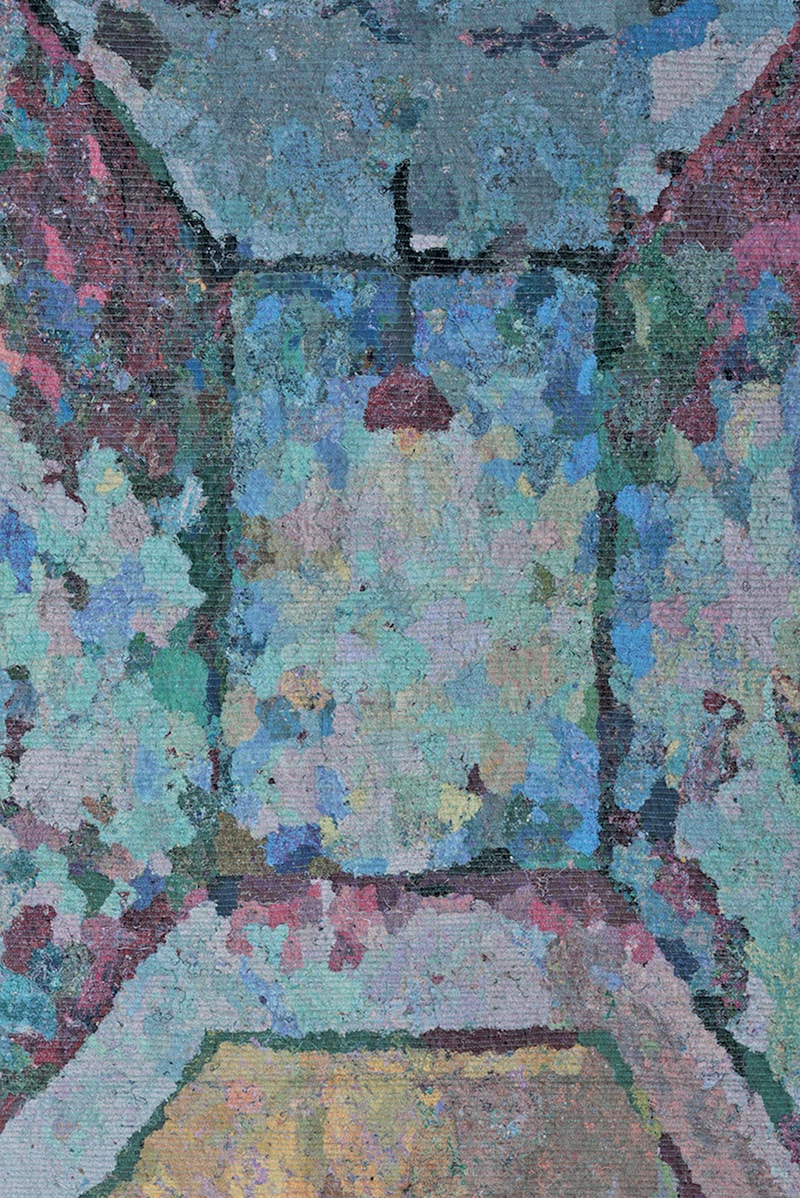
For some, the event proved much better than expected and they were quite happy. Riddhi Jain, Studio Medium, New Delhi informed, “The fair was very promising this year. We met a couple of buyers interested in our products; most of them were store/boutique owners. As the company participated for the first time in Heimtextil, we were enthusiastic, and the event turned out to be very promising.” The collection showcased by the company was called ‘re-’. It is an upcycled collection of home textiles made out of discarded cotton yarns. The colour palette included bold pastels inspired by the irregularities of natural textures. There were ranges of cushions, futons and wall arts.
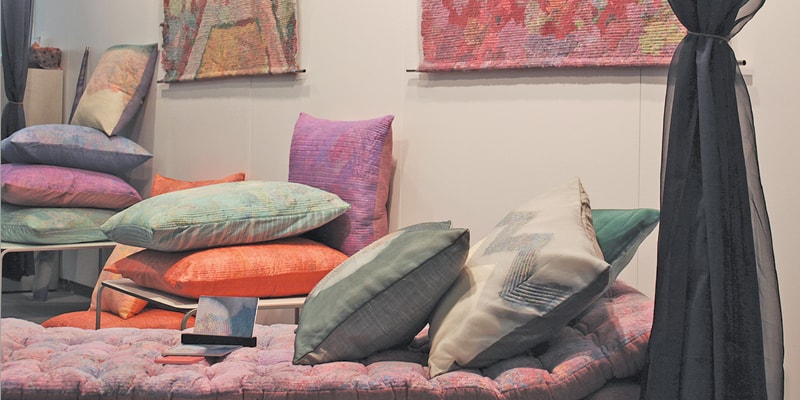
The fairs as a whole highlighted that there was no recovery in most European markets; weakened pound and uncertainty of the effects of Brexit have also negatively affected sentiments. Likewise, in USA with the new President focusing on “Make in America”, there are possibilities of higher duties on imports. This year is again going to be challenging for Indian companies so it is important to develop markets other than Europe and USA. Interestingly, some Indian participants were of the opinion that they didn’t find much issue with the enthusiasm of the buyers. “Buyers were looking for new things and price was not as big a consideration as many were making it out to be,” said Riddhi Jain, adding, “We realized that now is the time when retailers are ready to experiment with new and bold collections as their main focus is on providing new products to their buyers. They were also on the lookout for products that are sustainable for our surroundings and this really fitted well with our upcycled collection, at Heimtextil this year.”
For many exporters, the Heimtextil Trend Park was particularly very inspiring, taking them through the upcoming trends in technology and textiles. As Germany is a very important country for Indian home furnishing exporters, EPCH organized the participation of the stakeholders of the Narsapur Mega cluster and members in Heimtextil, through India pavilion with 15-member exporters.
DOMOTEX 2017
Organizers of DOMOTEX 2017 claimed that this dynamic event puts fresh wind in the sails of the global floor coverings industry with substantial growth in number of exhibitors and size of exhibition. It witnessed a total of 1,409 exhibitors from more than 60 countries, and out of them nearly 350 exhibitors were from India. As far as visitation is concerned, it was on a par with the last comparable DOMOTEX, staged in 2015 with 43 per cent coming from EU countries. From the nearby Middle East, it was up by 9 per cent, while East and Central Asia increased by 16 per cent. More visitors came from the US and the UK, in particular. The latest trends revealed a strong focus on sustainability and natural-looking designs. There is strong demand for eco-friendly designer products, as well as for laminate and designer flooring with surfaces of such deceptively natural appearance that they can hardly be discerned from real wood.
Sustainability was as usual highlighted under the title ‘Sustainability, Mindset, Responsibility’. Participating for the first time at Heimtextil and dealing in organic home furnishing products, Storyfabrics, a Switzerland-based company, sourcing home products from Indian company Rajlakshmi Cotton Mills, was happy with the fair. Martina Unternaehrer, Founder of the company said, “I met potential customers from Switzerland and with whom I couldn’t get a meeting back in Switzerland. Small companies like ours have to go to the big fairs to be taken seriously.”
One of the Indian participants Ravi Chabbra, MD of Chhabra Home Concepts, Panipat shared his opinion, “Overall, the fair was okay and we met 4-5 good buyers. Generally I think Europe is picking up the daily use or basic products, but not for exclusive or luxury kind of things.” The company offered regular range of bath mats at the event. Pradeep Singh, Director, Zoya Home, Panipat too had a similar view as he said, “Fair was mostly dominated by European visitors and business was almost the same as last year or even little less than that.” Floor covering in natural fibres like jute, hemp, wool was displayed by the company. Pradeep also added that exhibitors like him participated in such international events through Indian Government agencies/councils, which should make more effort to get proper locations so that more buyers can visit their stalls.
Maison & Objet
In Maison & Objet, Paris there were almost 23 Indian participants like Shingora Home, Ludhiana; Kanodia Global, Delhi; Condor, Gurgaon and few designer brands. There were in total 2,871 exhibiting brands while more than 1,35,000 visitors visited the show. Amit Jain, MD, Shingora Textiles shared, “Fair was just okay; I would give it a 5 out of 10 as there were visitors but business was missing. Still Europe seems to be slow.” The company displayed its blankets which were made by cotton rather than wool. On the contrary, Anil Sharma, Senior Merchant of Noida-based Janavi shared, “For us the event was reasonably good and we are satisfied with it.” The company highlighted its strength in cashmere art in wide range of designs, while products included blankets and shawls.