Growth and development are matters of pride for any country and if they lead to joining the big league of developing nations from that of a least developed country (LDC), there are no two ways about it. And Bangladesh stepped into this new journey after almost 45 years as it qualified to graduate into a developing nation from an LDC after the United Nations Committee for Development Policy (UN CDP) recommended the country’s graduation in its final evaluation not so long ago.
Bangladesh is now officially scheduled to become a developing country in 2026 as the UN committee recommended that the country should get five years, instead of three, to prepare for the transition due to the impact of the COVID-19 on its economy. So, until 2026, Bangladesh will continue to enjoy the trade benefits as a LDC even as the recommendations will be sent to the United Nations Economic and Social Council (ECOSOC) for endorsement in June and the UN General Assembly is scheduled to approve the proposal in September.
Taffere Tesfachew, Chair of the CDP subgroup on LDCs, shared the decision of recommendation at a briefing after the second triennial review of the LDC category of UN CDP — the five-day review meeting was held from 22 February at the UN Headquarters in New York — even as Bangladesh, for the second time, has met all the three eligibility criteria for the graduation involving income per capita, human assets index (HAI), and economic and environmental vulnerability index (EVI).
In the briefing, Taffere Tesfachew also said they would take some other measures considering the fallouts of the Coronavirus on the economy of the newly graduated countries while adding that they would analyse at the 2024 triennial review if the extension was needed.
They will also improve monitoring systems; pay special attention to COVID-19 impacts and alert ECOSOC of action whenever needed.
Meanwhile, Prime Minister Sheikh Hasina has also formally announced the graduation status of Bangladesh and underlined, “This achievement is an outcome of our relentless planning, hard work and efforts over the last 12 years. The people of this country have made it possible. We have only provided the people with policy support from the Government.”
As per their schedule, the UN CDP completed its final round of assessment on Bangladesh based on the country’s economic data up to 2019 even as the UNCTAD had made a separate report on Bangladesh’s economic vulnerability profile following the COVID-19 fallout while the UN CDP has given the final recommendation based on the UNCTAD report and a position paper of Bangladesh Government that was submitted to the UN committee earlier for assessment.
The UN CDP in its second triennial review assessed the economy of Bangladesh and found a strong fulfilment of all three required conditions for the graduation. Bangladesh was well ahead in the gross national income (GNI) criterion: its per capita income was US$ 1,827 in 2019 against the threshold of US$ 1,222, while in the HAI criterion, the country’s score stood at 75.4 points, well above the requirement of 66. In the EVI, a country’s score has to be less than 32. Bangladesh’s score was 27.3.
As per the Prime Minister, Bangladesh’s per capita income was 1.7 times higher than the required threshold even as she said the per capita income was now US$ 2,064.
It may be mentioned here that although the concept of the LDCs originated in the late 1960s — LDCs are usually low-income countries confronting severe structural impediments to sustainable development. While there were 25 countries in the list of LDCs in 1971, the number is 47 now — the first group of LDCs was listed by the United Nations back in 1971.
Bangladesh was first listed as an LDC in 1975 even as so far, a total of five countries have graduated from the LDC status, which are namely Botswana (1994), Cape Verde (2007), The Maldives (2011), Samoa (2011) and Equatorial Guinea (2017).
When Bangladesh was included in the LDC group in 1975, the poverty rate of the country was 83 per cent. In 1981-82, the figure was 74 per cent even as the Bangladesh’s poverty rate declined to 20.5 per cent in 2019 from 40 per cent in 2005, according to data from the Bangladesh position paper. Similarly, the extreme poverty rate also declined sharply to 10.5 percent in 2019 from 25.1 per cent in 2005, the paper said.
The current Bangladesh and the country an era ago are not the same; today’s Bangladesh is a changed Bangladesh, reportedly underlined the country’s Prime Minister, adding, “We will have to uphold this achievement and will have to make it sustainable…The graduation to a developing country is a special step for the country in its efforts to achieve the Sustainable Development Goal by 2030, become a higher middle -income country by 2031 and a developed country by 2041.”
Meanwhile, Finance Minister AHM Mustafa Kamal, on his part said that Bangladesh will benefit more than it would lose once the country graduates to a developing nation.
“I think we will gain much more than we will lose,” said Kamal while underlining that even if
many people maintain that exports would fall by four to five billion US dollars, that was not the case.
“If we lose an export of US$ 100 million, US$ 75 million of that will be [foreign] input. As a result, we will lose US$ 25 million. Thanks to graduation, old problems would not exist, and there would be many opportunities,” the minister said, adding that all sides, including the economy will benefit even as he went on to add currently, foreigners were apprehensive of investing in Bangladesh, but that would be resolved once Bangladesh moves out of the LDC category while adding that graduation would increase foreign investment in Bangladesh, while the economy will gradually become stronger.
There’s no doubt that LDC graduation would not only help reap rich dividends but it also is a landmark development from Bangladesh’s perspective.
However, as per many experts, there are some flip sides to it as well.
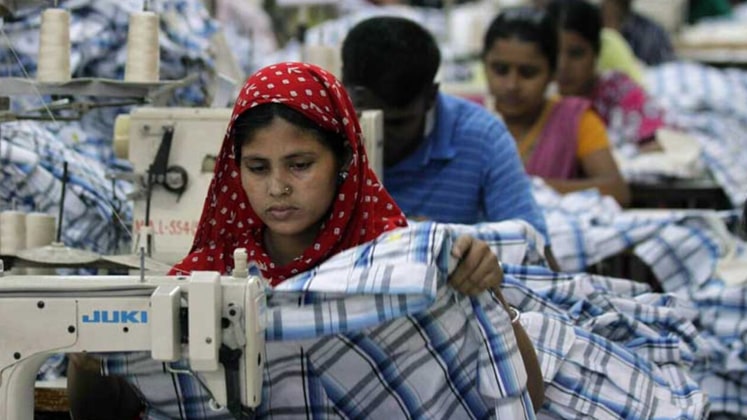
Looking at the situation from the eyes of a garment exporter, in 2026, when Bangladesh will no longer be an LDC, a shirt made in a factory in the country (Bangladesh) would reportedly be 20-25 per cent pricier in Montreal or Sydney than the one shipped from Vietnam. Average tariffs on Bangladesh-made apparels will go up by 10-15 per cent when Vietnam, a key competitor, will enjoy duty-free access to markets of Canada, Australia, China, Japan and the European Union and bilateral and regional free trade agreements and engagement in trade blocks will give Vietnam a competitive edge.
To offset the impacts of graduation from the LDC and stay competitive, Bangladesh needs to make efficient use of the next five years carrying out tough negotiations bilaterally, or as a group, maintained Professor Mustafizur Rahman, distinguished fellow of the Centre for Policy Dialogue (CPD), analysing costs and benefits of graduating from the LDC to a developing country.
Preparedness to deal with complex issues such as tariff and trade liberalisation, the opening of sectors for foreign investment, labour and environmental compliance are among the priorities for Bangladesh during the transition, the CPD listed even as according to the World Trade Organisation (WTO) Secretariat estimates, Bangladesh’s export loss will be almost 90 per cent of the losses that 12 graduating LDCs will incur.
Bangladesh will lose export earnings amounting to US$5.37 billion, which is about 14.3 per cent of the country’s total export value, while the remaining 11 graduating countries’ losses will be only US$650 million. As such, it underlined that aggressive plurilateral and mega-regional agreements will have important implications for Bangladesh’s competitiveness.
Bangladesh should try to make the best use of the additional time at its disposal, following LDC graduation in 2026, said Prof. Mustafizur,according to whom the 12th ministerial meeting of WTO scheduled in Geneva in November would be a proper forum to press for continuation of trade and other privileges until 2031, while also suggesting enabling a proper business environment to increase productivity, reduce production costs to maintain the competitiveness of the private sector.
“We have proved our resilience time and again…our expert committees are working on how to use the remaining five years effectively for smooth graduation,” stated State Minister for Foreign Affairs Shahriar Alam who also acknowledged that Bangladesh, like other graduating nations, would have to walk through new challenges as international support measures in trade, loan and climate mitigation will cease once Bangladesh moves out of the LDC group.
It may be mentioned here that according to reports, Bangladesh is among a very few LDCs, which has been able to reap most benefits originating from preferential market access, offered by developed countries and consequently, it has the most to lose after graduation even as around 70 per cent of Bangladesh’s global exports are covered by preferential access while among the 12 candidates graduating LDCs, Bangladesh is going to face the highest rise in tariffs, of about 9 per cent.
Meanwhile, experts have also urged the Government to make comprehensive preparations immediately to ensure that Bangladesh gets the GSP plus facility in the European Union market after LDC graduation even as they underlined that this was needed to maintain stability in export earnings by overcoming the loss of trade benefits associated with LDC graduation.
At a recent webinar, distinguished fellow at the Centre for Policy Dialogue (CPD), Dr Debapriya Bhattacharya presented the keynote titled ‘LDC Graduation of Bangladesh: Are We Ready for GSP plus?’ and stated the European Commission was now working on GSP plus scheme issues and that is why it was high time for Bangladesh to prepare itself to secure access to the EU market while adding the Commission would send the proposal for GSP plus scheme to the European parliament by June.
“It will then be a challenging task for Bangladesh to convince the European parliament, which does not discuss any technical issues and only concentrates on social, labour, and governance issues,” Debapriya added while underlining that it was high time Bangladesh had a cohesive, dynamic and inclusive transition strategy for the GSP plus scheme and to link it with other global initiatives, particularly taken by the World Trade Organisation and the United Nations even as he maintained that 71 countries are eligible for utilising the GSP plus scheme in Europe but only eight are accessing it.
Meanwhile, expressing his views on the issue of LDC graduation, President of the Bangladesh Garment Manufacturers and Exporters Association (BGMEA), Faruque Hassan said 61 per cent of readymade garment exports to the EU market would come under new tariffs after the LDC graduation. He thus recommended formulating an immediate and mid-term strategy to maintain competitiveness after the LDC graduation, which would result in Bangladesh losing many of the existing trade benefits, including duty-free exports to the EU.
He also stressed on strategy, capacity building and diplomatic engagement with the EU to seek an extension of the Everything but Arms (EBA) deal for 10 more years on grounds of exports and employment even as former Bangladesh Knitwear Manufacturers and Exporters Association (BKMEA) President Md Fazlul Hoque said Bangladesh should make all-out efforts to secure GSP plus and extend the EBA agreement.
“The Government should lead the initiative and form a special committee comprising experts, think tanks, and business leaders to work on the issues,” said Fazlul even as Md Mosharraf Hossain Bhuiyan, Ambassador of Bangladesh to Germany stated that EU is Bangladesh’s largest export destination and accounts for more than 61 per cent of total exports and, that is why the Government initiated several processes to secure easy access to the market in order to export products from Bangladesh.
Going by the views and thoughts shared by the experts, there is no denying the fact that Bangladesh’s LDC graduation, notwithstanding the fact is a landmark development from the country’s perspective which would do a lot of good for Bangladesh in the days to come, also has some adverse implications and it perhaps depends a lot on the stakeholders as to how they can minimise the fallouts of the graduation, the various facets of which have been highlighted by the pundits at length.