The protracted Covid glut ultimately made way for good days as Bangladesh’s export earnings made a strong rebound in the just-concluded fiscal year, fetching US $ 38.75 billion, thanks to revival of apparel shipments.
According to the Export Promotion Bureau (EPB), compared to export earnings of US $ 33.67 billion in FY ’20, export earnings in FY ’21 were US $ 38.76 billion, growing by 15.10 per cent even if the earnings were still US $ 1.77 billion lower than the pre-pandemic earnings in FY ’19.
Meanwhile as per the figures, in FY ’21, apparel export grew 12.55 per cent to US $ 31.45 billion from what was US $ 27.95 billion in FY ’20 — export earnings from woven garments in the financial year 2020-21 increased by 3.24 per cent to US $ 14.49 billion from US $ 14.04 billion in FY ’20 while earnings from knitwear export in FY ’21 grew by 21.94 per cent to US $ 16.96 billion from US $ 13.90 billion in FY ’20 — even as BGMEA President Faruque Hassan on his part reportedly maintained that despite increase of apparel export by 12.55 per cent in FY ’21, earnings were still 7.84 per cent lower than the pre-pandemic levels while Executive Director of Policy Research Institute, Ahsan H Mansur, stated, “We are in a recovery shape and hopefully, the export earnings will exceed the amount of the pre-pandemic period in FY ’22,” while interacting with the media.
So, even as the industry was rejoicing the starting of the export recovery, RMG shipments took a tumble in July by 16 per cent (year-on-year dip) and as perhaps would have been expected, it raised questions, why it had happened even as BGMEA Vice-President Shahidullah Azim on his part said June, July and August are the peak months for apparel exports as manufacturers export 35 per cent – 40 per cent of the total RMG products of the year during this time.
Also Read: Design and development is the way forward for Bangladesh garment makers
What’s more, the main export destinations for Bangladeshi RMG products, the US and the EU, have already opened shops following mass vaccination, which further led to an increase in demand for apparels.
Naturally so, this sudden dip in export came as a surprise to the garment makers. However, after a little bit of contemplation, the industry was able to get to the bottom of things and figure out the reasons and, there seem not one but a host of causes that led to the export fall in July.
Week-long countrywide lockdown, Eid vacation and the severe container congestion in the Chittagong Port, all combined to cause this export fall, so feel the industry insiders even as economists and garment exporters have opined that this is something temporary and things would only improve going forward.
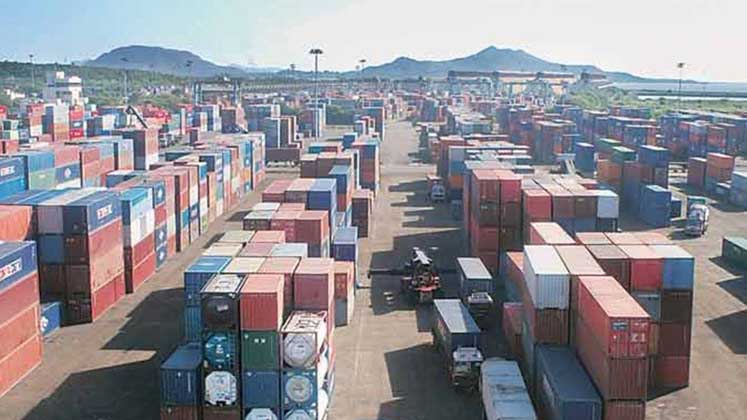
It may be mentioned here that the premier sea port of Bangladesh which handles the bulk of import and export, the Chittagong was badly affected by container congestion lately which even led the garment exporters to request the Government to take steps to settle the deepening container crisis even as they held a meeting with the inland depot owners, shipping agents and freight forwarders while also meeting with the State Minister for shipping Khalid Mahmud Chowdhury separately.
“Export cargoes pile up at Chittagong Port, but there are no empty containers. In many cases, if the containers are available, there are vessel crisis,” complained the First Vice-President of the BKMEA Mohammad Hatem, adding, “If the berthing capacity of the Chittagong Port can be increased to 12 from current 10, the overall export capacity of the port will ramp up 20 per cent.”
Earlier BGMEA President Faruque Hassan presided over a meeting in which were present BGMEA Vice-President Md. Shahidullah Azim; Vice President (Finance) Khandoker Rafiqul Islam; Vice-President Md. Nasir Uddin; Directors Md. Mohiuddin Rubel, Asif Ibrahim, Abdullah Hil Rakib, Haroon Ar Rashid and Rajiv Chowdhury while First Vice-President of BGMEA Syed Nazrul Islam and Vice-President Rakibul Alam Chowdhury also attended the meeting virtually. Even President of Bangladesh Freight Forwarders Association (BFFA) Kabir Ahmed; First Vice President of Bangladesh Inland Container Depots Association (BICDA) Jowher Rizvi; First Vice-President of BKMEA Mohammad Hatem; Director of Bangladesh Textile Mills Association (BTMA) Syed Nurul Islam; Director of Leathergoods and Footwear Manufacturers & Exporters Association of Bangladesh (LFMEAB) Ziaur Rahman; President of Bangladesh Garments Accessories & Packaging Manufacturers & Exporters Association (BGAPMEA) Md. Abdul Kader and Chairman of Bangladesh Terry Towel & Linen Manufacturers & Exporters Association (BTTLMEA) M Shahadat Hossain were also present at the meeting.
In the meeting they decided to work together and seek the Government’s intervention even as they urged to direct authorities concerned not to increase any charges fixed by freight forwarders/shipping lines during Covid period, requested the port authority to allow more feeder vessels to berth at the port to address the container and vessel shortage while also demanding to arrange an export yard on temporary basis to facilitate loading-unloading of cargoes at the private ICDs.
“Bangladesh will recover from the situation soon. We do not need to judge the entire 2021-22 fiscal year by only the earnings of July. There is no reason to worry about it,” maintained Distinguished Fellow of the Centre for the Policy Dialogue (CPD) Mustafizur Rahman pertaining to the July export fall, who further added exports were hampered in July due to Eid holidays, factory closures amid lockdowns, and container congestion at the Chittagong Port and, went on to underline, “…Bangladesh is still getting a lot of purchase orders and a huge number of containers are ready to be shipped.”
It may be mentioned here that after facing a brief closure on account of the countrywide shutdown, all export-oriented industries in different industrial zones across Bangladesh, including the apparel manufacturing units have resumed operation since 1st August and are regaining momentum as per reports a day after the factory reopening. It also reported that 85 per cent-90 per cent workers reported for work in the major export-oriented factories even as in some cases the percentage was as high as 95 per cent.
Speaking to media, Shahidullah Azim claimed around 90 per cent-95 per cent workers had joined their respective workplaces at the BMGEA’s member factories across the country by then even as an official of the Bangladesh Knitwear Manufacturers and Exporters Association (BKMEA) also underlined that 85 per cent-90 per cent workers have returned to work.
On the other hand, even as the factories resumed operations, the BGMEA has urged the global buyers not to penalise the suppliers for any reasonable delays caused by the lockdown even as BGMEA President Faruque Hassan on his part made the request through the buyers’ forum in Bangladesh, as well as to the individual buyers, in a letter issued in this direction.
“All export-oriented factories reopened from 1st August and are now carrying on with production in full swing,” underlined the Distinguished Fellow of the CPD, adding, “We hope exports will recover in August, and Bangladesh will soon return to pre-pandemic levels. This will not have any negative impact on the national export economy, so there is no reason to panic.”
Garment exporters too agreed with the views expressed by Mustafizur as they underlined the July export dip is temporary and that they have enough purchase orders from retailers in the EU and the US markets.
“…all export-oriented factories, including those in the garments sector have been reopened, which will boost production and shipments will increase; we are expecting good days ahead,” added Shahidullah Azim, even as prominent garment manufacturer and exporter Fazlul Haque reportedly stated that retail chains and outlets in West have already opened up following mass vaccinations which will increase demand for apparels even as he added due to people staying home for longer periods on account of the pandemic, export of woven products took a hit.
Meanwhile, in what can be termed a positive development, leather and leather goods — another major foreign currency earner — posted a marginal 1 per cent gain, fetching around US $ 90.5 million in July, up from what was US $ 89.9 million in the same month last year even as jute, which is another major export commodity, failed to gain the desired traction in terms of exports with the Vice-President of the Bangladesh Jute Spinners Association (BJSA) Moniruzzaman Mridha,on his part maintaining, “The jute industry has been lagging behind for a long time due to the pandemic. Illegal stockpiling of jute should be stopped. Many unlicenced people are entering the industry despite not having industrial knowledge, they need to be controlled,” even as he added Government’s instructions of using jute bags for packaging should be implemented, which would help boost domestic consumption.
So going by the views and opinions as expressed by the experts, economists and the garment manufacturers, July’s apparel export dip seems to be an aberration and things are set to improve from hereon for the rest of the year, which gives reasons for hope that the industry would come back on track in the coming days.