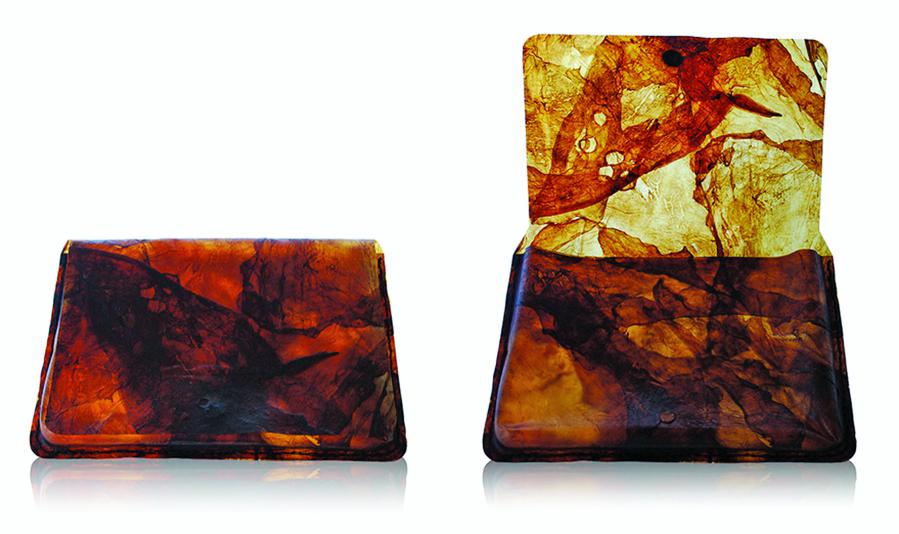
 Yurii Kasao, a Design Products 2015 graduate from the Royal College of Art (London, UK) with the support of SustainRCA, has been working on developing a material derived from jellyfish that could offer an alternative to leather in accessories and small goods. To date, leather alternatives have focused on making leather processes such as tanning less toxic, but by reconsidering abundant natural by-products, usually regarded as waste, as a resource, 100% jellyfish leather has been produced. This jellyfish leather can be cut, sewn and remoulded, just like cow leather. Blooms of jellyfish can visibly impact coastal populations and economies – clogged nets for fishermen, stinging waters for tourists, even choked cooling intake pipes for power plants.
The leather industry has a serious environmental impact on water, terrestrial and atmospheric systems because of the toxic chemicals used for stabilising the leather in tanning. In this proofof-concept, jellyfish are harvested, put between flat sheets, pressed and dried, to be cut, sewn and remoulded. All the materials, which are used for this jellyfish leather production, are organic and biodegradable.




 Bharat Tex Special Report 2026