Europe and the USA have long been the export strongholds of Bangladesh; and it’s not that these two markets have stopped yielding results!
But with time, one has to look beyond the tried and tested to grow and develop further and Bangladesh, which has over the years turned into a preferred sourcing hub for the brands and buyers thanks to its expertise and maturity, has now reached a stage where it has to actively look at diversifying its markets with the future in perspective.
Lately it has ventured into new territories to explore and exploit the emerging opportunities and has achieved great success too! Take for example the SAARC countries, which have emerged as major export destination for Bangladesh, led by India, that has so far bypassed the six other countries of the bloc to emerge as the single largest export destination amongst the SAARC nations for ‘Made in Bangladesh’ products.
As per analysts, Bangladesh’s export to the SAARC countries has increased by a massive 88 per cent in the last five years even as they claimed the growth of Bangladeshi exports to this sub-regional block to be much higher than the Bangladesh’s overall export earnings growth from across the globe, while according to the country’s Export Promotion Bureau (EPB), Bangladesh’s export to the SAARC nations ballooned to US $ 1.49 billion in the FY 2020-21, up by 88.03 per cent from what was US $ 797.69 million five years back in FY 2016. Due to the COVID-19 pandemic, Bangladesh’s earnings from exports to the South Asian nations reportedly took a hit in FY 2020 before reviving in FY 2021, when Bangladesh’s earnings from export to SAARC countries reached US $ 1.49 billion, as per the EPB data.
Further as per the EPB data, India’s import of Bangladeshi goods crossed the US $ 1 billion mark for the first time in FY 2019 even as Bangladesh exported goods worth US $ 1.28 billion to India in FY 2021 — as a Least Developed Country (LDC), Bangladesh enjoys duty-free quota-free (DFQF) access for nearly 94.1 per cent of its export items — even as Bangladesh made shipment of different goods worth US $ 82.71 million to Pakistan, US $ 68.66 million to Nepal and US $ 47.32 million to Sri Lanka in FY 2021 while it also exported goods worth US $ 8.64 million to Afghanistan, US $ 6.89 million to Bhutan, and US $ 6.02 million to the Maldives in the just-concluded fiscal year even if among the export items, the apparel sector was the dominant one, earning more than US $ 500 million from Indian market alone.
Also Read: RCEP: Should Bangladesh join the world’s largest trade bloc or keep away from it like India?
Similarly, China, the apparel market of which is approximately around US $ 330 billion (as of 2019), and second only to that of USA (market size of approximately US $ 345 billion) is emerging as a very potential export destination for Bangladesh, more so, after China last year declared zero-duty for 97 per cent of the Bangladeshi imports even as a recent study suggests Bangladesh’s exports to China, the world’s second biggest economy, can grow to US $ 25 billion if local suppliers manage to grab an additional 1 per cent share of the Chinese market by 2030.
Similarly, the country (Bangladesh) has been performing well in Australia even in the time of this pandemic and in the last fiscal year, earnings from garment shipment to Australia was US $ 731.13 million, a rise from that of US $ 601.14 million in fiscal year 2019-20 even as the amount was US $ 719.78 million in the 2018-19 fiscal year, as per the BGMEA data while among the Latin American countries, Brazil and Chile have been showing promise for garment export even as in last fiscal year, local exporters shipped US $ 70.73 million worth of goods to Brazil and US $ 82.56 million to Chile although in both of these destinations, the amount of garment shipment was more than US $ 103 million in fiscal year 2019-20. According to BGMEA Vice-President Shahidullah Azim, garment makers have managed to explore the Latin American markets, which is now worth US $ 2 billion.
Similarly, Japan, is the only non-traditional and Asian destination where US $ 1 billion worth of garment shipments were made from Bangladesh in fiscal year 2018-19.
“I hope we can export more to Japan as the market is reviving from the fallouts of the COVID-19,” underlined garment maker Fazlul Hoque, who also exports to Japan even as industry people said Japan is the most promising market for Bangladesh in Asia.
Meanwhile speaking to the media, BGMEA President Faruque Hassan stated, “We are working to increase exports of clothing products to non-traditional markers as a part of our market diversification. As the exporters enjoy cash incentives in the non-traditional market, they will drive to export more to this market,” while also adding that he was planning to hold a road show in Dubai in December this year to grab a bigger share of the Middle Eastern markets, which as per many experts, would be the destination next for Bangladesh, as far as apparel export is concerned and rightly so Bangladesh is already making efforts at exploring and exploiting the same.
Meanwhile, as per experts, there’s around US $ 10 billion RMG potential in Gulf countries that has remained untapped, who further added that despite the good diplomatic relations with Gulf countries, Bangladesh was missing out on the US $ 10 billion unexplored apparel market owing to a lack of initiatives on parts of the Government as well as the private sector.
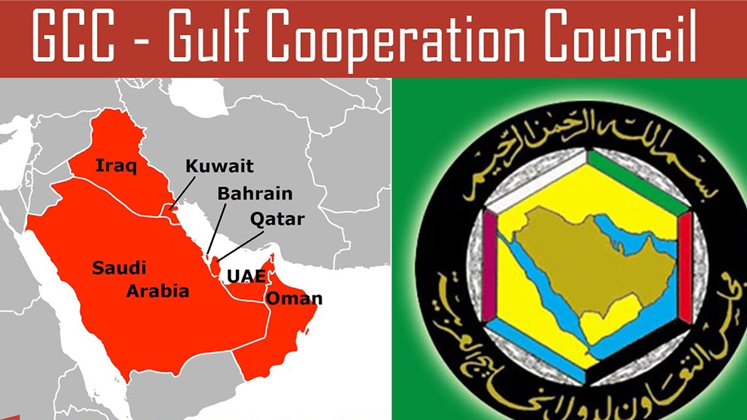
It may be mentioned here that the Gulf Cooperation Council (GCC) is a political and economic union of Arab states, including the United Arab Emirates (UAE), Saudi Arabia, Qatar, Oman, Kuwait and Bahrain even as according to the International Trade Centre data, in 2020, the UAE sourced about US $ 4.40 billion worth of apparel items from global markets, Saudi Arabia US $ 3.01 billion, Kuwait US $ 1.13 billion, Qatar US $ 660 million, Oman US $ 608 million and Bahrain US $ 274 million, while Bangladesh currently exports only around US $ 367.49 million worth of goods to this region, according to the data from Bangladesh’s Export Promotion Bureau even as Bangladesh can supply about 5 per cent of the annual demand of the UAE, around 4 per cent of Saudi Arabia’s and less than 1 per cent of the rest, the EPB underlined.
“We are planning to explore those markets in association with the Commerce Ministry and the Foreign Affairs Ministry,” claimed Faruque while adding ‘Made in Bangladesh’ apparels have big opportunity in the Gulf and Middle East markets, which have remained untapped for a long time owing to a lack of initiatives even as the Managing Director at TAD Group, Ashikur Rahman Tuhin, reportedly maintained that Bangladesh apparel exporters are focusing on traditional markets as it is very easy to get orders there even if new markets call for more efforts.
It may be mentioned here that very long ago, Bangladesh’s Ambassador to Saudi Arabia proposed the country to import garments, along with leather products and handicrafts from Bangladesh even as in a meeting held with Dr. Abdul Hakim Al Khaldi, Chairman of the Eastern Chamber of Commerce of Saudi Arabia and Secretary-General Abdul Rahman Al Wabel, Bangladesh’s Ambassador Dr. Mohammad Jabed Patwari BPM (Bar) asserted Bangladesh is currently the second-largest exporter of garments in the world and has been manufacturing and exporting approximately all the mandatory quality garments.
Hence, Saudi Arabia can import any type of quality garments from Bangladesh, maintained Patwari.
Meanwhile, speaking to the media, BGMEA Vice-President Shahidullah Azim reportedly underlined that the Gulf countries have been sourcing most of their apparel items from China, India, Turkey and other countries even as despite being the second-largest apparel exporter globally, Bangladesh’s share is very nominal in this market, he said while expressing hope that Bangladesh’s participation in the upcoming expo 2020 in Dubai could help to explore the Gulf markets.
Now, if and when Bangladesh manages to explore the opportunities that lie there remains to be seen.





 Bharat Tex Special Report 2026