The contribution of Bangladesh apparel industry in terms of exports globally is well-known worldwide! Not so long ago there have been reports though of Vietnam wresting the position of the second-largest apparel exporter globally from Bangladesh — Bangladesh had been the world’s second-largest garment exporter since 2010, according to World Trade Organization (WTO) rankings. However, Bangladesh lost its rank to Vietnam after the latter reportedly sold US $ 29 billion worth of apparel merchandise to the world in 2020 while Bangladesh’s readymade garment exports were valued at US $ 28 billion last year. Vietnam accounted for 6.4 per cent of global garment exports last year while Bangladesh’s share was 6.3 per cent — even if latest reports suggest Bangladesh has again overtaken Vietnam thereby getting back to its coveted position of being the world’s second-largest garment exporter, and now stands only behind China in terms of apparel exports.
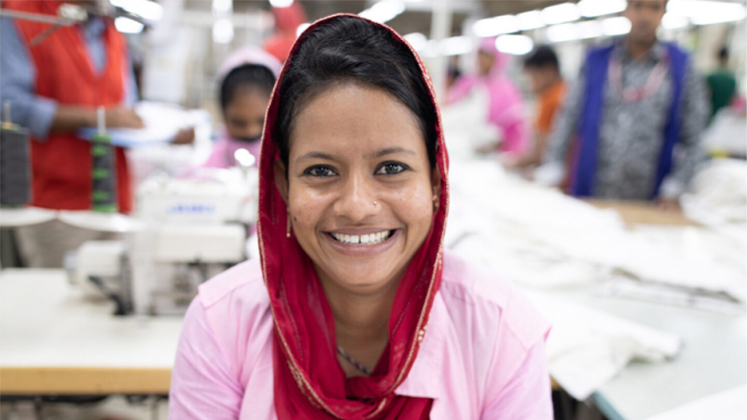
However, it’s just not the ‘Made in Bangladesh’ apparels, which are in big demand globally, the garment workers of Bangladesh seem to be equally in demand, especially in Jordan.
If one may remember, it was not very long ago, Bangladesh Foreign Minister Dr AK Abdul Momen underlined that Jordan’s readymade garments (RMG) sector will recruit over 12,000 skilled workers from Bangladesh in one year.
“This recruitment will be processed only through Bangladesh Overseas Employment and Services Limited (BOESL),” reportedly maintained the Foreign Minister then while interacting with the media even as he added that one of the employers in Jordan met officials at Bangladesh Embassy there and his team will visit Bangladesh soon.
“They have requested Bangladesh to allow recruitment of skilled workers who do not have passports, and facilitate providing the selected workers with passports in the shortest possible time. This is a good opportunity opening for us,” reportedly claimed Dr AK Abdul Momen even as the officials concerned, on their part, underlined they will do their best in processing and facilitating passports and other requirements for sending the workers as quickly as possible.
Now, if latest reports are to be believed, 16 Jordanian companies have already started hiring RMG workers from Bangladesh even if 36 more are in queue to follow suit!
Also Read: Do we need to revise wastage rates?
It may be mentioned here that Jordan’s Free Trade Agreement (FTA) with the USA has made the country a favourable destination for apparel manufacturers from foreign countries, including from Bangladesh — the United States and Jordan continue to benefit from an extensive economic partnership. A key element of this relationship is the United States-Jordan Free Trade Agreement (FTA) that came into effect on 17 December 2001, and was implemented fully on 1st January 2010.
Besides, the Jordan Government also reportedly provides various facilities to foreign investors, as a result of which, entrepreneurs from Bangladesh, India and Sri Lanka are going to Jordan — many of who set up their production facilities there to avail the duty-free privilege (exports from Bangladesh are subject to duties in the US market, unlike the EU that offers zero duty) and as may be expected many of them prefer to have workers from back home, and what perhaps adds to the same is that Jordan allows factories there to hire 75 per cent of the workforce from abroad, which have opened up a new horizon for Bangladeshi skilled apparel workers, mostly women, to work in the Middle Eastern country.
It’s not that the workers from other countries like India, Nepal, Sri Lanka, etc., are loath to enjoy the benefits that Jordan has to offer — as per reports, the minimum wage in Jordan is three times as high as that offered by factories in Bangladesh. Besides, recruiters offer air tickets, food, accommodation and healthcare facilities to the workers as well — however, they reportedly cannot fly to Jordan because of certain travel restrictions put in place by their respective Governments, due to the Coronavirus pandemic, which has apparently made Jordanian apparel manufacturing factories lean heavily on Bangladesh of late to recruit workers from here even as industry people maintained that workers of garment factories in Bangladesh are usually hired as helpers only on the basis of oral exams. But the recruiters from Jordan are now appointing operators directly and candidates are being finalised by assessing their practical knowledge and further went on to add that representatives of Jordanian apparel companies come to Dhaka every week to select skilled workers even if three dozen Jordanian companies have submitted demand letters this year to recruit female garment workers from Bangladesh while a Jordanian company is hiring about 400 women operators for its garment factory there while 15 others are said to involved in the process of hiring workers for factories in Jordan as well.
According to people in know of things, factories in Jordan offer handsome salaries even as according to annual report of BOESL, each female worker can earn at least Taka 22,000 per month in Jordan while in Bangladesh, the overall income hovers around Taka 8,000 to Taka 8,420. On top of that, Jordanian factories also pay for the flight and other charges of a worker.
It may be mentioned here that Sparrow Group, a Bangladeshi apparel exporter, had invested in Jordan in 2007 by forming a joint venture company with one of the leading Indian garment manufacturers.
“We established the factory to produce some high-value garments for the US market at the Jordan export processing zone…In 2010, my Indian partner and I were working for the same brand. At that time, we considered setting up a factory abroad where Bangladeshi workers would produce apparels. We searched for opportunities in Bahrain, Ethiopia and Jordan…,” reportedly maintained Managing Director of Sparrow Apparels, Shovon Islam, who was very close to buying a factory in Bahrain, but as there was a risk that the country’s duty-free market access would expire by 2014, they moved to Jordan considering its geographical location and strong trade relations with the US and established Jordan Tusker Apparel Limited, a joint venture company, which already has around 1,600 Bangladeshi female workers working there even as it was scouting for 400 more women operators.
“We have been able to confirm only 250 in the last three months. We have to select rest of the workers as soon as possible as we have booked orders for the next session,” reportedly claimed Shovon Islam earlier while speaking to the media, adding that due to the lockdown earlier, they faced some problems in interviewing workers and getting visas for the selected ones even as he added his company provided air tickets, accommodation, food and primary healthcare facilities to the workers while underlining that the total recruitment process has been done through state-owned recruiting agency BOESL.
Reports have it that Like Tusker Apparel, few other companies including Classic Fashion Apparel Industry Limited Co, Aseel Universal Garments Manufacturing Co and Rainbow Textile representatives are also appointing workers through practical tests and interviews at three technical training centres in Dhaka under the Bureau of Manpower, Employment and Training.
Meanwhile, speaking to the media, Company Secretary at BOESL, Md Abdus Sobhan reportedly maintained that around 36 Jordanian companies have submitted demand letters this year to recruit female garment workers,
But we are not getting enough workers, claimed Md Abdus Sobhan, who reportedly added that Classic Fashion Apparel Industry Ltd alone needs 20,000 workers in phases even if as per BOESL, 9,307 Bangladeshi garment workers, including 9,199 women, went to Jordan in one year from July 2018 to June 2019 while as per Better Work Jordan, an association working to improve working conditions and boost competitiveness of the garment industry, in 2020, around 90 export-oriented garment factories in the middle-eastern country employed over 70,000 workers and 75 per cent of them are women even if reports suggest that about 16,000 of the workers are Jordanians, while 53,000 others have migrated from Bangladesh, Nepal, Sri Lanka, India, China, Cambodia, Madagascar, Pakistan, Myanmar, and Syria to make up the rest.
Going by the facts and figures and insights shared by industry insiders and other stakeholders, it seems Bangladeshi garment workers are going to play a significant role in the apparel manufacturing sector of Jordan, in the days to come.