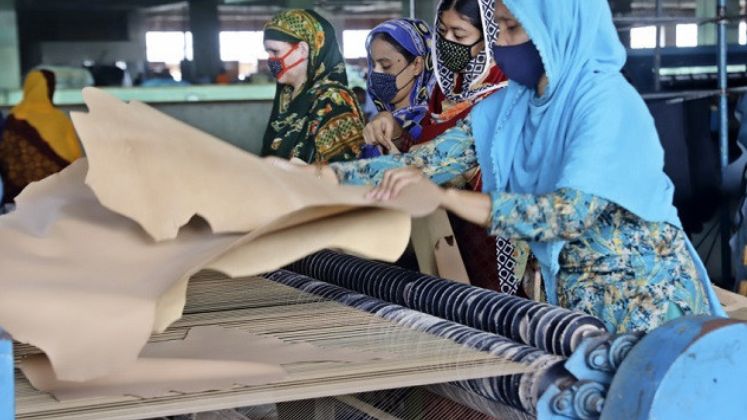
The Bangladesh government is prioritising improvements to waste treatment infrastructure and industry recovery measures as the country’s leather sector continues to grapple with relocation-related challenges and environmental compliance issues, according to Industries, Commerce, Jute and Textiles Minister Khandaker Abdul Muqtadir.
The minister made the remarks following an inspection of the Central Effluent Treatment Plant (CETP) at the BSCIC Leather Industrial Park in Savar, where he reviewed the facility’s operational status and discussed sector challenges with industry stakeholders.
Muqtadir acknowledged that while the relocation of tanneries from Hazaribagh to Savar was a necessary step from an environmental perspective, shortcomings in planning and implementation had hindered the industry’s anticipated growth.
According to the minister, the decision to relocate the tanneries was appropriate given the significant waste generated by the sector and the need for modern treatment facilities. However, he noted that weaknesses in the execution of the relocation process had created long-term operational challenges for the industry.
The minister highlighted capacity constraints at the CETP, a critical component of environmental management within the Savar leather estate. The facility was originally designed to treat approximately 25,000 cubic metres of liquid waste per day. However, waste generation during peak production periods rises to between 40,000 and 50,000 cubic metres daily, resulting in a substantial treatment shortfall.
To address the issue, the government is focusing on restoring the CETP to its intended treatment capacity while strengthening chromium recovery systems to improve environmental performance and ensure compliance with international standards.
Muqtadir said the government is also exploring the possibility of involving Italy in upgrading and operating the CETP. The proposed collaboration is expected to enhance pollution control measures and improve environmental management across the industrial estate.
In addition to infrastructure improvements, the government is considering support measures for tannery operators facing financial pressures stemming from relocation-related disruptions and increasing debt burdens.





 Bharat Tex Special Report 2026