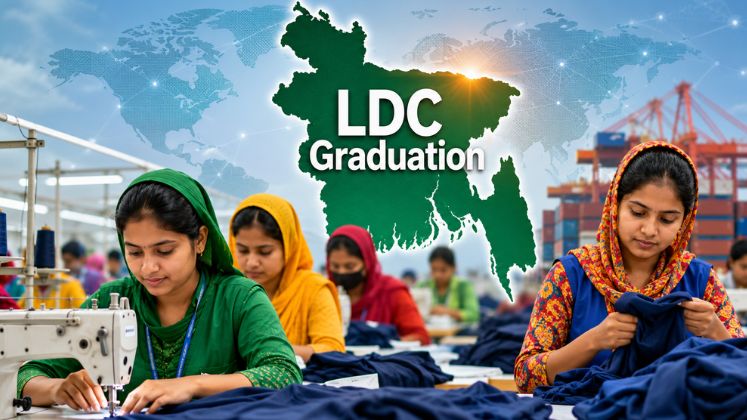
Bangladesh could face export challenges amounting to approximately US $17.5 billion following its graduation from the Least Developed Country (LDC) category, as the country is set to lose preferential market access benefits currently available in several developed economies.
Commerce Minister Khandakar Abdul Muktadir stated that Bangladesh’s transition to developing country status would significantly alter the country’s trade landscape. He noted that the withdrawal of duty-free preferences and other trade-related concessions could affect a substantial share of the nation’s export earnings, underlining the importance of retaining existing markets and diversifying export destinations.
The minister said the government was undertaking a range of initiatives aimed at mitigating the impact of the transition. These measures are focused on securing long-term trade arrangements with key export markets while enhancing Bangladesh’s competitiveness in the global trading system.
As part of these efforts, Bangladesh has concluded negotiations on an Economic Partnership Agreement (EPA) with Japan. At the same time, discussions on a Comprehensive Economic Partnership Agreement (CEPA) with South Korea are progressing.
The government is also exploring potential trade agreements with several strategic partners, including the European Union, the Regional Comprehensive Economic Partnership (RCEP) bloc, the United Arab Emirates, Singapore, Indonesia and China. According to the minister, such agreements are expected to help safeguard market access, reduce trade barriers and create new opportunities for Bangladeshi exporters following LDC graduation.
The issue carries particular significance for Bangladesh’s export-oriented industries. Preferential trade arrangements have been instrumental in supporting the country’s export growth over recent decades, especially in the ready-made garment sector, which remains Bangladesh’s largest source of export earnings.
The minister emphasised that maintaining export momentum in the post-LDC era would require continued progress on trade negotiations alongside efforts to attract investment, generate employment, expand into new markets and deepen economic cooperation with major trading partners.
The government’s latest initiatives form part of a broader strategy to ensure a smooth transition to developing country status while preserving export competitiveness and supporting long-term economic growth.





 Bharat Tex Special Report 2026