
Moving slowly from family-run businesses (Lala culture) to professionally-run organizations, Ludhiana-based garment exporters are moving forward by identifying their strengths and setting strategies for growth, be it focusing more on product development, creating product niche, working with a set kind of buyers or increasing thrust on technology. With second generation of the business taking the lead role, these strategies are proving successful which is motivating not only for them, but also for the entire industry to initiate more of such focused strategies. Apparel Online recently met 4 progressive companies on their growth strategies…
Tees are still the dominating product category in Ludhiana, be it for exports or domestic market, and companies are ensuring growth in the same segment by playing in volumes. Grandway Incorporated works only with the US buyers and that too with those offering volumes (basic minimum 25,000 pieces; colours may be 5 or more). Despite having resources and complete know-how, knitting and dyeing are outsourced through closely associated firms working only for them, and almost every payment is done immediately to get CD (cash discount), and to get quality, they claim to be a good pay master. “The time we are able to save by outsourcing of knitting and dyeing is more precious than the little extra cost that we pay, which in reality hardly matters in the final costing of the end-product. By putting the extra time in garmenting, we get better margins and faster deliveries,” says Kanwardeep Singh, MD and Pavneet Singh, ED of the company who initiated garmenting and are now expecting 25 per cent growth.

Since working with good US-based buyers keeps the lines full at Grandway, the management is not looking to explore newer or different markets for growth. What the company is doing is that it is investing a lot in R&D of fabrics and cutting room solutions including automation. Recently, the company has developed a new fabric (‘fake’ sweater) which looks like a sweater but is not a sweater and can be worn in summer, and if made heavier, it can also be worn in winter. This fabric is a mixture of fine gauge and different kinds of heavy yarns and sometimes of light yarns; it is cheaper to regular sweater fabric. The market response has been good and order books are full till July. “We are trying to focus on areas that can give us better returns and not on newer avenues to sell our products,” says Kanwardeep.
SEL employs about 20 per cent women at its garment factories while in the spinning and towel business it employs about 40 per cent women as hostel facilities have been provided. Similarly in Shingora, 20-25 per cent of staff is women. Experts feel that promoting women in workforce is the best solution to labour shortage, which is hampering Ludhiana’s growth.
Developing niche products using present strength is also a growth plan for Versatile Enterprises, producing and exporting laminated fabrics (for shoe uppers’ linings), artificial fur cloth and acrylic/woollen ribs for leather shoes and jackets. With some garmenting experience, the company now plans to start the manufacturing of seam sealed garments (workwear). Since both the fabric and garment proposed are not common in Ludhiana, they need special know-how. “Even till date most people don’t know what are the applications of laminated bonded fabrics, so we show them complete product applications. With our experience of exports, we are now on the lookout to invest in machinery for seam sealed garments. Once we finalize the machines, we will use our in-house fabric advantage to manufacture cost-effective workwear and we are sure for further growth with these products,” says Akhil Seth, Director, Versatile Enterprises. The company has 180 sewing machines and 25 circular knitting machines apart from warp and flat knitting machines, as also a setup for lamination, and works with buying houses, exporting to European, South Asian and Arabian countries, besides selling to local sportswear buyers.
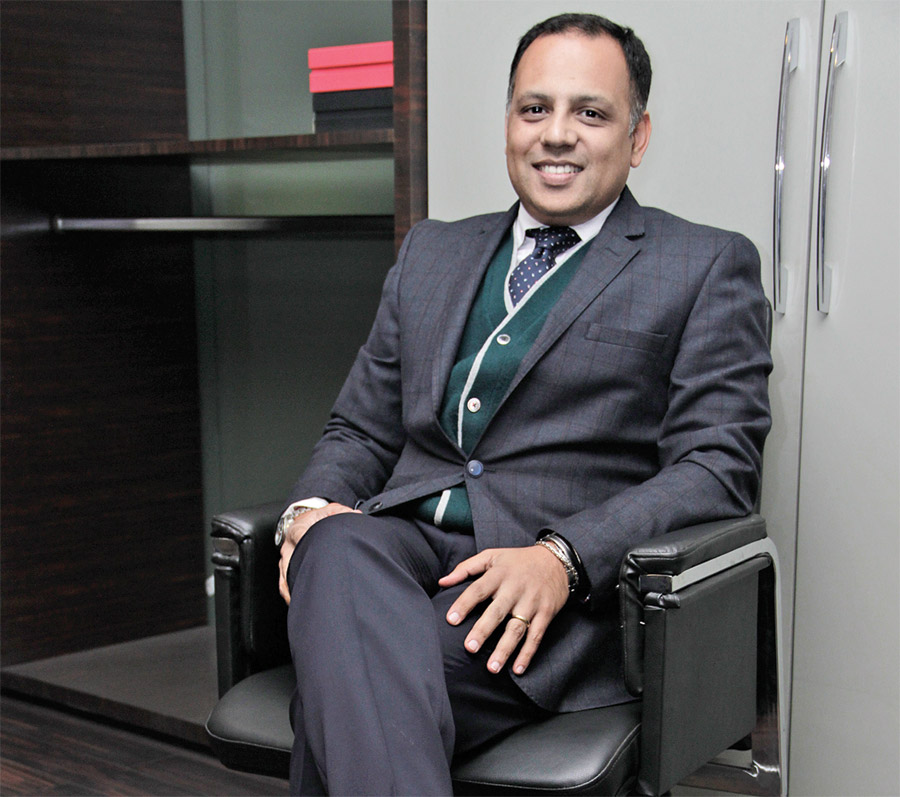
Traditionally, Ludhiana is not known for fashion accessories, especially high-end scarves and there are very few exporters of the same, yet Shingora Textiles has created an identity for scarves just because of its continuous product innovation as PD is the lifeline of the company. Having good business in the export arena, it is moving fast in the domestic front also. The company has recently developed a printed wool fabric for womenswear, which is normally found with Swiss/Italian companies. Trials are in progress and by next winter season it will be in the market; initially for export market and later for domestic. “We are focused and specialize more in design inputs, we don’t want to get into mass volume fabrics, but we do want to be present in very specialized areas, so we are trying to get into this kind of fabrics,” shares Amit Jain, second generation of the business and President of the company. In the meanwhile, Shingora has applied for a patent for indigo dyeing in wool as Amit claims that his company is the first one to dye wool in indigo, one more company has done it but in a very different way/process. In the domestic market, Shingora is engaged with Rajesh Partap Singh for luxury line of scarves in association with Italian designers.

Passionate about PD, Amit says, “For me, PD is about fundamental changes in products. We have changed the construction of fabrics and now we are using single ply warp and single ply weft. Earlier, there was two-ply warp and single ply weft. With this change, the weight of the fabric has drastically reduced and the feel is also very nice and soft. It proved cost-effective also. In terms of printing, we are using digital printing in very innovative ways. We are printing up to 26 colours in a screen. We are using blends like wool, cotton, modal, silk, and linen in a single fabric and in a single product to add value to the customer.”
Not only the medium level companies, but even giants of Ludhiana having professional culture and systems are working on set parameters to achieve goals. Among them, SEL Manufacturing Company Limited having capacity of 12 million pieces per year (mainly Tees) totally for export is not working with big retailers like GAP or Walmart at present as a part of a well laid-out strategy, but has instead built a client base of local brands, large regional retailers and wholesalers with a wide network of clients. Exporting mainly to US, Russia, Dubai, and Middle East, VK Goyal, ED & CEO of the company shares, “For the time being, we want our business to be less complex; therefore, at present, we don’t work with the giants, who have more elaborated and complex demands. However, going forward, we shall certainly plan to work with giant retailers like Walmart, Target, Tommy Hilfiger, Lacoste, UCB, GAP, etc., to name a few, and many others across the globe. Though, we can certainly deal with the complexities but that has a higher cost and you have to spend larger share of limited and expensive management time. Lower level of complexity is our strength, as garmenting in itself is a complex business.” He also adds that capacity and integration is SEL’s strength which allows them to deliver fast, offer consistent quality and do everything in-house with complete commitment.
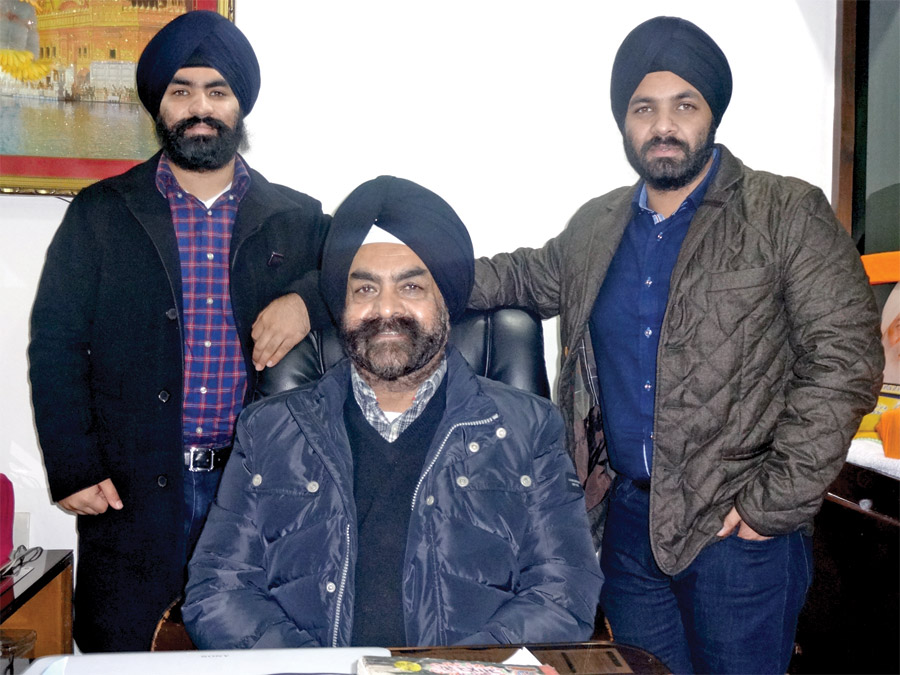
Known for quick decision making, SEL is continuously growing in garmenting at the growth rate of 15-20 per cent from the last few years and is sure of at least same growth rate over the next few years as Goyal has noticed increasing buyer inclination towards India, even those who were working with both China as well as India. “No doubt, Bangladesh is doing well but there is a limit for Bangladesh to grow as it is not such a large country which can produce and do clothing for the whole world. After all there is space for everyone. The major share has to move out of China and that is happening already. Bangladesh will also be a beneficiary of the same,” he adds.
Though the recent quarter was not as healthy as it should have been for the company; the garmenting section continued to do well, according to Goyal. Reason for the company’s slow growth rate was primarily because of the financial stringency. However, the company is already in the process of overcoming major difficulties and is confident of continuing its journey of growth. We have utilized adversity to consolidate our business and make significant improvements throughout the organization.” he concluded.