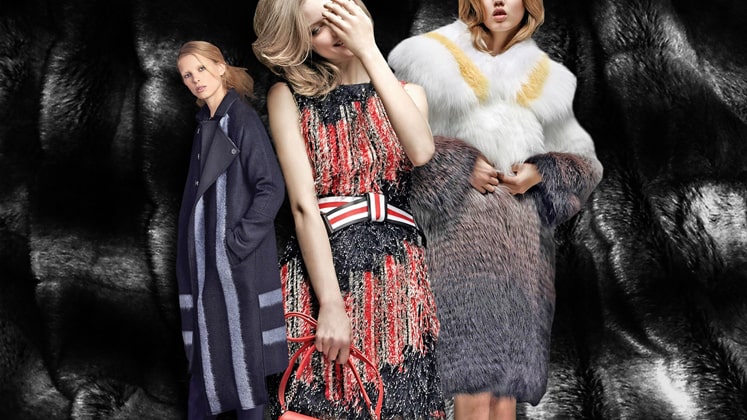
After the boycott of natural fur from the global fashion scene, designers have come out with alternatives to fur, as it has always been a fascinating value addition for luxury clothing. In the fall of 2015, reflecting both the consumers and designers increasing environment and ecological awareness, there was a noticeable movement towards eco-design development, and glimpses of fur like tactile surfaces on the runways are pointing towards usage of faux fur and similar 3D surface creation techniques. With the growing presence and demand for these ‘fur-like’ value additions, exporters, designers and service providers are developing distinctive substitutes which not only look luxurious, but are also durable and low on cost…
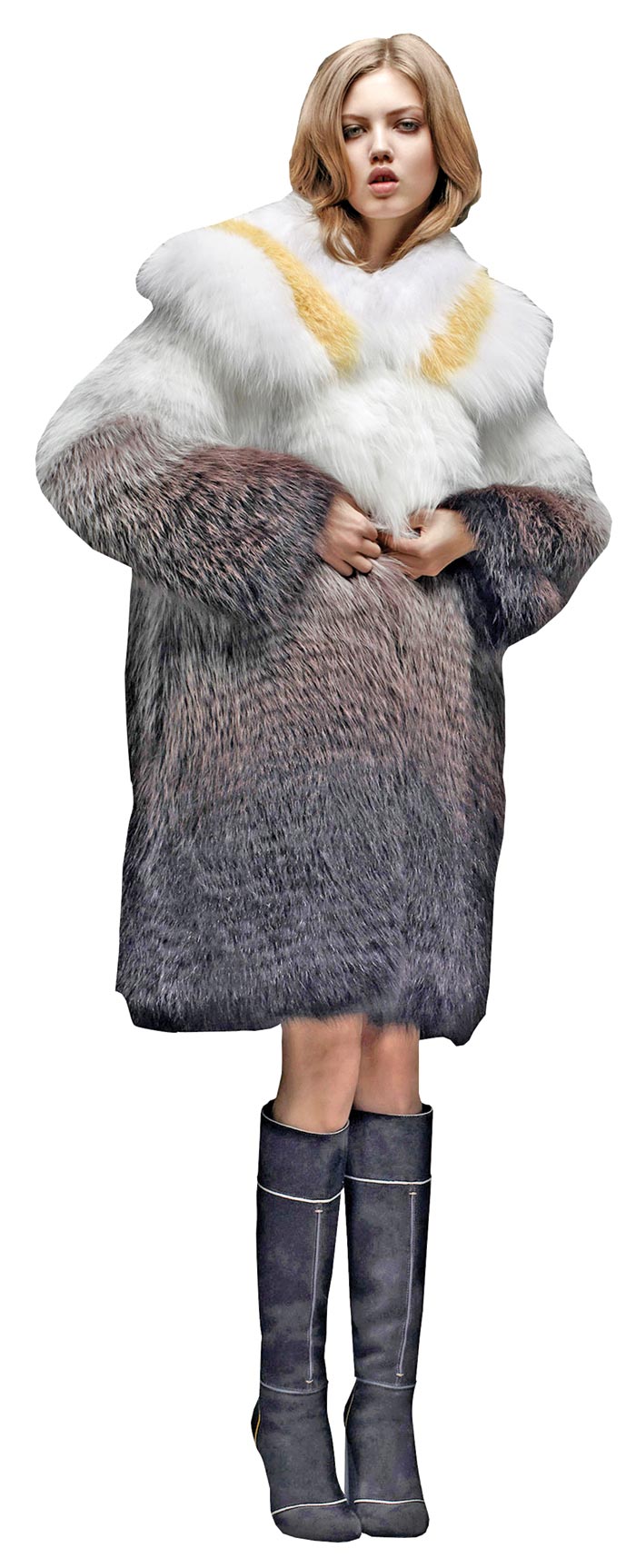
Fur had been a constant in fashion, as for some people it signifies the true essence of luxury. But as the users and makers faced the reality that such luxury was coming at the expense of animal cruelty, fur was no longer a part of designers’ collections. In the quest of not killing a living creature to adorn an outfit with fur, but also feeding the fascination for luxury that it represents, a wide range of on-trend faux fur has hit the market right on spot. Manipulating and involving techniques of fibre fusing, flocking and knitting, service providers have been able to create a similar fur-like effect to feed the growing demands of fur users. Noticed visibly on the runways of the recently concluded Pre-Fall ’15 and ongoing Fall ’15 RTW runways, designers exploited the resources available to them in the best possible way to create a never seen before fur-effect. The motive is not to create one solid colour 3D fur surface, but to provide a new character to it by using multi-faceted techniques.
Fendi projecting out the plush and warmth, showcased flapper dress in silk fibre tattered to look like fur. Built with the most basic fabric knitting technique, the designer intentionally made use of the pigtail yarns with bigger tentacle lengths to create a dense fur look. Making use of the tufting technique, majorly used in making of carpets, Marni added tufted faux fur sleeves and front panels to its wide variety of jackets. Elaborating on the growing demand of patterned synthetic fur, Sahil Singh, Managing Director, Sahib Synthetics, manufacturer and supplier of artificial fur, said, “With the preference of the wearer changing season on season, everybody is looking at options which are low on cost and high on surface value. With solid fur becoming a thing of the past now, people are moving more towards pattered variations, be it dyed colour variations, pile height differences, or printed versions. Today, the trend is more about creating a tactile surface without being uninteresting and dull.”
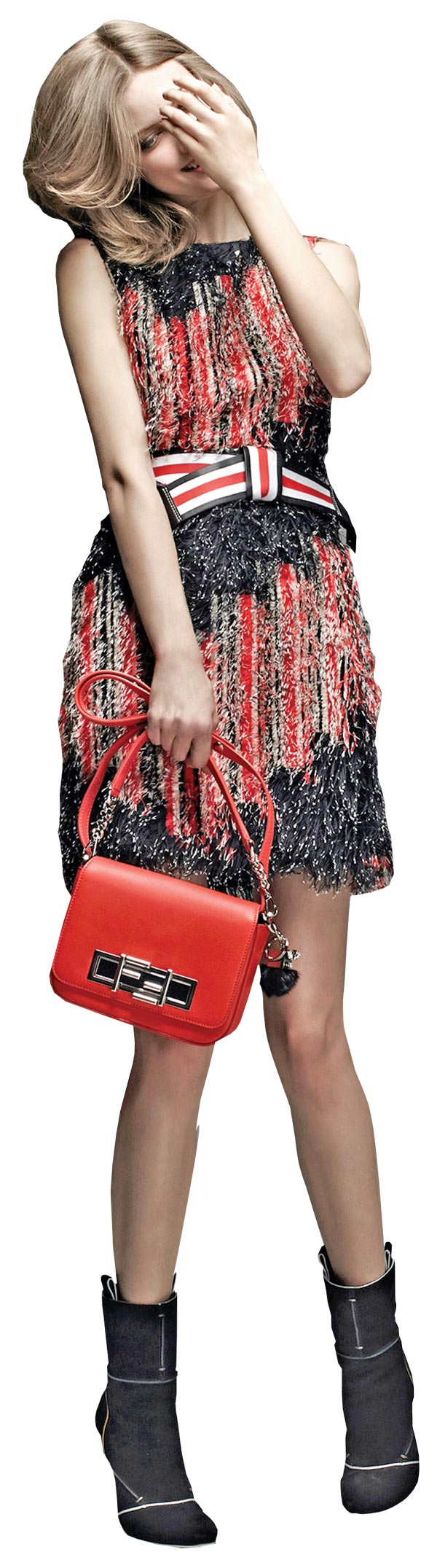
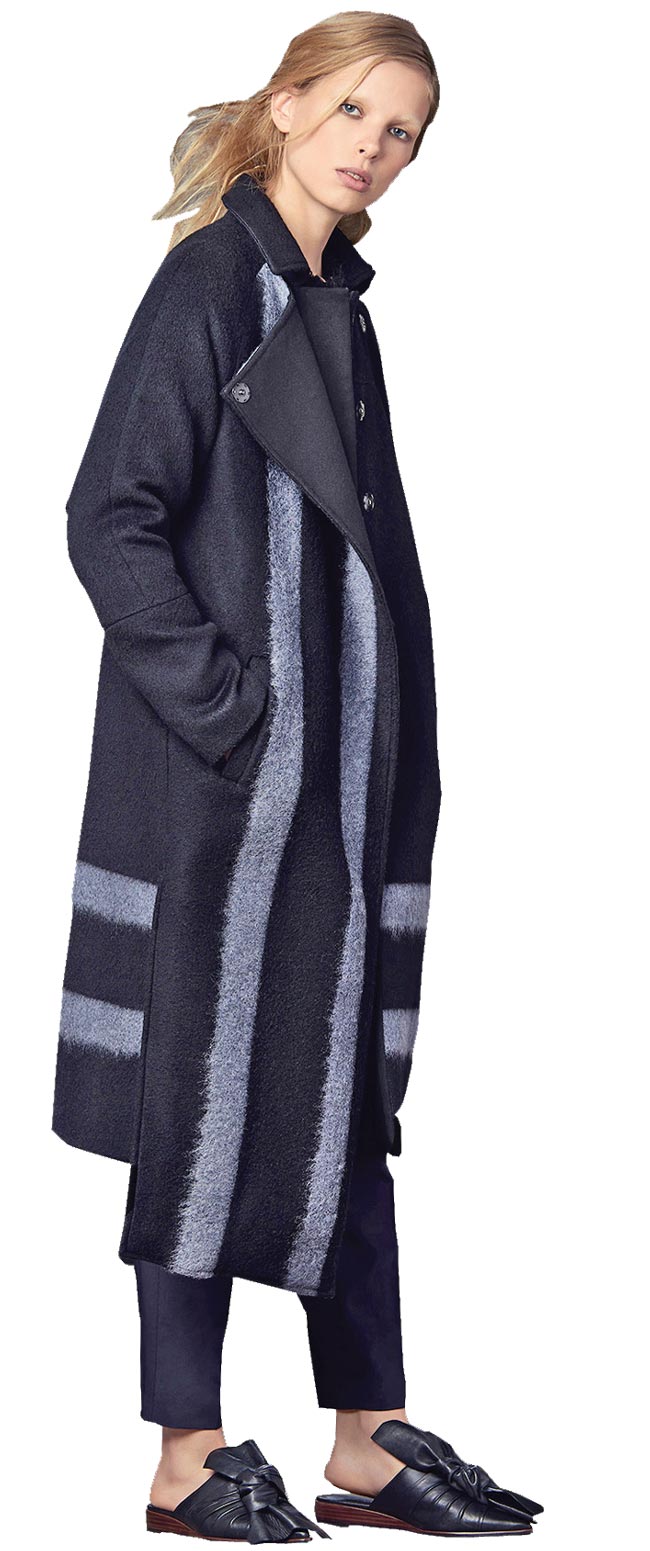
Other than the tufted, woven or knitted adaptations, flock printing is also a technique which can be manoeuvred to give fur-like value addition at few places, avoiding the all-over effect. Marni adorned its long sleek tailored coats with gun metal grey shinny fur fibres on the pockets, whereas, Tibi was seen flaunting the art of flock printing on its jackets in sparsely placed thick stripes. Fendi also tried to give its overcoat a third dimension by playing with the fur and no-fur effect. The overcoat witnessed stripes of varying widths of printed fur.
The demand for flock printing has also seen a gradual increase in comparison to last few seasons. Witnessed as a very form-oriented technique on the runways of A/W ’14, flocking in A/W ’15 is more about giving a 3D feel. Nylon amongst other short filament fibres is the most demanded flock fibre on account of its better quality and shiny properties. Viscose flock is mostly used in the domestic market because of its cheaper cost but the flock tends to flatten after a few washes. The output may look soft and fragile but is actually quite durable and does not fade. With qualities like high colour and washing fastness, flock printing has become one of the most important techniques to achieve the fur-like tactile effect.
Jay Prakash Tosniwal, Director, Gujarat Flotex Pvt. Ltd., manufacturer and exporter of flock printed fabrics with two lines of fully automated machines of roll to roll flocking, affirms, “The quality of the flock depends on the kind of flock and adhesive used. By using a good quality flock and adhesive, very good washing fastness, rub fastness and colour fastness can be achieved. “The diameter of the individual flock strand is only a few thousandths of a centimetre, and ranges in length from 0.25 mm to 10 mm. With such varying lengths coming into place, pile height differences can be easily created in a single go on the same machine. Corroborating with the same, K. Muthusamy, Proprietor, Sindhu Tex Prints/Marvel Flock Printer, manufacturer and exporter of flocked fabrics informs, “Different types of flock printing facilities like one colour, two colours, multi colours going up to eight colours, flock on flock, etc. are very popular on various types of fabrics like cotton, polyester, silks, be it solid or printed.” An inference can be easily drawn from this that multi-colour patterns are sure to be created through this technique with fabulous durability and fastness properties.
Another technique to achieve a high on trend fur surface is digitally printed artificial fur. Though companies are already making use of fibre dyeing processes to create varied patterns and colour differences but digital printing will provide a more refined approach to patterns on the faux fur. Companies like A.T.E. Enterprises Private Limited and Cheran Machines India Pvt. Ltd. offer heat transfer presses and digital fusing machines designed for flocking through transfer paper techniques. Discussing about Zimmer’s digital printing systems for textiles and carpets, Smeesh Koul, Marketing Manager, A.T.E. Enterprises Private Limited shared, “In the case of carpet/bathmat/fur fabric digital printing system, Zimmer Austria offers the ChromoJET digital printing machine series. This is a unique printing system suitable for medium to heavy substrates mainly for carpets, rugs, and other pile fabrics with no limitation of design repeat up to the commonly used 16/24 colours.”
True, fashion is an expensive business, and fur is that kind of a segment which has not been explored to the fullest as yet, therefore designers find aid under the wide umbrella of technology to bring their aspirations and dreams into reality.