 The timeless story of denim has continued from year to year and season to season, with innovations that are hard to count and possibilities that are limitless to imagine. The business of denim is complex and undoubtedly a huge one as there are 500 denim mills across the world, 450 denim mills in Asia alone creating denim fabrics to keep inspirations alive. From runways to retail, denim is a staple which is hard to replace, but ironically it also needs constant reinventions to remain a favourite fashion item…
The denim jeans market around the world is highly consolidated, with an average denim buyer spending anywhere from US $ 34 to US $ 1,000 per pair of jeans today. It is a challenge for the manufacturers and brands to keep pace with their market segment while meeting aspirational requirements. Runways are no doubt a source of inspiration and all market segments keep a close watch on what new to incorporate, but not every segment is as experimental and adventurous when following trends.
Interestingly, in the category of designer brands, the more expensive a brand, the more risks the retailer is willing to take, knowing that their end-users will wear his/her denim as a lifestyle product and will treat it with equal importance as their couture gowns. Designer brands like, Jean Paul Gaultier, Dolce & Gabbana, Trussardi, Alberta Ferretti, Dsquared and Gucci have over the years worked closely with technology suppliers and the mills to interpret their ideas into reality, giving ideas that are ‘out of the box’.
But even despite the apparent success of designer jeans, with celebrities endorsing styles, when it comes to market share of this segment, they have not been successful in capturing a sizable chunk of the jeans market. It’s very evident that there is more to jeans than just innovation and brands like Diesel, True Religion, Guess, Pepe Jeans, Tommy Hilfiger are among the top 10 best selling denim in the world, their design methodology is classic and the risks they take in creating innovation are much lesser, working within a price constraint to suit their market positioning. These are the brands that follow trends set by the designers most closely… good quality of denim with differential weaves, varied and multiple finishes on single garment and classic cuts and fits are the niche of these brands. Value additions used are also more expensive like Swarovski. The designer and high-end denim brands together account for about 15% of market share globally, with designers share being a mere 2%.
Following closely are the medium-end denim brands or the ‘power middle’ as they are called, which account for 20% of market share. The brands operating in this segment like, Zara, Mango, Lee Wrangler, American Eagle Outfitters, Old Navy cost anywhere around an average US $ 32 to US $ 90, and are mostly seen with surface ornamentation and wider use of metallic studs and local crystals. These brands experiment with different silhouettes and play of washes, which are already in use. Offering a product which cost less, they offer more styles, follow runway trends at affordable prices, and also have a more loyal customer base at the moment.
Even though brands have a huge range, denim is also one of the most democratic forms of clothing with something for every pocket. While brands like Primark, Target, H&M, Walmart cost anywhere around an average US $ 10 to US $ 25, some other lower brands are even taking it down to US $ 10. Around 2.8 billion pairs of basic jeans are sold worldwide annually and to handle that kind of quantity, these brands do not feel the need to invest on trends as already they are following the established brands. These jeans are used mostly for daily wear with little variation in presentation and also include what are commonly termed as five-pocket jeans with basic washes. With high quantities, controlling and handling very experimental designs becomes very difficult and the focus is on basic manufacturing, packaging, shipping, warehousing, etc. Accounting for over 65% of market share, this segment is majorly produced in Asia.
Trends on the runway to watch for in retail…
Once again flowing into the S/S 2015 season and beyond, the looks come with a fair amount of value addition, making it an incredibly fun and adventurous time for denim, as there is a jeans, a jacket, a skirt and a shirt…
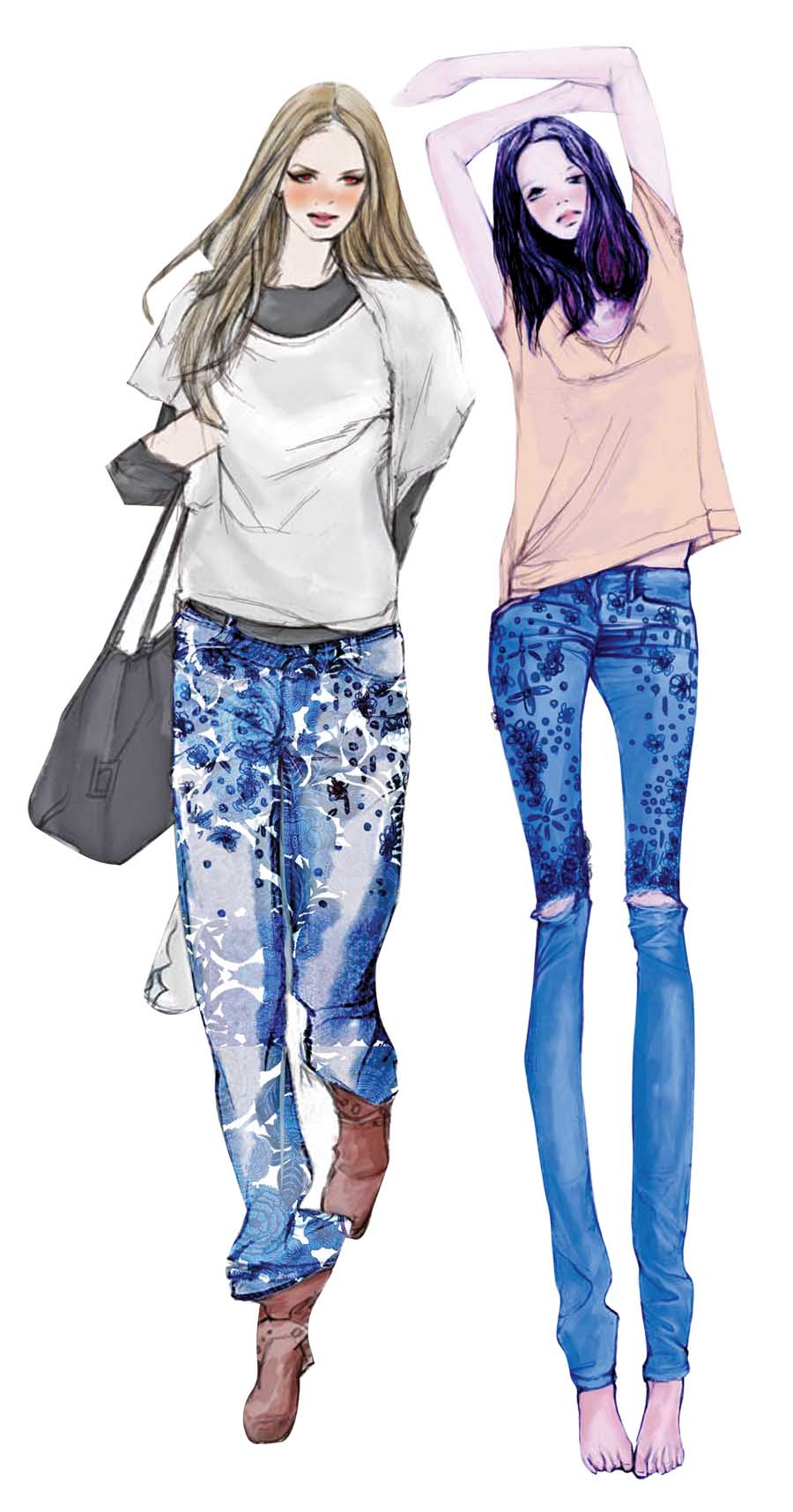
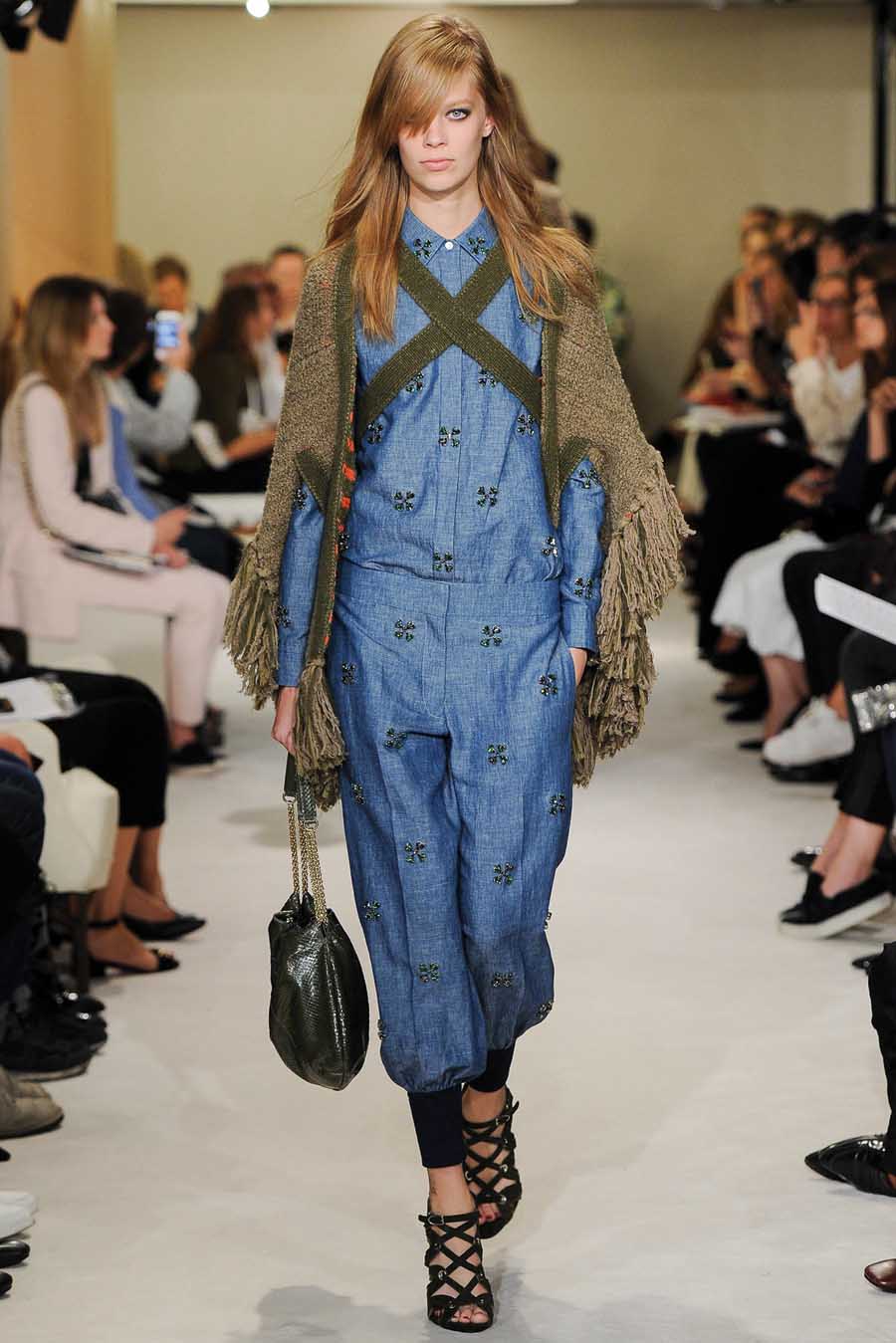
This season Blue Denim grabbed some serious attention as it transformed from a casual daily wear fabric to be used by designers to create trendy high fashion garments adorned by power giants. An extensive line of indigo essentials walked down the recent runways, ranging creatively from shredded to dark-wash, low-slung to high-waist, and even patched or bedazzled, washed, raw, straight or slim. Denim was re-imagined and given some street styling by the Italians as denim was brought back with a relaxed fit. The runways featured denim pants that were cropped and wide legged. Many were paired with lace panels, floral detailing and even rhinestones. Armani created cropped cuffs that were finished with tailored jackets. Even Karl Lagerfeld recognized women’s demand for denim and created a Jodhpur type style that were cropped at the calf.
This season Blue Denim grabbed some serious attention as it transformed from a casual daily wear fabric to be used by designers to create trendy high fashion garments adorned by power giants. An extensive line of indigo essentials walked down the recent runways, ranging creatively from shredded to dark-wash, low-slung to high-waist, and even patched or bedazzled, washed, raw, straight or slim.
Not only as bold and beautiful denim separates, but also as all over denim looks, the look reigned the catwalks further. Fendi used the fabric in a head to toe look: super casual with denim polo tee, draw-waist jeans and Mandarin collared jacket. Bottega Veneta didn’t sway from their feminine message in their use of denim – their raw edged denim dresses were sequined and embellished. Chloé went for the shirt dresses and maxi skirts look and the final indication for the denim industry came from haute couture designer Valentino who decidedly dressed his models in denim culottes paired with indigo uppers.
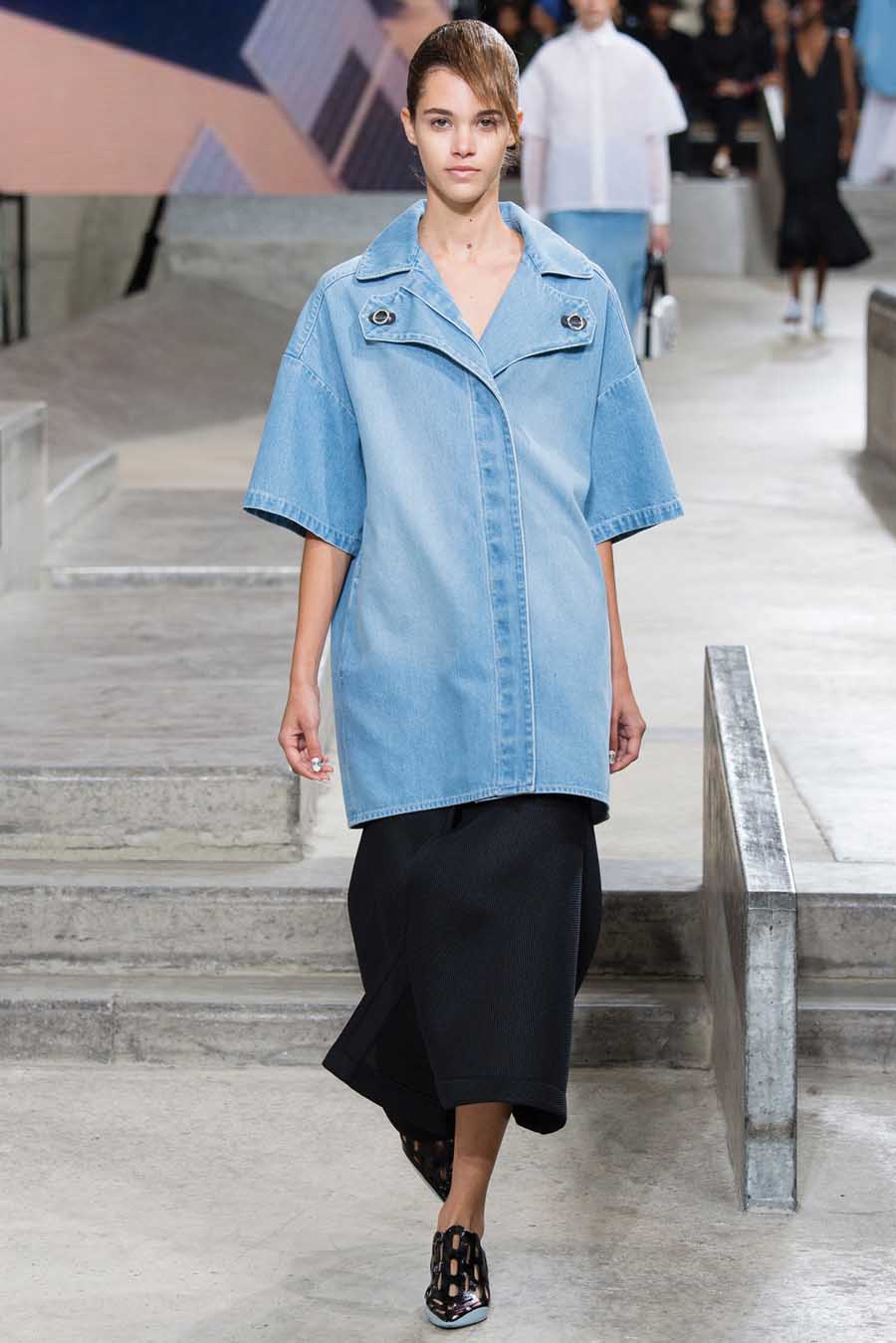
Making yet another big statement, French designers went for big, bold and confident at Vanessa Bruno and Leonard – the denims were patchworked; at Kenzo in kick pleat midi skirts and oversized, boxy outerwear; Stella McCartney chose double-on-denim with draw waisted culottes, denim shirt tucked in; Sonia Rykiel created chic outsized dungarees with the fabric and Veronique Branquinho’s floor sweeping maxi skirts signal that denim is not being used as the base of an outfit, to layer more exciting forms atop.



 Bharat Tex Special Report 2026