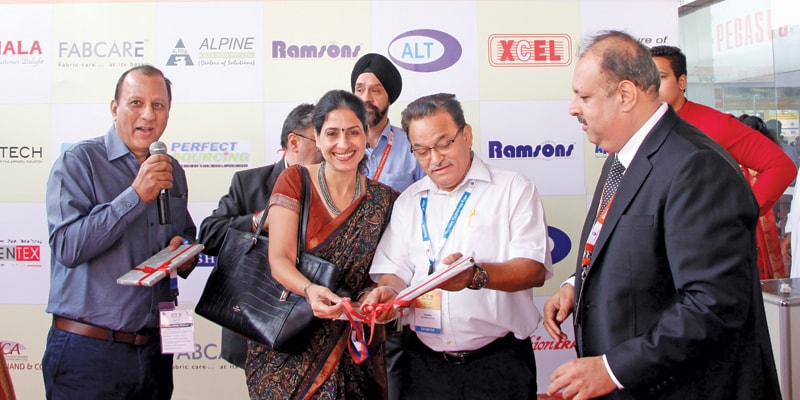
With over 400 brands displaying cutting-edge solutions for the garment manufacturing industry from IT interventions to attachments and folders, the 23rd edition of Garment Technology Expo held in Bangalore had something for everyone. Visitation came from all major garment exporters and brands that operate from the city, and exhibitors expressed satisfaction at the quality of footfall with many claiming to have received some serious enquiries.
The event featured many latest innovations in sewing, printing, embroidering, cutting rooms and washing and finishing equipment. Automation in sewing saw a new angle, with companies working towards improving mobility and offering technologies that can work from mobile phones. Companies reviewed all the technologies presented, but were selective about what to buy. “Although the exhibitors have an incredible array of options, and we explore all innovations, we select technology on the basis of what we will use,” stated Sanjeev Makhija of Golden Seam.
Bangalore, the hub known for trousers and shirts manufacturing, has seen an increase in the number of companies investing in knit production capabilities of late which was evident on the displays. “I showed machines for jeans manufacturing and knits because these are the two major categories that are on an uprise currently,” said Anil Anand, MD, HCA.
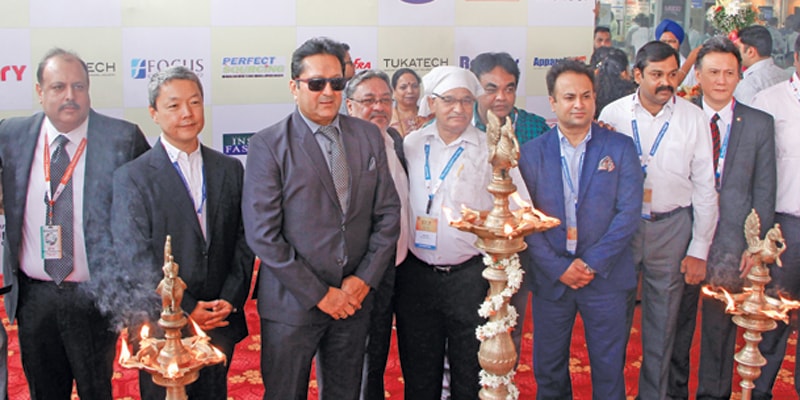
Teams from ITC, Texport Industries, Madura, were among the prominent once seen at some booths, though this is just the tip of a long and impressive list of visitors. “It is very important for people managing factories to visit such events and review the options in the market,” stated Lal Sudhakaran, Madura Garments. However, this does not mean the owner-level visitation was missing at the expo. Right from Indian Designs, Golden Seams, Gokaldas Images (from Bangalore) to Sree Santhosh Garments, Tirupur and Global Mode and Accessories, Delhi were represented by their owners, creating quite a buzz among the technology suppliers.
The purchasing team from Global Mode and Accessories Pvt. Ltd. along with the owner, Aman Mehra and Project Manager, Arun Sahu grabbed attention as the Delhi-based exporter, considered one of the biggest manufacturers for H&M, is setting up a factory in the Binary Apparel Park in Karnataka. The team was scouting for relevant technology and took great interest in the seam sealing technology of H&H. “The team showed interest in the seam sealing technology as they want to upscale their offerings, and we are hopeful that the interest will be converted into sales,” said Anshuman Dash, MD of Loiva Intech representing H&H brand in India.
The Morgan team was ecstatic to see Naseer Humayun, MD, Indian Designs at the show. The company had already shown interest in their cutting systems and it was an opportunity to take the discussion forward. “For the new factory we are putting up at Hindupur in Andhra Pradesh, we want to invest in best of technology, as per the philosophy of the company and investing in a computerized cutting solution makes sense,” said Ravi Kumar, CEO, Indian Designs. India Designs is considered among the fastest expanding companies in India and the technology providers were happy to see him at the expo.
Though most of the companies represent international brands, one company that stands out as a true representative of the ‘Make in India’ movement is Krishna Lamicoat. The company is known for its cutting room accessories like specialty papers and films. The most recent addition is the sustainable film made from used packaging material, which was tested for the first time at the fair. The company has always invested in R&D and is today exporting their products to many countries. “We are expanding our factory and adding capacity as the cutting room in manufacturing units is getting more automated, and many factories who earlier considered cutting solutions as mere ‘cost’ to the company, are now realizing the actual saving they are making on fabric. This has expanded our market,” averred Ashok Chhajer, Director, Krishna Lamicoat.
Though the event was a success, the participants did point out that due to slow market conditions many projects that were expected to seal the deal at the event did not happen…, yet the silver lining was the interest that exporters and the domestic manufacturers showed for new technologies.





 Bharat Tex Special Report 2026