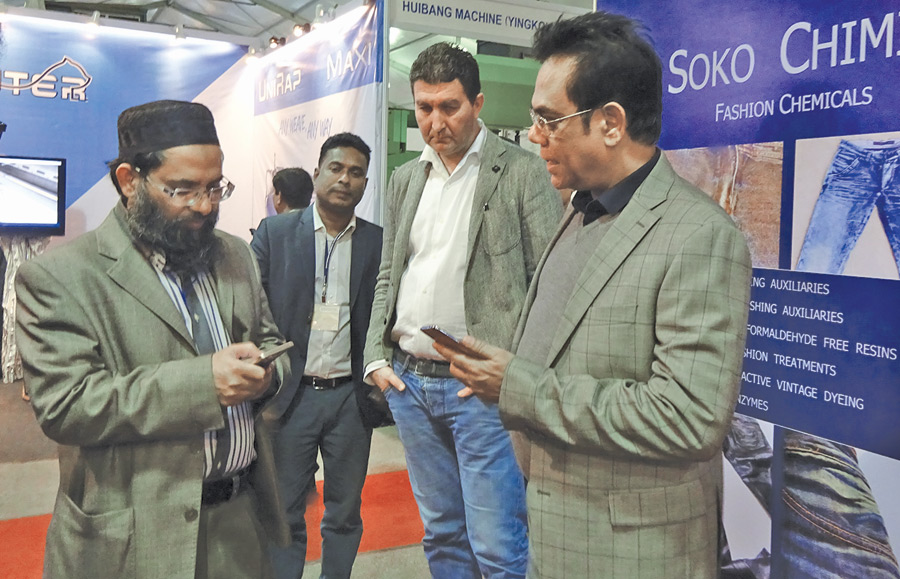
As per the data released by Bangladesh Textile Mills Association (BTMA), 0.48 million tonnes of woven fabrics and 92,577 tonnes of knitted fabrics were imported by Bangladesh in FY ’15, as against 0.45 million tonnes and 67,061 tonnes respectively in FY ’14. These statistics clearly indicate the growing demand for fabric as the industry grows, and which cannot be entirely satisfied by the local manufacturers, though spinning and weaving is a growing segment in the country. As Bangladesh gears up to realize ‘Vision 2021’ of US $ 50 billion from the current US $ 27 billion, the four-day show of Dhaka International Textile & Garment Machinery Exhibition (DTG) 2016, also veritably referred to as the ‘ITMA of Bangladesh’, lent a pulsating and critical insight into the burgeoning Bangladeshi textile industry. The months leading up to the show had already featured the mega show of ITMA in Italy where the bigwigs had made massive purchases for their expansions in textile manufacturing and processing. Yet, DTG registered over 38,000 visitors.
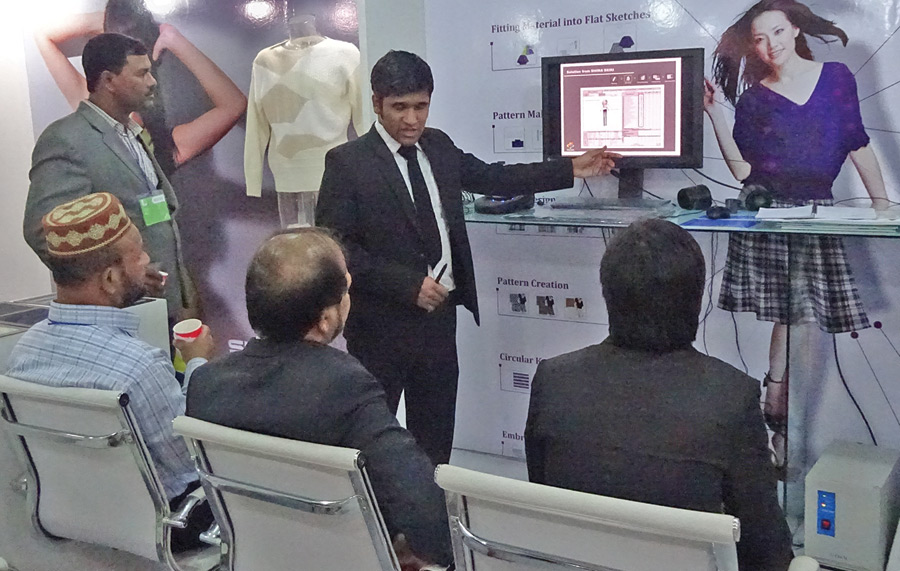
The importance of investments across the value chain have been garnering spotlight at all major congregations of the industry. The need for investment and strengthening the textile chain beyond the garmenting capacities today has become crucial for a multitude of reasons. It is also noteworthy that the Bangladeshi textile manufacturing industry has for long been dependent on imported old equipment and hence laggard techniques of textile industry. In order to achieve the goal, improving techniques and eliminating old equipment is necessary. Thus, the show not only provided the opportunity for an excellent gathering of the international suppliers to usher in new technology, state-of-the-art equipment, materials and services, but also offered an excellent avenue to the textile and apparel manufacturing industry to accelerate Bangladeshi technological advances that will impart effective quality, high speed and competitive cost to gain that all-important edge in textile and garments industry. On the other hand, at a micro-level as well as a general business dynamic, the pressure is immense on apparel manufacturers for delivering a quality product in an efficient and sustainable manner on very tight timelines thus speeding up the pace of adoption of automation in the factories and vertical integration.
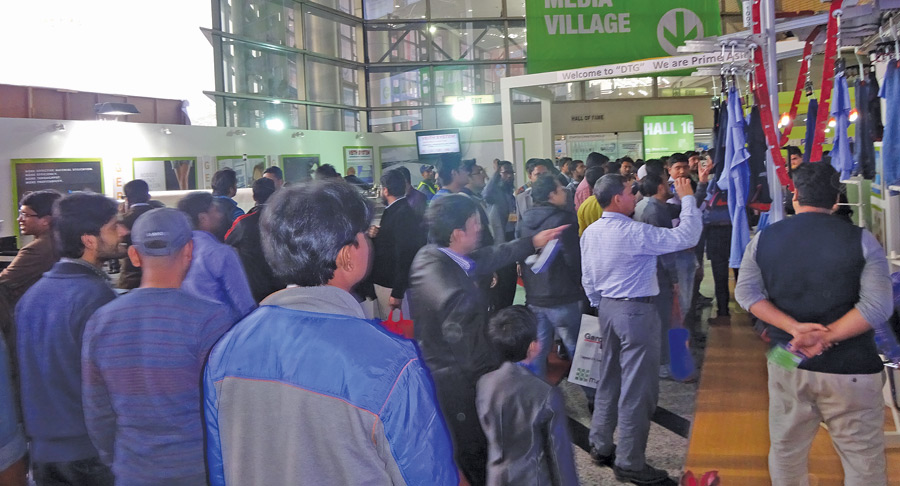
Having grown seven times in scale since its inception, the four-day event featured over 1,000 leading brands from 33 countries and regions, covering 1,160 booths.
Characteristically enough, the show featured fabric processing technologies, knitting technologies, spares & consumables, besides automation solutions for cutting room and finishing room. While Toyota was the only company that exhibited power looms, Eton was the only sewing solution provider. Today, the country has escalated to a point where most technology providers feel that making sales is not difficult; instead the challenge is that of establishing a rich pool of skilled workforce. This in addition to the age-old hurdle of difficulties in obtaining gas connections that many agree has limited the potential to which the industry could have grown.