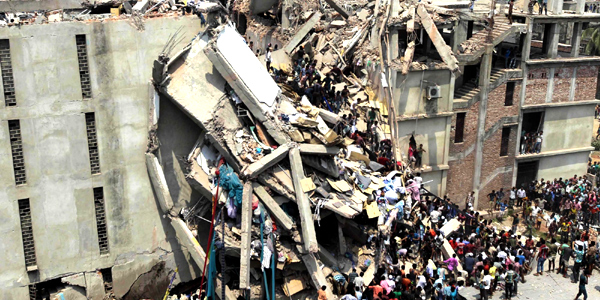
A Rajdhani Unnayan Kartripakkha (RAJUK) building inspector has been sent to jail by a Bangladeshi court, pending further legal procedures, in connection with the murder case filed in the 2013 Rana Plaza collapse case.
Also Read – Bangladesh Court orders mass arrests over Rana Plaza disaster
According to reports, RAJUK official Md Awlad Hossain, had surrendered before the court of Senior Judicial Magistrate in Dhaka earlier on Monday. He had applied for bail, which the court rejected and ruled for him to be taken to jail.
It may be mentioned here, that a Bangladeshi court had earlier ordered the arrest of 24 people and ordered seizure of their assets after they allegedly failed to turn up to face murder charges in connection with the infamous Rana Plaza tragedy that killed more than 1,100 people and sent shockwaves not only through the Bangladeshi garment industry, but all through those nations that source their products from the flourishing garment industry of Bangladesh.
According to media reports, Senior Judicial Magistrate Mohammad Al Amin had issued the warrants after the court accepted the murder charges against the 24 fugitives for the collapse in April 2013 of the Rana Plaza factory compound.
The 2013 Savar building collapse or Rana Plaza collapse was a structural failure that occurred on Wednesday, April 24, 2013, in the Savar Upazila of Dhaka, Bangladesh, where a multi -storey commercial building named Rana Plaza collapsed. The search for the dead ended on May 13, 2013. Approximately 2,515 people were injured in the accident which also claimed scores of lives, mostly workers who were from the garment manufacturing factories housed within the building.
Also Read – 73 Garment Factories Shut; Over 20,000 Workers Affected Post-Rana Plaza Incident, Says Syed Ahmed
It is considered to be the deadliest garment-factory accident in history, as well as the deadliest accidental structural failure not only in Bangladesh but the entire modern human history. The building housed clothing factories, a bank, apartments, and several shops. The shops and the bank on the lower floors immediately closed after cracks were discovered in the building. Warnings to avoid using the building had reportedly been issued after cracks started to appear the day before. But those had been ignored. Garment workers were reportedly ordered to return the following day, and the building collapsed during the morning rush-hour. The accident posed a serious question mark on the working environment of the garment workers, who are involved in Bangladesh’s thriving RMG sector.