It takes six to seven days to get the consignments released from the off-docks as compared to only two days at the port, say apparel exporters even as the Bangladesh Inland Container Depots Association (BICDA) reportedly maintained that their fees could be a bit higher but they actually perform task faster than the Chittagong Port.
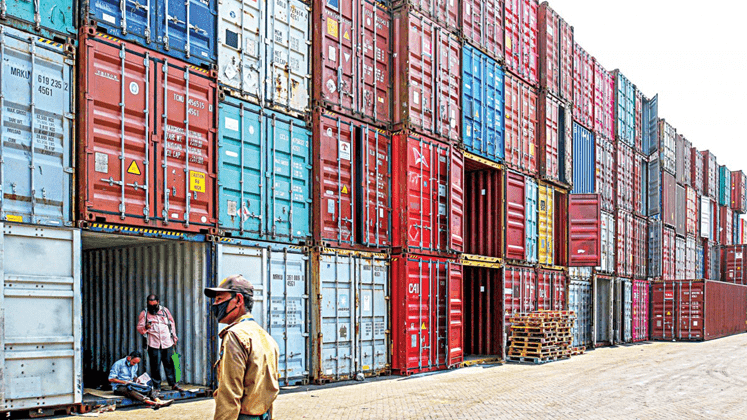
Not so long ago, the Chittagong Port Authority (CPA) took an initiative to ease container congestion at the Chittagong Port by diverting the work of handling imported apparel consignments through the privately-operated Inland Container Depots (ICDs) or what are known as off-docks. Further, related to the same, the port authorities also submitted a proposal to the country’s National Board of Revenue (NBR).
However, it was just a matter of time before the garment makers turned down the CPA’s proposal which leads one to question that when the CPA’s move was to ease the congestion, which ultimately was is in the interest of those receiving and sending shipments through the port, why are the garment makers against such an initiative.
It may be mentioned here that ships docking at Chittagong Port — Chittagong Port is the 64th busiest container port among 100 top ports across the world, according to the 2019 edition of Lloyd’s List of One Hundred Ports — reportedly dropped by around two per cent in 2020 due the COVID-19 pandemic; it nevertheless faced different problems last year, including congestion of ships in the outer anchorage, severe backlog of containers caused by slow delivery, and evacuation of jetties due to the threat of cyclones.
Handling around 98 per cent of sea containers (goods), there are around 12 jetties which are used in the loading and unloading process of the ships, but only 8 to 10 ships could be unloaded each day even as on an average, 20-30 ships every day are reportedly found waiting in the outer harbour for anchoring in the jetties during the normal time.
Now as to the proposal of the CPA, the apex garment makers’ body in the country, the Bangladesh Garment Manufacturers and Exporters Association (BGMEA) President, Dr. Rubana Huq reportedly wrote a letter to the NBR underlining that apparel exporters would lose competitiveness if the NBR accepts the CPA proposal.
The garment makers complained the ICDs are charging higher fees as well as taking more time than the CPA to release their goods, and requested NBR to allow apparel exporters to use the port to get their imported consignments cleared. However, leader of the ICD operators, the Bangladesh Inland Container Depots Association (BICDA), has differed on these issues.
Though they admitted that their fees are a bit high, they, however, denied having taken longer time to release the imported consignments. On the contrary, they actually perform the task faster than the Chittagong Port, they claimed.
“The importers have to pay Taka 4,140 for taking delivery of a twenty-foot equivalent unit (TEU) of container from the port while it is Taka 7,300 in the case of the private ICDs,” explained Mohammad Rahul Amin Sikder, Secretary General of the Bangladesh Inland Container Depots Association (BICDA) while underlining that as per the Time Release Study (TRS) conducted by the World Bank (WB), the release of goods took 11 days on an average in 2017-18 at the Chittagong Port.
If the time even came down to nine days in 2019, it is still higher than that of the off-docks as it takes only four days here, claimed Mohammad Rahul Amin Sikder adding the private operators usually try to provide speedy services to stay competitive even as BICDA President Nurul Qayyum Khan said there is a misconception about these issues as the Government has offered the exporters options to choose either private ICDs or the port to release their goods and went on to add that it takes four days to release imported goods from the private ICDs and added that huge investment in the private ICDs was under threat and the investors are struggling to survive.
The private ICD operators — there are a total of 18 private ICDs delivering only 23 per cent of the FCL containers while 10 per cent are delivered at the consignees’ premises and the remaining containers are delivered from the port premises — argued that all FCL (Full Container Load) containers at all ports of the developed countries are released from the off-docks.
Meanwhile, speaking to the media, BGMEA Vice-President A.M Chowdhury Selim reportedly said the private ICDs charge some undue fees beyond the law and added that the RMG exporters cannot bear the additional charges as they have to stay competitive in the international market.
Now if reports are to be believed, both sides seem to have put forth some valid points in their arguments.
As to the increased charges for handling consignments, one has to also take into account the crisis the apparel makers are going through. Due to the pandemic, especially in Europe and North America, the business of export-oriented apparel sector is facing extraordinary challenges even as many export destinations are under lockdowns and restrictions to combat the second wave of the pandemic while a new, more contagious variant of the COVID-19 virus has further compounded the problem.
The BGMEA thus in its letter to the NBR, rightly underlined that supply order worth US$ 3.18 billion of garment products has been cancelled or suspended by international buyers due to the pandemic and understandably so in such a scenario to remain competitive, they would naturally want to reduce the cost of doing business; hence it goes without saying apparel exporters are somewhat sensitive about the higher container handling fees that they allege the private ICD operators are asking from them.
According to reports, even if the private ICDs have been barred from handling imported apparel items, the off-docks were allowed to deliver all goods, including those belonging to the apparel exporters, from 24 April to 14 June last year to ease the then congestion at the port while on 1st December last, the CPA recommended increasing the number of items to be released from the off-docks and gradually bringing all imported items under the scheme to reduce the container congestion at the Chittagong Port.
However, the exporters also alleged that the lack of space, equipment and labour force in the private ICDs is causing delays in handling the goods.
“It’s not possible to take delivery of the consignments from the off-docks at this moment of crisis due to additional charges and time,” reportedly maintained the BGMEA President even as under the given circumstances, the exporters requested the NBR to allow continuing with the existing facilities of releasing the import consignments from Chittagong Port to reduce the cost of exports and help the sector survive.
Meanwhile, as per reports, the continuing problem of container congestion at the Chittagong Port is not reportedly expected to ease at least until the Patenga container terminal — the terminal will have three container jetties and one dolphin jetty — becomes operational by next year even as the port authorities, utilising experiences of the global epidemic are ready to face the challenges of the New Year (2021), and as part of which, the port authorities are emphasising on new infrastructure, construction of jetties, terminals, automation and digitisation in official and operational activities, etc., so as to increase capacities to efficiently handle the country’s growing import-export pressures while also facilitate transit of goods to neighbouring countries like India, Nepal and Bhutan as well.
Now, from the perspective of the ICD, during the economic shut down when export-import came to a near standstill, akin to the garment exporters, ICD operators also reportedly suffered significant losses and there have been concerns about the risks they are reportedly facing subsequent to making sizeable investments in the cargo handling business.
So, even as both parties seem to have their own concerns to deal with, a mutually-acceptable solution, one would agree, nevertheless can always be reached through dialogue and discussion, which would be in interest of all.




 Bharat Tex Special Report 2026