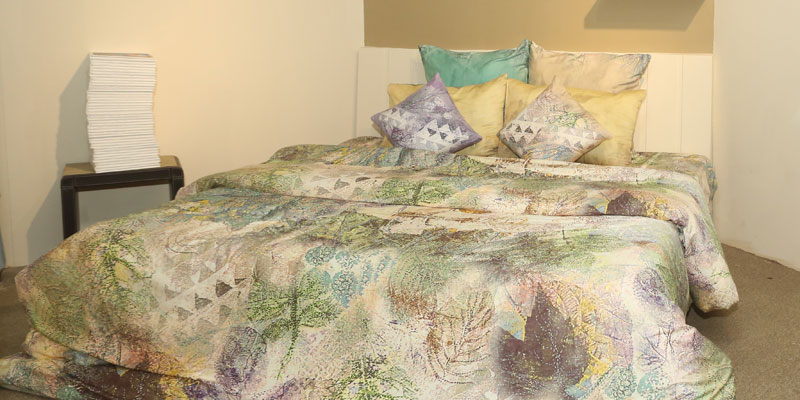
 The Union Cabinet chaired by the Prime Minister Narendra Modi has given its approval to the reforms to boost employment generation and exports in the Made-ups (home furnishing) Sector which includes simplified labour laws and technology upgradation within the special package of Rs. 6006 crore, announced by Government in June 2016. The interventions are expected to boost employment in the textile sector and create employment for up to eleven lakh persons, lead to increase in exports and enhance benefits to the workers in the textile and apparel sector.
Post the approval, Smriti Irani, Cabinet Minister of Textiles tweeted that capital investment subsidy rate for made-ups units has been increased to 25% with value cap revised to Rs. 50 crore. With the renewed financial support, exports in made-ups sector are expected to increase by US $ 2.8 billion over the next 3 years. Currently, with US $ 4.6 billion exports, India is second after China in global made-ups exports. Increase in demand of domestic fabric production will boost growth of SMEs as they cater fabric to 70% of the Made-ups produced in the country.
Also Read – Cabinet approves Special Package for T&C industry
This package includes providing production incentive through enhanced Technology Up-gradation Fund Scheme (TUFS) subsidy of additional 10% for Made-ups similar to what is provided to garments based on the additional production and employment after a period of 3 years. Similarly, there is extension of rebate of state levies (ROSL) (for apparel) scheme to made-ups sector for enhanced duty drawback on exports of made-ups.
The approval envisages extension of Pradhan Mantri Paridhan Rozgar Protsahan Yojana (PMPRPY) Scheme (for apparel) to made-ups sector for providing additional 3.67% share of Employer’s contribution in addition to 8.33% already covered under PMRPY for all new employees enrolling in EPFO for the first three years of their employment as a special incentive to made-ups sector. As far as simplification of labour laws is concerned, it includes increasing permissible overtime up to 100 hours per quarter, making employees’ contribution to EPF optional for employees earning less than Rs 15,000 per month. Bodies like Indian Texpreneurs Federation (ITF), SIMA, FICCI, CII welcomed the move saying that it is a significant initiative for the textile industry.