Bangladesh’s imports climbed to their highest level in three years this July, reflecting a rebound in economic activity as the country gradually overcomes the dollar shortage that had earlier forced authorities to restrict foreign purchases.
According to Bangladesh Bank figures based on National Board of Revenue (NBR) data, imports stood at US $ 6.2 billion in July, a 19.5% increase from the same month in 2024. In July 2023, the value was slightly higher at US $ 6.3 billion, but volumes subsequently dropped before recovering this year.
Business leaders noted that the comparison is partly influenced by the weak base of last year, when political turmoil and anti-government protests disrupted trade and closed ports. They said the return to more normal business conditions in 2025 has supported the latest surge.
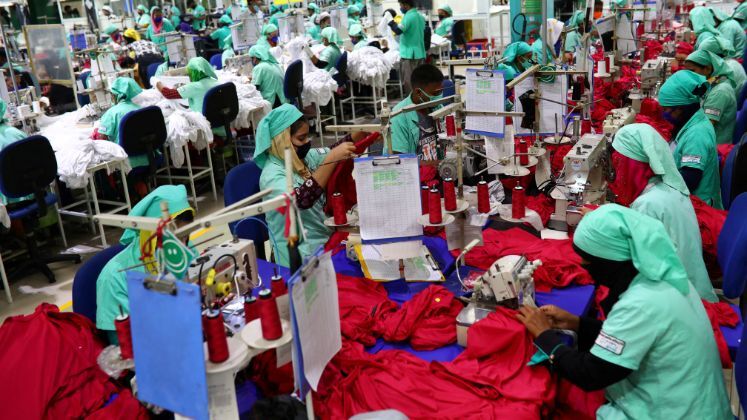
The growth was largely driven by intermediate goods, including raw materials for the garment sector, alongside iron, steel, base metals, and capital machinery.
Mahia Juned, additional managing director of City Bank PLC, explained that rising import bills are mainly tied to industrial demand, particularly for capital equipment and production inputs. She emphasised that the recent increase reflects investment and production requirements rather than consumer spending.
MCCI President Kamran T Rahman described the uptick in capital machinery imports as a positive sign of improving business confidence, but warned that the data must be interpreted carefully.
BCI President Anwar-Ul-Alam Chowdhury made similar observations, stressing that comparisons with last year exaggerate the scale of growth. He also pointed out that private investment remains sluggish, with letter of credit openings and capital machinery imports trending downward for several years.
Bank lending to businesses rose 6.52% in July, slightly higher than June, but still marking the second-weakest private sector credit growth in 18 months. Economists said the subdued pace reflects limited investment appetite despite the rebound in imports.
Former FBCCI president Mir Nasir Hossain said the revival of RMG-related imports highlights renewed momentum in the industrial sector. Intermediate goods imports rose 21% year-on-year to US $ 3.84 billion, while capital machinery imports jumped 71% to US $ 456 million. Imports of RMG inputs alone increased 10.3% to US $ 1.52 billion.
He added that some factories recently received long-delayed gas connections, enabling them to expand or resume operations, which has contributed to higher demand for inputs.
Former DCCI president Ashraf Ahmed said the data suggest weaker imports of food and other consumer items, possibly due to sustained inflation, while the rise in industrial inputs signals easing of import restrictions and recovery from last year’s political unrest.
However, he flagged a concerning shift in the textile value chain, noting that a fall in raw cotton imports alongside higher yarn imports indicates domestic spinners are losing ground to foreign competitors.





 Bharat Tex Special Report 2026