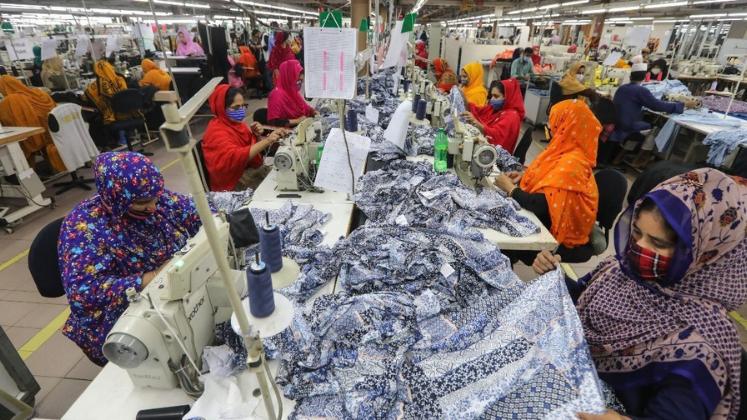
The Government intends to eliminate all of these financial benefits for exports by July 2026, which is months before the country is expected to leave the category of Least Developed Country. As a result, the ready-made clothing industry will experience a 0.5 per cent reduction in export incentives every six months.
The Finance Ministry’s strategy, which went into effect in January of this year and first reduced monetary stimulus, calls for reducing export incentives for other export-related industries by a third year until they are eliminated by July of 2026.
A variety of additional subsidies, such as up to 10 per cent power tariff waivers, exemptions from licencing fees, and a maximum 1 per cent duty on the import of capital machinery and spare parts, will make up for the lost revenue for the export sectors. The draft policy from the Commerce Ministry states that export firms will be eligible for low-interest loans as well as tax advantages for green energy and wastewater treatment plants.
Being the largest export sector, RMG enjoys most of the cash benefits that led to its spectacular rise in the last four decades and now stands to lose the most as the Bangladesh Bank has already started to implement the roadmap in January.
Currently, nearly all exporters of ready-made clothing benefit from 43 sectors’ incentives, the majority of which are in the form of financial support. According to the central bank’s circular dated 30th January, the rate for them was 4 per cent, which was later lowered to 3 per cent.
Leaders in the apparel business fear that removing cash incentives will have a negative impact and insist that the Government must implement alternatives to help the export sector remain viable and competitive after LDC graduation when duty-free access ends.
Industry analysts say the phase-out of cash support is unavoidable under the WTO rule after LDC graduation and businesses need to be ready for the reality with alternative policy supports from the Government.