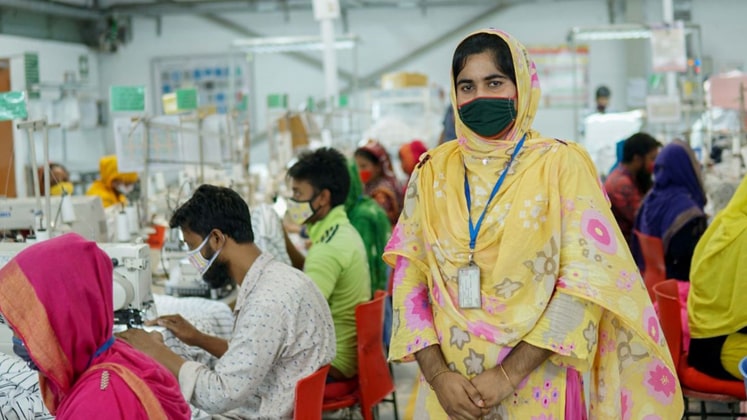
Close on heels of the United Nations Committee for Development Policy recommending Bangladesh’s graduation in its final evaluation held recently, thanks to which, Bangladesh is now qualified to graduate into a developing nation from a least developed country (LDC), experts have called upon the country (Bangladesh) to diversify its export basket while also underlining the need to pay more attention to bilateral FTAs (bilateral free trade agreements) and ditch protectionist policies.
We must increase competitiveness as much as possible, and address issues in exchange rate, ports and transport sector.
It is the Government’s duty to ensure an environment conducive to business and create market access in order to boost export, reportedly, underlined the Executive Director of Policy Research Institute (PRI), Ahsan H. Mansur while speaking to the media even as writing a column in a news daily, economist Wahiduddin Mahmud on his part maintained that after graduation, Bangladesh will get a grace period to continue availing the trade benefits and other facilities given to the LDCs under the World Trade Organisation (WTO) while adding that the country must start preparing right away to perform in a global economy without those facilities.
We need to be proactive in trade negotiations to get duty concessions bilaterally or within multi-country trade agreements, reportedly, maintained Wahiduddin while citing example of Vietnam (Vietnam has, reportedly, successfully negotiated several such trade agreements) while Director General at the Bangladesh Institute of Development Studies (BIDS) KAS Murshid highlighted the need of diversifying the export basket while also expressing hopes that the Government will help the industries with policy assistance.
“…Bangladeshi exporters have the capability to overcome temporary issues in the market,” reportedly, stated KAS Murshid, adding, “I don’t think RMG is the only force in our economy. We have many other promising sectors.”





 Bharat Tex Special Report 2026