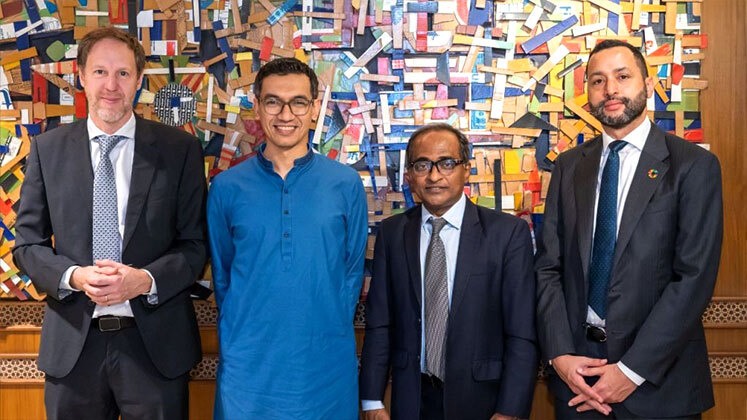
The Bangladesh Investment Development Authority (BIDA), the Ministry of Commerce, the International Labour Organization (ILO) and the United Nations Development Programme (UNDP) have jointly launched the Resilient Supply Chains for Sustainable Trade and Investments Platform in Dhaka, marking a major step in strengthening the country’s trade competitiveness ahead of its graduation from Least Developed Country (LDC) status.
According to a BIDA delegation, the platform will prioritise supply chain growth, policy consistency and stronger public–private partnerships. It is designed to serve as a central forum for policy dialogue, capacity building and knowledge exchange, forming part of Bangladesh’s wider efforts to ensure a smooth and competitive entry into global markets post-LDC graduation.
Lutfey Siddiqi, the Chief Adviser’s Special Envoy on International Affairs, said the country’s upcoming LDC graduation presents an opportunity to redefine its competitive edge. He stressed that the transition must be built on “value, skills, quality and fairness,” and noted that the platform would convene government, industry and development partners to guide the next phase of economic growth with greater sustainability and dignity.
BIDA Executive Chairman Chowdhury Ashik Mahmud Bin Harun underlined the need for a clear strategy and accountability framework, saying the aim is measurable progress rather than prolonged discussion. He remarked that “by the end of 2026, we know exactly where we stand,” adding that global value chains increasingly demand higher labour standards, compliance and transparency.
Mahbubur Rahman, Commerce Secretary at BIDA, said Bangladesh is moving ahead with regulatory reforms and aligning trade and investment policies with international norms as it prepares for LDC graduation in November 2026. He stated that the government’s goal is to create a more resilient and competitive environment for domestic and foreign investment, ensuring sustainable growth and decent work for all.
ILO Country Director Max Tuñón highlighted the vital role of workers and entrepreneurs in shaping Bangladesh’s economic progress, while UNDP Bangladesh Resident Representative Stefan Liller said the new platform would act as a collaborative hub linking trade, investment and manufacturing with social and environmental safeguards.
The launch comes amid growing recognition that stronger supply chain resilience and transparency are essential for sustaining export competitiveness in an evolving global marketplace.