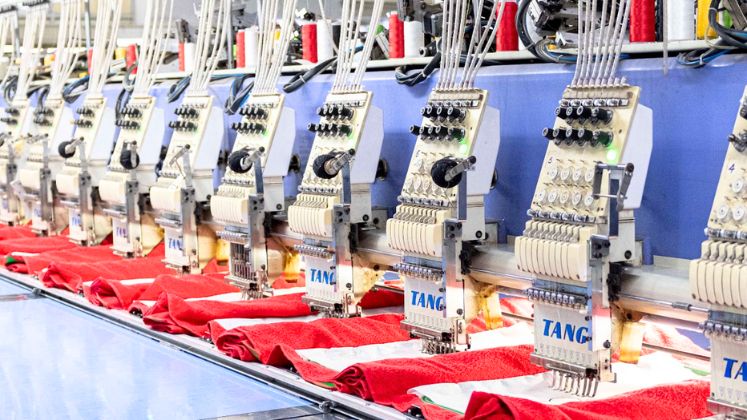
Bangladeshi entrepreneurs are facing significant challenges as the import of capital machinery for industries, including the vital Ready-Made Garment (RMG) sector, has dropped in the wake of ongoing dollar shortages and political instability. A recent report from the Central Bank highlights a concerning trend in imports from July to November of the current fiscal year (2024-25).
During this period, letters of credit (LCs) worth US $ 712.6 million were opened for capital machinery imports, marking a 26.45 per cent decline from US $ 968.9 million in the same timeframe last year. The credit settlement for capital equipment also saw a significant decrease, falling to US $ 864.7 million from US $ 1.1073 billion in the previous year. This decline signals a slowdown in new initiatives for setting up industries and expanding businesses, particularly in the crucial RMG sector, which relies heavily on modern machinery for production efficiency.
Industry insiders attribute this stagnation in investment to the prevailing political uncertainty and a lack of confidence among entrepreneurs. “After the political change, no one is making new investments,” said a representative from the sector. The ongoing dollar crisis and inflation, which remains around 10 per cent—well above the levels seen in many other countries post-Russia-Ukraine conflict—are compounding these issues.
In addition to capital machinery, the report also indicates a reduction in LCs for industrial intermediate goods. In the first five months of the fiscal year, LCs worth US $ 1.7024 billion were opened for these goods, down 15.38 per cent from US $ 1.9240 billion a year earlier. Similarly, the settlement of these credits decreased from US $ 2.2071 billion to US $ 1.8682 billion, a drop of 12 per cent.
Conversely, the import of raw materials by industrial factories, including those in the RMG sector, increased. In the same period, LCs for raw material imports reached US $ 9.891 billion, up 5.58 per cent from US $ 9.3685 billion last year. However, the settlement of these letters of credit decreased by 7.13 per cent.
The current economic landscape poses a dual challenge for the RMG sector: while there is an uptick in raw material imports, the decline in capital machinery and intermediate goods imports could hinder growth and expansion efforts. As the sector navigates these challenges, stakeholders are calling for stability and improved conditions to foster investment and sustainability.