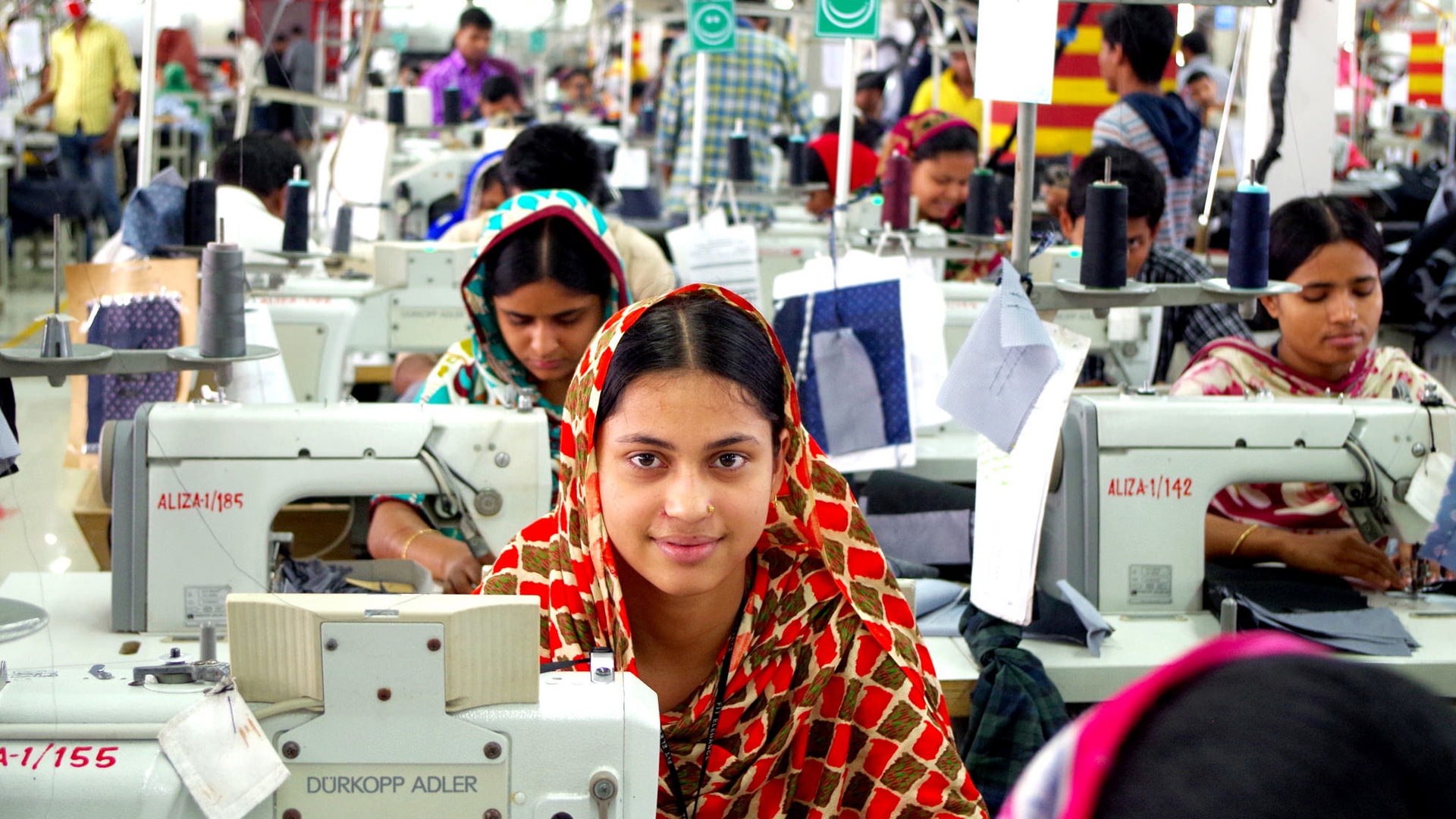
Approximately 80 per cent of the garment workers globally are women. If China has more than 70 per cent of female garment workers, Bangladesh, which trails China as the second-largest apparel exporter globally, has 85 per cent female workers employed in its garment manufacturing industry.
Despite the fact that garment production has overwhelmingly been women-driven since the onset of mass manufacturing, women workers who are highly-valued for their dedication, work ethics and sincerity, more often than not are victims of gender inequality and violence as well!
As per a new study conducted by Shojag (Awaken), a coalition of Bangladesh Legal Aid and Services Trust (BLAST), BRAC, Christian Aid, Naripokkho and SNV, twenty-two per cent of female garment workers in Bangladesh apparel industry face physical, psychological, and sexual harassment at workplace or on the way to/from the workplace, but 67 per cent of them refrain from seeking support from bodies like Violence Against Women Prevention committee at workplace due to lack of trust. What’s more, 86 per cent of the respondents reportedly mentioned male supervisors as the main perpetrators.
The baseline study by Shojag has been carried out between March and June this year among 382 female garment workers from Savar, Ashulia and Gazipur areas, the findings of which were made public recently.
“Any type of violence, mental, verbal or psychological, is a crime and is unacceptable,” observed Jason Belanger -Bangladesh Country Director of SNV Netherlands Development Organization, which is a part of the coalition.
Even though the High Court Division of the Bangladesh Supreme Court has issued guidelines in 2009 on sexual harassment but there seems to be not many takers of it. As per Mahbuba Akhter, Deputy Director (Advocacy and Communications) of BLAST, most of the factories were not complying with High Court’s directive to make complaint committees in workplaces functional.
Of late, there have been many such reports pertaining to workplace violence and gender-based discrimination. Recently Human Rights Watch has documented sexual harassment in garment factories in Cambodia, Bangladesh, Burma, and Pakistan and found that abuses were rife, legal protections did not exist or were weakly enforced, and efforts to audit factories or monitor for harassment were ineffective.
Things are no different in supplier factories manufacturing for the big brands either. Based on interviews with about 250 workers in 60 Walmart supplier factories in Bangladesh, Cambodia, and Indonesia, a coalition of charities said women were ‘systematically exposed to violence’ and faced retaliation if they reported the attacks, while two more reports released this year have documented gender-based violence within H&M and Gap’s Asian garment supply chains as well.
Given the present state of affairs, a multi-pronged approach is a must. Even though the Government has the primary human rights obligation to combat such issues, brands, retailers and the manufacturers too, have a very important role to play to ensure greater transparency in the supply chains.
Some non-profit organisations and global bodies have already started working in this direction. In 2016, the C&A Foundation, Gender at Work, and the Global Fund for Women joined hands to launch a new initiative to end gender-based violence and empower the female garment workers in Asia, which aims to ‘find, fund and strengthen organizations working to end gender-based violence against women workers in South Asia, with focus on major apparel sourcing countries including Bangladesh’. Similarly, Better Work, a joint initiative of the International Labour Organization (ILO) and the International Finance Corporation, also launched a comprehensive five-year gender strategy to empower women, reduce sexual harassment and close the gender pay gap in the global garment industry.
“Workplace situation in the garment factories has improved and if any incident of harassment takes place on the floor, the workers should inform authorities. Factory owners are now much more cautious about workers’ harassment in their factories,” reportedly maintained Senior Vice-President of Bangladesh Garment Manufacturers and Exporters Association (BGMEA) and Managing Director of Giant Apparels Ltd., Faruq Hassan, speaking to the media, who further underlined that both the factory owners and the Government agencies need to be more vigilant.
Considering the significance of the women workers for the Bangladesh apparel industry, not only civil societies and grant bodies, all the stakeholders need to join hands to improve the lot of these women workers, which would be the only way forward for the garment sector to truly thrive and prosper.





 Bharat Tex Special Report 2026