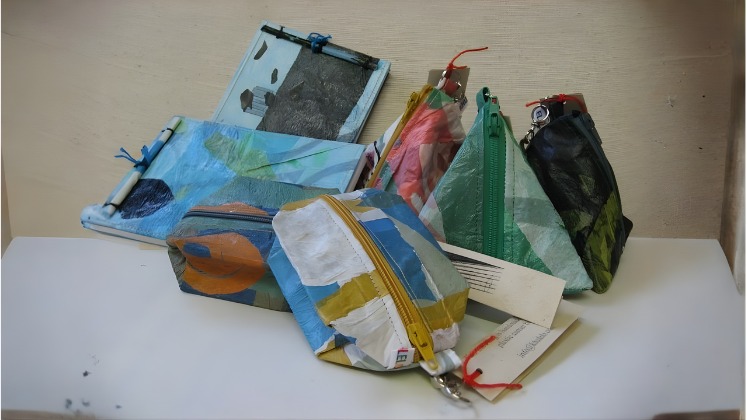
The global market for upcycled textile pouches is projected to grow nearly fourfold over the next decade, reaching close to US $ 1 billion by 2036, as brands increasingly adopt circular packaging solutions to meet sustainability and regulatory expectations, according to recent industry estimates.
Industry projections indicate that the market will expand at a compound annual growth rate of 14.6%, rising from around US $ 255 million in 2026 to approximately US $ 995 million by 2036. The growth reflects a broader shift in packaging from a cost-driven function to a strategic tool for delivering measurable sustainability outcomes.
Demand is being driven primarily by the fashion, luxury, retail and corporate gifting sectors, where brands are using reusable and upcycled packaging formats to support circular economy commitments and reinforce sustainability narratives. Fashion and luxury gifting is expected to remain the largest end-use segment, accounting for an estimated 35% of market share by 2026, supported by demand for premium, reusable and brand-enhancing packaging.
Reusable fabric pouches are projected to represent around half of all packaging formats, signalling a move away from single-use materials towards longer product life cycles. From a materials perspective, reclaimed textiles such as post-industrial and post-consumer cotton, PET blends and jute composites are expected to make up nearly 60% of total material usage, underlining the sector’s role in diverting textile waste from landfill.
On the manufacturing side, around 45% of production is currently attributed to advanced techniques such as precision stitching and ultrasonic welding, which reduce environmental impact and enable stronger seams without adhesives.
While North America and Europe continue to lead demand through sustainability-led branding, regulatory pressure and the adoption of premium packaging, Asia Pacific is emerging as a key production hub due to its scale of textile waste streams and manufacturing capacity. Rapidly growing markets including China, India and Brazil are also gaining traction, supported by design integration capabilities and artisanal upcycling expertise.
Despite its growth potential, the sector faces structural challenges, including higher production costs compared with virgin materials, inconsistent quality and availability of textile waste feedstock, and the absence of globally recognised certification standards for upcycled content. Industry participants say investments in material science, automated sorting, digital traceability and certification frameworks will be critical to enabling the next phase of scalable growth and sustaining confidence among brands and consumers through 2036 and beyond.





 Bharat Tex Special Report 2026