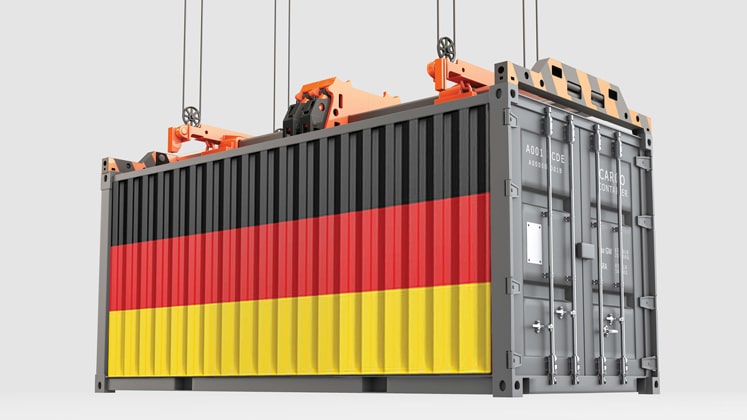
After USA, Germany is the second-largest export destination for Bangladesh, where it shipped goods worth over US $ 5.6 billion in the last fiscal year, of which 95 per cent were apparel items.
This in itself sums up the importance of Germany for Bangladesh as an export market!
However, from 1st January 2023, things are going to be somewhat different and challenging as well for the Bangladesh garment exporters thanks to the new German Supply Chain Act, which people in know of things, say, is going to have negative ramifications on Bangladesh’s exports to the Central European country.
Apparel exports to take a hit!
Passed by Germany’s Parliament last year, the German Supply Chain Due Diligence Act will initially apply to German companies with 3,000 or more employees even if from 2024, the threshold will be reduced to 1,000 employees, which means a large number of German entities will come under the purview of the new act.
Once implemented, Bangladeshi suppliers would have to operate with necessary transparency to enable their German clients to comply with this law which mandates the latter to actively perform due diligence to prevent human rights and environmental abuses within their global supply chains, failing which they would have to cough up hefty fines.
German enterprises will be subjected to penalties of up to € 8 million or 2 per cent of their annual global turnover if any of their foreign suppliers violate the rules. What’s more, if an administrative fine is imposed above a certain minimum level, enterprises would be rendered excluded from public procurement for up to three years.
Such stringent measures, if at all, will only lead German enterprises to ensure all relevant norms and standards are followed by all of their partners along the supply chain.
The German embassy has already sent letters in this direction to Bangladesh’s garment makers’ bodies–the BGMEA and the BKMEA.
“…Bangladesh’s exporters, supplying to German companies, now have huge responsibilities to prepare themselves…,” says German Ambassador in Dhaka Achim Troster, adding, “Bangladesh needs to respond proactively and demonstrate a compliant business landscape that respects human rights, as well as the environment.”
‘Greenwashing’ and the diligence dynamics!
‘Green is the new black and sustainable is the “it” look’, have become the motto of the fashion industry lately. With this in mind, loads of corporations, businesses and brands have begun to advertise eco-friendly products and services in an effort to promote their awareness of their industry’s role in climate change.
While this is a great step forward, it’s not all good news, say experts as branding something as eco-friendly, sustainable or green does not mean it always is, they underline.
“Many are making it look as if the fashion industry is starting to take responsibility, by spending fantasy amounts on campaigns where they portray themselves as ‘sustainable’, ‘ethical’, ‘green’, ‘climate neutral’ and ‘fair’…” says environmental activist Greta Thunberg adding, “But let’s be clear: This is almost never anything but pure greenwashing…”
The term also refers to when companies deflect attention from the environmental harm they cause or when they cast themselves as allies in the fight for climate justice when, in reality, they are not.
Germany, in particular, has been under the scanner for long even if according to global law firm DLA Piper,83-87 per cent of German companies, had to face criticism for decades for allegedly profiting from weak and poorly enforced national regulations in emerging and developing countries.
It was thus obvious the focus would sooner or later turn on Bangladesh as well, for which Germany is a prominent apparel export market.
Also to be noted in this direction is the fact, questions have been asked on and off if Bangladesh has been doing enough in terms of upholding the labour laws and ILO conventions on labour practices.
Recently, a four-member EU trade delegation visited Bangladesh to take stock of the progress made in terms of implementing its recommendations pertaining to amendment to Bangladesh Labour Act, labour rules and EPZ labour law in line with International Labour Organisation conventions.
And now as the new German law comes into effect, companies within the scope of the act must establish a risk management system and define internal responsibility for compliance with it – for example, by appointing a human rights ombudsperson.
Besides, they need to carry out regular risk analyses and adopt a policy statement on the company’s general human rights strategy.
The law also requires them to take remedial actions if a violation has already occurred or is imminent, alongside setting up an internal complaint procedure. Moreover, the companies will have to document due diligence procedures, risks identified, measures taken and then publish a yearly report on its website, which must be free of charge and publicly available.
Is the industry ready for it?
Notwithstanding it would be an uphill task for the industry to comply with all that is required of it to do keeping with the new rule, which might very well have implications on the price front as well, most of the exporters are confident, they are already up to the task and there won’t be much of a problem.
“Bangladeshi apparel exporters will not face any trouble to comply with the new law,” assures BGMEA President Faruque Hassan even if both the garment makers’ bodies, the BGMEA and the BKMEA, acknowledged both had received letter from the German embassy in this regard.
The trade bodies have, however, reserved their formal reactions, which they assured are very much forthcoming, but only after analysing the German Government’s directive for the adoption of the supply chain act.
Even if bigger entities will be able to make it through the rigorous measures, smaller entities may not have as much luck, they said.
A number of vendors may be eliminated from the supply chain as most of them will fail to comply with the new due diligence procedures, claims BKMEA Vice-President FazleeShamim Ehsan.
“We have been creating business opportunities for small entrepreneurs as they provide us with many services and goods, such as label printing, etc.,” cites Ehsan on how smaller vendors might get affected while adding apparel exporters cannot outsource anything now and would have to do everything in-house by setting up their own facilities so as to maintain due diligence.
“We are doing business as the suppliers of export-oriented industries by complying with local laws regarding labour and environment,” meanwhile claims President of the Bangladesh Garments Accessories and Packaging Manufacturing and Exporters Association (BGAPMEA) Md. Moazzem Hossain Moti while underlining the accessories’ suppliers contribute about US $ 6.9 billion to apparel exports as a backward linkage industry even as Chief Executive Officer (in charge) of Bangladesh Textile Mills Association (BTMA) Monsoor Ahmed, on his part, states, “We have 220 export-oriented spinning mills and 200 textile mills that are fully compliant with local laws. But the new German law may put some additional pressure on their suppliers.”
Now, what will be the implication (short and long term) of the new German law as it comes into effect remains to be seen.





 Bharat Tex Special Report 2026