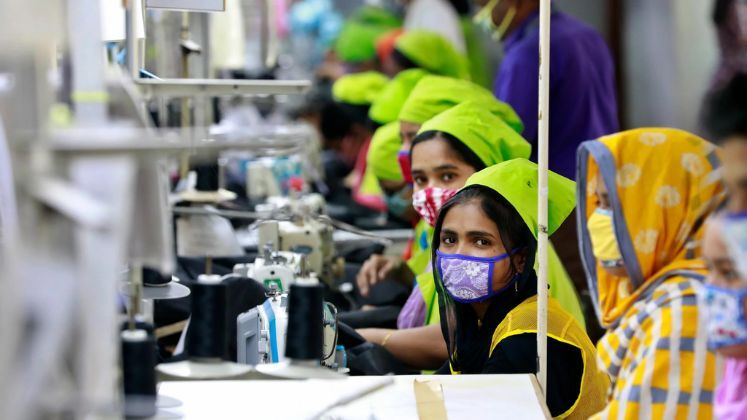
To quell the ongoing discontent in the industry, Bangladeshi apparel factory owners have complied with all 18 worker demands, including providing night allowances and tiffin facilities.
The decision was made public on Tuesday during a press briefing held at the labour ministry in Dhaka by AHM Shafiquzzaman, the secretary of labour and employment. Together with him were leaders of the Bangladesh Garment Manufacturers and Exporters Association (BGMEA) and unions, as well as four advisors to the interim administration.
Asif Mahmud Sajib Bhuiyan, the labour and employment adviser, stated during the briefing that normal operations in the industrial zones are anticipated to resume on Wednesday since the requests have been met.
He claimed that the salary arrears would also be paid off and that the industry would return to normal on Wednesday. Home Affairs Advisor Jahangir Alam Chowdhury advised staff members to return to their places of employment in accordance with Bhuiyan’s suggestion. Speaking on behalf of union officials, Kutub Uddin Ahmed, a former secretary general of the IndustriALL Bangladesh Council, also asked employees to resume work.
He went on to imply that various causes outside the garment business were to blame for the unrest.
The implementation of the current minimum wage in all factories and the resolution of all pending payments were among the workers’ primary demands. Employees also requested an increase in tiffin allowance of Taka 10 and attendance bonuses of Taka 225.
According to Shafiquzzaman, between 1% and 2% of clothing factories failed to adopt the most recent wage structure, which went into force in December of last year.
He went on, “To help workers buy necessities at lower prices, the government will also provide assistance in heavily industrialised areas through the open market sales program of the Trading Corporation of Bangladesh.”
Control over the trade in secondhand clothes emerged as one of the main reasons for unrest, therefore the government decided to create a program to centrally oversee the waste fabric, or jhut, business.
The labour secretary announced that a separate study panel will submit a report on the industry’s capacity to review the pay structure and that the government will also look into police charges against workers to ensure they are not harassed.
Labour leaders said that workers from several factories had gathered in front of the buildings in the morning and left when they found out the factories were closed.
The Industrial Police claim that the majority of the shuttered enterprises are located along the Bypail-Abdullahpur highway in the Ashulia districts of Jamgora, Narasinghpur, and Zirabo.