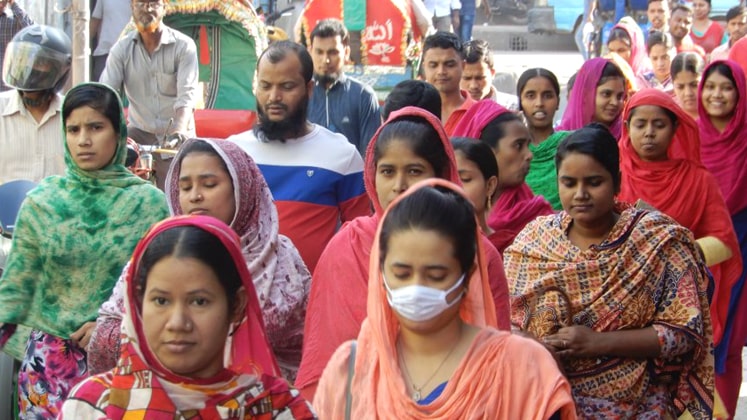
Even as the dreaded COVID-19 was spreading like wildfire in the West forcing fashion retailers to shut shop, apprehensions were there that Bangladesh, the second biggest apparel exporter in the world, may have to bear the brunt of it and so would the over four million apparel workers who make clothing items for all the major brands and retailers, cutting across geographical locations.
If recent survey findings are something to go by, such fears do not appear unfounded!
As per a report published by the Penn State University’s Centre for Global Workers’ Rights and the Worker Rights Consortium (WRC), more than one million garment workers in Bangladesh have already been fired or furloughed or temporarily suspended from work, thanks to the large-scale order cancellations. In such a scenario, labour rights and workers’ benefits have remained just mere words, it seems.
Founded in 1855 as the Farmers’ High School of Pennsylvania, the Pennsylvania State University or Penn State or PSU is a public research university with campuses and facilities throughout Pennsylvania, which conducts teaching, research, and public services, while the Worker Rights Consortium (WRC) is an independent labour rights monitoring organisation focused on protecting the rights of workers who sew apparel and make other products sold in the United States. The WRC conducts independent, in-depth investigations, issues public reports on factories producing for major global brands, and aids workers at these factories in their efforts to end labour abuses and defend their workplace rights.
The recent report published jointly by these two bodies maintained that when orders were cancelled, 72.1 per cent of the buyers refused to pay for raw materials such as fabric, etc. already purchased by the suppliers, and 91.3 per cent of buyers refused to pay for the cut-make-trim cost (production cost) of the suppliers. As a result of order cancellations and lack of payments, 58 per cent of factories, surveyed in the report, shutdown most or all of their operations, it added.
As per the report findings, suppliers – in the survey – reported that 98.1 per cent of buyers refused to contribute to the cost of paying partial wages to furloughed workers, required by law, and 72.4 per cent of furloughed workers were sent home without pay.
Meanwhile, 97.3 per cent of buyers refused to contribute to the severance pay expenses of dismissed workers, also a legal entitlement in Bangladesh. Four out of five workers were dismissed without their severance pay, it underlined.
Despite the fact that many brands have “responsible exit” policies – where they commit to support factories in mitigating potential adverse impacts to workers should they decide to exit – they failed to keep their end of the commitment, further unearthed the survey.
However, not everyone in the industry agree with the findings, especially the workers’ lay-off.
“There’s no logic behind such findings…,” opined Mohammad Hatem, the first Vice President of Bangladesh Knitwear Manufacturers and Exporters Association (BKMEA) while speaking to the media. He did not rule out ill motive behind the publication of the report as he felt they do not have any knowledge of the implications of one million workers being let go.
Now whether or not the research findings are true is debatable, but there’s no denying the fact that these are really stressful times for the industry and the workers and many garment workers are passing their days in fear and uncertainty.
“I can’t sleep. Don’t know what to do,” said a garment worker named Aleya, who has been working at a garment factory in Malibagh since arriving in Dhaka around three years ago. Her factory, however, shut down on March 24.
“I can’t say what to do. We can’t return to the village. How long can you live inside a room? Who knows when the factory will open? And whether I will have my old work back… maybe not,” Aleya expressed her worry.
Aleya is not alone and there are scores like hers who are now staring at an uncertain future.
“The export orders that our factory used to receive have stopped coming. We don’t know whether I will get back my job even if the factory reopens, because the owners had already spoken of dismissals,” stated another apparel worker named Monowara Begum, who works in a sweater factory in West Malibagh.
However, the silver lining now is that many brands have assured Bangladesh of not cancelling their work orders, which would mean some respite to the garment workers.
Recently, five more global fashion brands assured the apparel exporters that they are ready to receive readymade garment shipments that had already been produced in Bangladesh or are in the process of being manufactured.
Exporters termed the development positive for the sector as many global buyers cancelled orders or halted shipment of ready goods as the coronavirus outbreak hit hard the global consumption of apparel items.
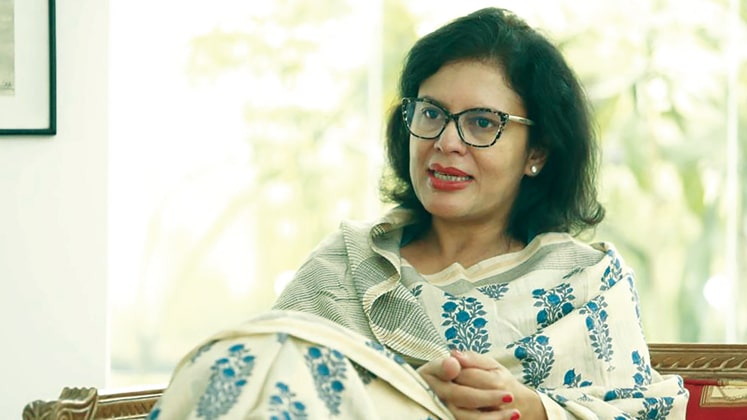
Among the retailers, three from the European Union and the rest two from North America have agreed to take delivery of the orders already produced and orders that are undergoing production, confirmed Dr. Rubana Huq, the President of Bangladesh Garment Manufacturers and Exporters Association (BGMEA).
Earlier, Swedish clothing retail company H&M assured of taking delivery of the already produced garments as well as goods under production. H&M also said that it would pay for the goods under agreed payment terms and the retailer would not negotiate prices on already placed orders.
“Few brands namely Spanish clothing company Inditex, British multinational retailer Marks and Spencer, French retail company Kiabi and the US retail company PVH and Target have come forward and informed us of their decision to take the ready goods along with the goods in production,” Rubana informed the media, adding, “We welcome their decisions to support us and hope that the payment terms will remain unaffected in order to ensure liquidity flow for the factories.”
Rubana further said that Marks and Spencer has also confirmed taking the goods already produced and those which are in progress while also agreeing to pay for the raw materials that were not used as yet.
“Inditex is also not walking away and are taking all that’s being produced and are in the seas. PVH has sent a clear confirmation of taking everything,” Rubana underlined, adding that US retailer Target has confirmed with full assurance that it would take all orders. She said that Target also reiterated that they would work as partners to come out of the crisis and had no intention of cancelling any order.
Meanwhile, former BGMEA Vice-President Mahmud Hasan Khan Babu said that French retailer Kiabi has also confirmed that it would take all its placed orders. The retailer put its many orders on hold following the coronavirus outbreak in Europe, and the company – in a video conference with its Bangladeshi suppliers – has assured of taking delivery of the already produced garments as well as goods being produced, Babu said.
Even as the readymade garment exporters were busy figuring out the business loss that the COVID-19 outbreak has caused to the apparel manufacturing sector of the country, the Government floated a Taka 50 billion coronavirus bailout fund to help export-oriented industries pay the workers’ wages.
To bail out the workers from the precarious situation that they are in, the Government of Bangladesh has also decided to put forth bailout package of Taka 50 billion to pay wages of workers who are engaged in all the export-oriented sectors including readymade garments.
The country’s central bank, the Bangladesh Bank would release this amount to the commercial banks which, in turn, will disburse loans to the garment makers after receiving estimates from the concerned manufacturers as to the amount they would need to pay salaries to the workers.
Payable within the next two years with a grace period of six months, the garment makers, who avail of this facility, would reportedly have to pay interest of two per cent on the loan taken.