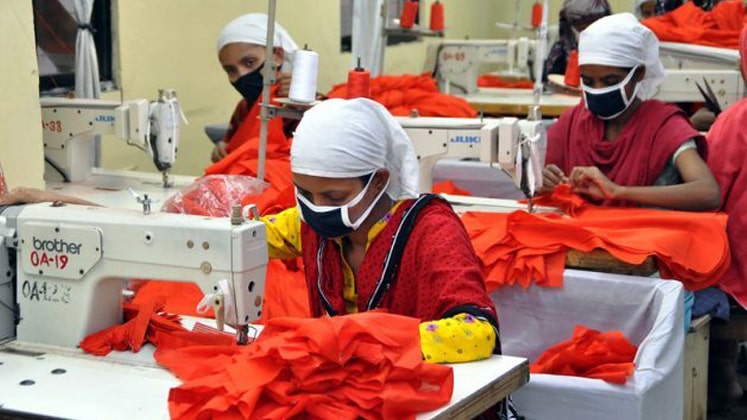
The real minimum wage in Bangladesh witnessed a negative 5.9 per cent growth between 2010 and 2019, which is the steepest fall amongst the countries in Asia and the Pacific in last one decade despite higher productivity gains (5.8 per cent growth in productivity).
This was underlined in a recent study of the International Labour Organisation (ILO), titled the ‘Global Wage Report 2020-21’, and unveiled on 2 December (Wednesday), which looked at wage trends in 136 countries in the 4 years preceding the pandemic (COVID-19).
The only country in Asia and the Pacific whose minimum wage does not reach even the lowest international poverty line is Bangladesh, ILO’s Global Wage Report 2020-21 reportedly underlined even as it added that higher rates apply in the export-oriented RMG sector of the country.
As per the ILO report, Bangladesh’s negative 5.9 per cent growth in real minimum wage was followed by Sri Lanka (negative 4.5 per cent) and Afghanistan with negative 0.6 per cent growth while amongst nations that have experienced an increase in real minimum wages, the highest average annual increases were observed in Vietnam (by 11.3 per cent), followed by Laos (by 10.1 per cent) and Cambodia (by 9.7 per cent).
Further, in terms of labour productivity growth, Bangladesh, which registered 5.8 per cent growth in past decade, is preceded by Myanmar, which reportedly witnessed the highest labour productivity growth in the region (5.9 per cent).
Following Bangladesh in terms of labour productivity growth are India (5.5 per cent), Pakistan (2.2 per cent), Nepal (4.3 per cent), Sri Lanka (4 per cent) and Afghanistan (1.7 per cent).