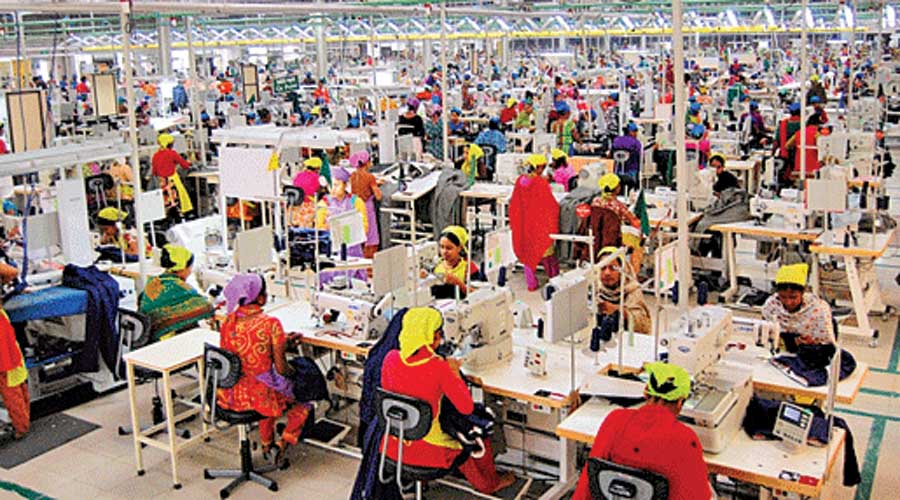
Consumers are demanding that products sourced from around the world are ethically made, from sustainable sources and with least carbon footprints or carbon emission. Buyers have taken a step forward and actively become involved in the countries and communities they work with, while suppliers have moved away from the shadow of the buyers to implement innovative ways to be sustainable, taking initiatives from saving energy to improving working conditions at factories.
Companies in Bangladesh too have started moving beyond basic social compliances attaining international certificates like ISO, GFSI, FSSC, WRAP, GOTS, Fair Trade to name a few. A recent study by the BGMEA shows that 2000 local factories out of 3500 running ones are following the compliance norms as set out by international benchmarks.
The concept of Green factories is also catching up fast in the country and today, the country boasts of three Green factories including the first Platinum certified factory of Vintage Denim Studio (VDS) at Ishwardi Export Processing Zone. While the VDS unit is Green from the conceptualization stage, Epic Group’s CIPL unit, and also Leed certified, has been converted into a Green factory after five years of existence.

Among the Green Factories, Brandix Group’s maiden venture in Bangladesh – Brandix Casualwear Bangladesh Ltd (BCB) received an ‘Eco Factory Attribute’ from M&S, fourteen months after it commenced commercial production in April 2011, becoming the first apparel factory in the country to achieve this status. The five-acre, 350,000 garments a month capacity plant at the Comilla Industrial Zone, reduced energy consumption by 27% and its carbon footprint by an estimated 60%, achieved a 45% saving in potable water, is recycling or re-using 95% of its solid waste and also complies with Global Sourcing Principles (GSP) ethical standards.
Set up to expand the Brandix Group’s woven bottoms business, BCB is designed for maximum use of natural light while also using energy efficient lights and motors. Clever use of natural ventilation enables reduced use of air-conditioning and the building and heating elements have been insulated for energy efficiency. The energy, lighting, insulation, water and waste management initiatives of the company have brought in saving of about 20 to 40% in energy cost.
No doubt, energy saving has become a major concern as the progressing garment industry has come across a speed bump in the form of growing energy crisis. There is an acute shortage of power and an insufficient supply of water. As a result small industries are perishing and big industries are forced to expand organically as there is no provision of getting a new electricity or water connection for a start-up. Owing to this many industries have started taking steps to meet this crunch.
The initiatives to become sustainable particularly with regard to the environment are many from structural changes to adding new technology to landscaping. “We have 30 feet high ceiling surrounded by glasses, so in the day time, we don’t need any electrical lights. The building and the columns are designed in such a way that there is an adequate air flow and working becomes easy,” says Majedur Rahim, Director, Giant Group. Moving forward from the basic measures, Giant Group has been really conscious in their choice of machinery when it comes to its effect on the environment. “We have emphasized on machines which require less power and less water, our dyeing machine is from THIES, Germany, called the I-MASTER; it is a LEAD certified Green machine with a 3.47 liquor ratio, which is half the prevalent industry standard. Less liquor ratio means less water, less chemical, less power,” he adds. Giant Group has gone to the extent of investing around US $ 1 million in the construction of an effluent treatment plant. “We have also setup a biological ETP, with the capacity of 100 cubic metres per hour. We bought it from Italy. It is capable of treating 25 tonnes of ditched water,” informs Rahim.
[bleft]While environmental sustainability engulfs natural resources – air, water and land – and how to manage these resources to prevent wastage and pollution, social sustainability is about providing equal opportunities to people, improving standard of living, upgrading education and community support so that everyone in the human cycle of need is benefited from growth. Additionally, it has been recognized that true sustainability can only be achieved through economic sustainability of businesses and communities.[/bleft]
The Beximco Group in also taking steps to become sustainable. “In our washing plant we have put ozone machines, which is a dry washing technology, thereby saving huge quantities of water,” informs Syed Naved Husain, Group Director & CEO, Beximco. The idea of sustainability becomes unappealing if it doesn’t correspond with cost-efficiency and Husain believes that sustainable measures are economically advantageous too. “Our sustainably efforts actually save us lots of money. Our turbines run at 75% efficiency, while generally they run at 44% efficiency. Just from my turbines I save US $ 300,000 a month. Similarly, we are moving to LED lighting which consumes just 20% power.” But one must not forget that the foremost intention behind the concept of sustainability is not monetary, therefore Beximco has been playing its part towards recycling and controlling carbon credit. “We have a waste heat recovery system which has reduced our carbon foot print. Moreover we recycle our cotton waste and also have partnered with a European designer to actually take all our waste. Under the project ‘Trash to Trend’ all our trash gets converted into fashion and we sell it under a brand name ‘Reet’,” adds Husain.
Sustainability in its essence means establishing systems that can be maintained foreseeing the future and taking pre-emptive steps to ensure it remains problem free. Beximco for example has created an orchard (in this premise) where they have planted 16,000 trees, which they call as ‘Lungs of Gazipur’. Their philosophy is simple, “If you work with the good surroundings then your employees are proud to come to work, your quality improves and you as a company progress,” concludes Husain aptly.





 Bharat Tex Special Report 2026