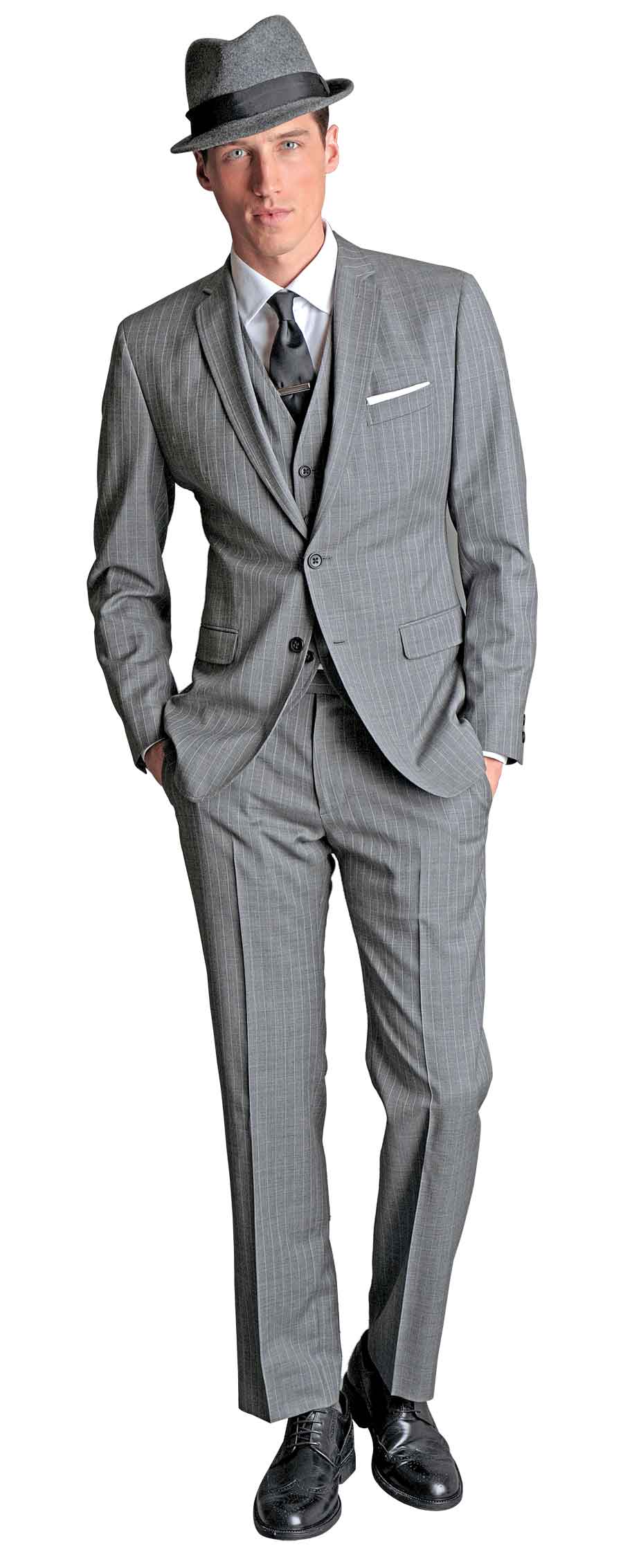
 A jacket is probably the most difficult garment to produce, compared to other garments because of its fit specifications, the number of operations and accuracy required in construction and 3-dimensional engineered outlook to provide proper drape, conforming to the body’s shape, using fusing or canvas material and requiring inline and post-sewing ‘buck’ for shape retention. Once a mass manufactured commodity from China, suits have now for the past 4-5 years retailed world over with a ‘Made in Bangladesh’ label. Known for manufacturing knits and denim jeans, Bangladesh has now leaped forward to make a presence in the global mass production of suits in a significantly short time period, and is presently fulfilling 3-4% of the global demand of suits, formal jackets and blazers. Although the first suit manufacturing facility came up in 1980, it was only during 2005-2007, after a gap of more than two decades, which saw five more companies take the challenge. It is only in the last 2 years the focus for this category is even more on Bangladesh with labour costs going up in China and a small but significant share of orders moving to Bangladesh.
Apparel Online spoke to the pioneers of suit manufacturing in the country – East West Industrial Park along with Energypac and Interlink – highlighting their perspectives on manufacturing suits in Bangladesh.
he first suit manufacturing unit was setup by Harun-Ar-Rashid, Managing Director of East West Industrial Park, after failing to hold on to jute basket manufacturing business in the US, coming back to the country looking for newer opportunities. During those times Bangladesh was just starting to be recognized for garmenting and sensing opportunity, Harun chose to manufacture trousers and immediately after started a jacket line. “Only an entrepreneur with the willpower to achieve something, made it big, back then,” states Harun-Ar-Rashid, who has created a unique identity as a suit manufacturer, in a country specialising in knitted apparels.
Similar were the reasons given by Humayun Rashid, Managing Director & CEO, Energypac Fashions, an established manufacturer of transformers, generators and other electrical equipment, who ventured into apparel manufacturing with the product category as late as in 2007. “We could feel the same pulse that our forefathers felt in the 1980s about the apparel business that a lot of new orders and buyers would be coming to Bangladesh, for newer product categories,” asserted Humayun Rashid, who took to manufacturing suits for all three categories of kids, men and women. “Men wear a suit, a jacket or a blazer for a couple of years only, but it has an even shorter lifecycle in case of females due to the frequently changing fashion. The lifespan is the shortest in case of kids, thus making it a very lucrative product category both in terms of volumes and FOBs,” added Rakiba Chowdhury, Assistant Vice President, Energypac Fashions.

Another predominant reason for these companies to venture into jackets and blazers was due to the fact that they had previously established a niche in manufacturing dress pants. Endorsing the same, Imtiaz Ahmed, Managing Director, Interlink Apparels added, “We are manufacturing suits for the same buyers who are sourcing dress pants and formal trousers from us.” Interlink is the newest entrant in the product category, which has setup its capacities for jackets and blazers in March last year, and now exports to Canada and Nigeria. Earlier manufacturing all kinds of garments from overalls to shirts, Interlink Group setup Interlink Apparels for manufacturing formal trousers in 2003.
Present Scenario – Capacities & Buyers
Of the suit factories present in the country, Ananta, East West and Univogue are doing men’s suits; FCI and Merimo are making jackets and trousers for females, while Energypac is manufacturing for men, women and kids. Interlink started with a setup of just 4 sewing lines and presently has 18 sewing lines producing 3,50,000 trousers per month. The company has just two lines for manufacturing suits with 120 machines each and 35 pressing and finishing machines, for all the critical areas like collar, lapel, front, back, shoulders and sleeves. Using polyester and poly-wool, the company is sourcing most of its fabrics from India and China.

Energypac Fashions which setup their factory in 2007 with 7 sewing lines, now has a setup of more than 400 sewing machines and 8 sewing lines; 5 for trousers and 3 for jackets, Energypac is doing large volumes of kidswear for brands like Dorothy Perkins, Debenhams and NEXT, along with jackets and blazers as school uniforms for brands like Truetex. “We started with Van Heusen, Haggar and C&A, and presently our biggest buyers are Walmart, NEXT, Debenhams and N&N Global Sourcing,” informs Rakiba. Energypac is among the handful of companies making unlined jackets for the summer season. The company sources most of its fabrics from China and India; “From India, all of my customers are favouring wool and PV-based fabrics from Grasim, Raymond and Tusha Textiles. Now since I have a lot of orders from NEXT, a lot of fabric is sourced from Raymond, and for Macy’s and Elbion, Grasim is coming frequently, and when working with BHS, Tusha is coming in frequently,” shared Tariquel Hassan Sumon, Deputy General Manager (Marketing & Merchandising), Energypac Fashions.
Presently working with Macy’s, H&M, TESCO, NEXT, M&S, C&A, PVH, Haggar and many more European buyers, East West had a tough time building its reputation with international buyers as a suit manufacturer. “We started shipping small quantities to mid-sized retailers in the UK, with an option of paying us after they have sold the goods, else they could keep the product,” recalls Harun-Ar-Rashid. Major success came to the company in the year 2007, when their first volume buyer H&M came to them with an order of 5,000 pieces, which has now gone up to 1,00,000 pieces.
East West has the biggest setup among all the companies discussed for suit manufacturing, with 40 sewing lines for trouser and 8 sewing lines for jackets and blazers, with a huge finishing setup for both inline and end line pressing and finishing. Although sourcing most of its fabrics from China and a very small part from India, East West also has its own fabric manufacturing facility producing 2,00,000 yards of suiting fabric per day.
The Learning Curve
The companies did not face much difficulty in training sewing operators as they were already working with fabrics of similar types in manufacturing formal pants. “Since our inception we have increased two lines for trouser manufacturing every year, as it takes a year’s training time for an operator before he is put on the main production lines. Unless they are fully trained and motivated, don’t start your factory,” advices Harun-Ar-Rashid. Adding to that Sumon explains, “The major part of our time is spent on training of our supervisors and production managers to give them clarity to help them in trouble shooting and handling in our absence, to make them future ready on layouts, balancing the lines.” Agreeing with the same, Imtiaz recalls, “We realized the importance of training our operators at the time of our 1st shipment, I noticed they first attached the buttons and were then pressing the suit, whereas it should be the other way around. I also feel lucky to have supervisors and production managers from already established companies.
“In the initial 4 years, I used all sorts of advertising mediums, searching people for suit manufacturing and we hired expats specializing in various critical areas of finishing and sewing, for training my people. But we were not able to hold these expats for more than 6 months as there is no night life in Bangladesh; moreover the expats asked for salaries more than US $ 10,000 per month and two business class return tickets, this package was not at all affordable,” shares Harun-Ar-Rashid, who instead took his key people to suit manufacturing facilities in Belarus, Germany and other countries for a first hand feel. Similarly Imtiaz Ahmed also took his team to suit manufacturing facilities in Myanmar, China and Vietnam.
[bleft] 1,65,000 jackets and blazers coupled with 8,82,000 dress pants are the combined monthly capacities of the top three suit manufacturers of the country with East West holding the largest share producing 1,00,000 jackets and 4,50,000 trousers per month, followed by Interlink producing 30,000 jackets and 3,50,000 dress pants per month, and Energypac with 35,000 suits per month and 82,000 dress pants per month. [/bleft]
East West focussed on improving its operations and systems when it started working with Japanese buyers which was around three years back. “The biggest benefit was imbibing their quality systems, which not only helped in maintaining shipping dates, quality and price, but also attracted European and American buyers,” added Harun-Ar-Rashid.
Energypac credits its customers John Lewis, BHS, Truetex, Mark H and Elbion for exposing them to better systems and technologies. “Earlier we used to do blazers and jackets without any in-line pressing. It was Elbion which pressurised us to get into quality suits and they even helped us with the know-how of the same,” shared Sumon, The company today is having latest finishing and pressing machines in its manufacturing operations. The company recently added 4 more finishing machines for lapel pressing, shoulder pressing, full front pressing and arm hole creasing, worth half a million dollars.
Now with a lot of suit manufacturing facilities coming up in the country at a rapid pace, Harun-Ar-Rashid,[bleft] “We started shipping small quantities to mid-sized retailers in the UK, but major success came to us in the year 2007, when our first volume buyer H&M came with an order of 5,000 pieces, which has now gone up to 1,00,000 pieces.” Harun-Ar-Rashid, MD, East West Industrial Park
“With ability to ship the finished goods overnight, you can just imagine the speed to market that we can provide to Indian brands and customers. Moreover, it will help us maintain just-in-time inventories, minus all the transit and logistics costs.” Humayun Rashid, MD & CEO,
Energypac Fashions [/bleft]believes that it is only the operational excellence and efficiency of pre-production operations that will set apart suit manufacturing facilities. However, Humayun Rashid feels that it is too early to push sewing operators for working faster as the company is still getting its grip on standardising the product quality, as due to the high FOB of the product, rework and rejections are too big of a loss to bear. “We are presently just focussing on reducing the bottlenecks in the sewing lines and wherever we have a bottleneck we put a few extra machines there and it is solved,” adds Sumon. Going beyond manufacturing, the company has recognized a total of 10 problems in the overall business from the cash flow to the supply chain which includes delays in raw material in-house, unshipped goods, unused raw materials, material movement in the factory, rework on finished goods, rejection of shipped goods, and are working on the same.
Future Plans
East West in a MoU (Memorandum of Understanding) with H&M is presently manufacturing 1,00,000 ladies blazers per month for the German retailer. As per the MoU, East West would also be manufacturing 3,00,000 blazers per month for H&M and which by the end of 2015 would be three million pieces per year, which will shoot up their present turnover of US $ 40 million to US $ 150 million by that time. “By manufacturing 20,000 jackets per day, I would become the 4th largest suit manufacturer of the world,” averred Harun-Ar-Rashid. For accommodating the influx of business, construction of two factory buildings is underway at the premises of East West, simultaneously.
With a humble setup of 8 sewing lines, Energypac would be adding 8 more sewing lines in 2015 and additional 8 more sewing lines by 2018, tripling its present capacities to 24 sewing lines. The finishing department on the ground floor will also have an overhead hanger system for smooth material movement. In the meanwhile the company is also looking at getting into a joint venture or technical support, for producing suiting fabrics. “Textile is our new focus,” asserted Humayun Rashid.
East West, already working with Indian brands like Raymond and Blackberry’s, has inspired other suit manufacturers to also look at India as a major buying country satisfying its future needs. Already supplying formal trousers to Reliance Trends, Energypac sees India as a priority market with an advantage of little logistics costs. “We start production on Tuesday which goes on till Sunday, as Monday is a holiday, then the goods are loaded on the trucks and by Monday morning it is into the Indian border, so you can imagine the speed at which we can provide to Indian brands and customers. Moreover at our ends we can handle our inventories better as we are shipping out goods every week to India, which is so low compared to the transit time and logistics costs required for shipping to the US and the Europe,” concludes Humayun Rashid.





 Bharat Tex Special Report 2026