 In the past few years various industries have tailored their respective products to the needs of an individual consumer, expanding upon their customer base. Following the direction, now accepted as a winning strategy, the apparel industry is undergoing a huge transition with retailers vying for consumer loyalty and attention through mass customization. Will this really work for mass fashion, remains to be seen, but what can be witnessed currently is the growing demand for customized individual products not only from luxury brands, but also from mass retailers.
An increasing number of retailers are undertaking mass customization, enabling customers to get products exactly configured to their needs and tastes by paying for the products well in advance, eliminating the risk of excess inventory, duplication and resulting discounts. This growing trend marks a boon for the fashion business which is entirely trenddriven where predicting consumers’ demand can be difficult and tricky. From Burberry to Nike, Converse, Hermes, etc. brands and designers alike are welcoming this new way of business and are indeed garnering attention of the masses.

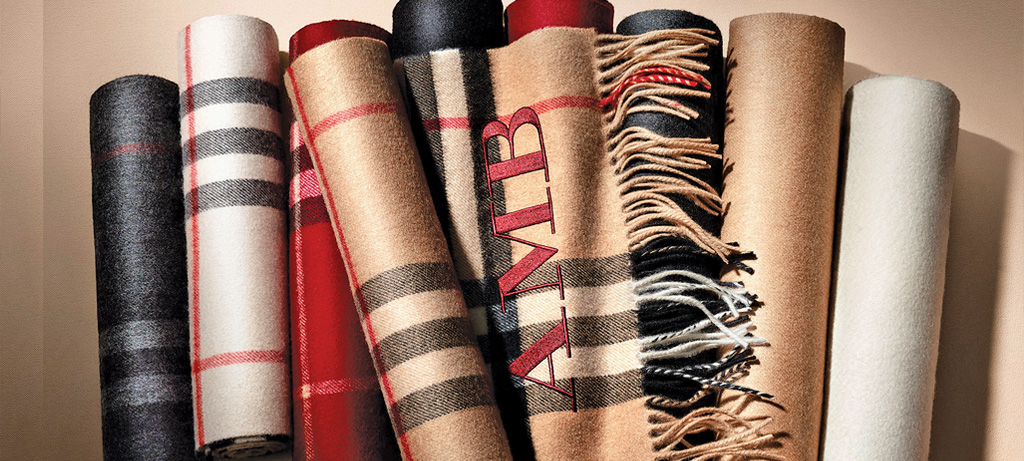
Way back in 2011, Burberry attempted this route through Burberry Bespoke, a special service for luxury trench coats. And now the British luxury brand has launched Burberry Scarf Bar, a service that lets customers monogram their initials on scarves, priced between US $ 475 and US $ 995. Consumers can also choose the colours, the fabric weight and patterns, reconfirming the company’s approach to customization. Apart from scarves, the brand has been offering opportunities to personalize ponchos and My Burberry fragrance for some time now. “This service always resonates with the consumers. Recognizing how important personalization has become particularly (with scarves), the brand has also expanded its monogramming offer both on and offline,” revealed the company’s statement.
Not just restricted to Burberry, the luxury industry has invested heavily in mass customization, with the famous Mon Monogram by Louis Vuitton and the Prada Customize program. Lately, Salvatore Ferragamo has launched an online project called L’Icona, letting shoppers customize their iconic pair of Vara shoes. A couple of years ago, Hermès also launched a custom silk counter at its Madison Av. flagship, where the customers could choose their scarf and have them personalized with their initials, a date or even a small message.
Making products one at a time means sacrificing large sales and also creating a customization interface for consumers that is easy to use, which happens to be one of the major challenges.
Leading the way in this specialized service for more mass markets are footwear brands Nike and Converse, who have built a popular ‘mass customization’ fan base. These services allow consumers to participate in the design of the products, which are built to order in large-scale factories, showcasing an amalgamation of traditional craft production with the efficiencies of modern industrial processes. In 1999, NikeiD, a digital customization platform was launched by Nike, which now generates significant revenue and a large portion of the total e-commerce business. Others such as Converse offer customization services at seven US stores, as well as online. “Today, about 10 to 12 per cent of total business at our New York store goes through customization,” informs Brandon Avery, Global Creative Director, Converse.
Not restricted to physical brands and retailers, online retailers such as Apliiq and Bow & Drape are changing the way retailers look at the mass customization model. They both operate on a hybrid model, importing premade T-shirts and sweaters, which are customized in facilities close to their consumer base in the US. While Apliiq lets consumers customize clothing basics with pockets, fabric panels and linings, on the other hand Bow & Drape does the same with appliqué graphics and letters. “We built a made-to-order line from the ground up,” claims Ethan Lipsitz, Founder of Apliiq. On the other hand, Bow & Drape is a modern reinvention of the classic dress-making tradition, when seamstresses worked with their clients to create outfits that fused fashion with personal style, leveraging technology to offer the modern woman the opportunity to design her own personalized wardrobe.
An increasing number of retailers are undertaking mass customization, enabling customers to get products exactly configured to their needs and tastes by paying for the products well in advance, eliminating the risk of excess inventory, duplication and resulting discounts.
While the opportunities for growth are huge, timely production to feed short fashion cycle becomes a major challenge. Tinker Tailor, an innovative company that makes it possible to customize readyto-wear designer clothing, lets customers tweak runway pieces by designers such as Marchesa and Giambattista Valli. Though orders are placed right after the shows, but it takes three to four months to reach consumers. The company also offers own-label garments that are custom built from scratch, but that also takes 4-6 weeks to deliver. “Footwear customers are willing to wait three to four weeks for a product to be delivered, but interest in customized men’s shirts declined after a two-week wait time,” reveals Elizabeth Spaulding, Head of Bain & Company’s Digital Transformation Group, who believes optimum lead times vary by product.
Moreover, making products one at a time means sacrificing large sales and also creating a customization interface for consumers that is easy to use, which happens to be one of the major challenges. It has also been observed that when consumers buy fashion products, particularly luxury brands, they are not confident enough to tamper with it, as they fear that the signature style for which they pay a premium will be diluted. But with a new generation of tech-savvy consumers, who are used to the personalized nature of digital products such as Facebook, are willing to embrace this change for customized products in fashion.
Every time a retailer is faced with the most common and important question as to how to surprise its consumers and how to make its products more individual… Mass customization surely is an answer, to entice consumers to make their own trends, rather than following them. But the key to its success is hidden amongst a lot of challenges, which this service still faces to mass acceptance.