Starting as a garment manufacturer, Managing Director of Hamid Fabrics Limited (the textile unit of Mahin group) shifted to fabric production to meet RMG sector’s burgeoning requirement for raw materials…
Textiles manufactured in Bangladesh today contribute around 40% of the total fabrics’ demand of the export-oriented RMG sector while the remaining is sourced from various fabric destinations globally, indicating an abysmally skewed demand-supply scenario existing in the country. Despite the share of domestic yarn and fabric supporting RMG sector increasing over the years, the absolute gap between demand and supply only kept rising owing to the high growth of RMG exports. “As things stands today, Bangladesh needs more textile mills than garment factories. In the existing scenario even 10 more Hamids would not be enough to meet the burgeoning fabric demand. Textile thus is a better way of serving the nation than coming up with a RMG unit,” rightly points out Abdullah Al-Mahmud, Managing Director of Hamid Fabrics Limited (HFL), who started his career as a garment manufacturer but shifted focus exclusively to fabrics, lately.
Hamid Fabrics has a Sri Lankan expat to look after marketing; another one is from Hong Kong who is in-charge of production. There is also a Malaysian expert, in-charge of the yarn dyeing facility; while the heads of maintenance and weaving are both from India.
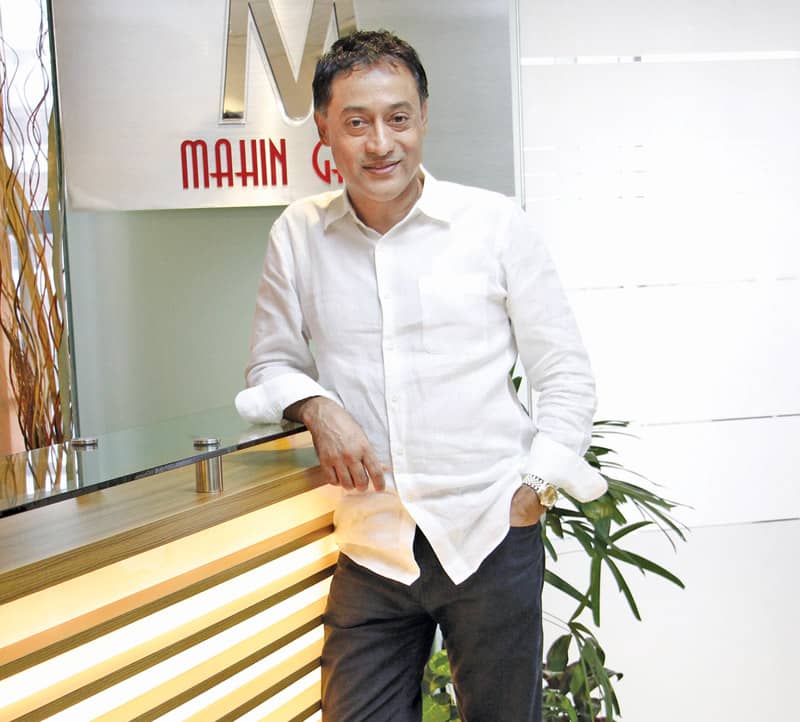
“Garmenting now is a small part of my business. In the 1990s, I was one amongst few big players in garment manufacturing in Bangladesh…,” reminisces Abdullah, who wound up one of his two RMG units in 2003 and the other one, although operational, is more into subcontracting business now. “Though I have been approached by the buyers several times, I refrained from manufacturing garments,” states HFL’s Managing Director underlining how other garment manufacturers felt threatened by the prospect of him weaning away their clients. The company is now contemplating to set up a green garment factory (still at the drawing board stage) for its own brand of apparels.
HFL, which has all the processes in-house right from weaving to dyeing and finishing except spinning, sources the yarns majorly from countries like India, Vietnam, Indonesia, Thailand, etc., depending on the kind of yarns that it requires. In pipeline for HFL is a 50,000-spindle spinning facility, to come up sometime late next year.
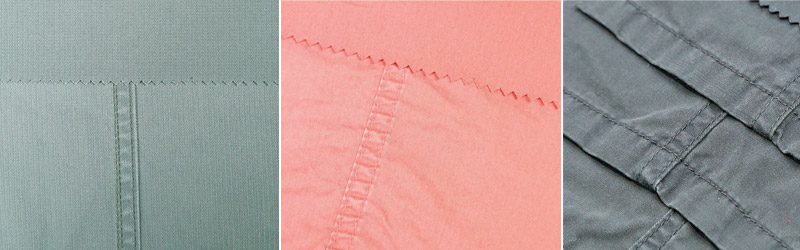
The company produces around 2.5 million yards of high-quality fabrics every month in more than 150 constructions which include Twill, Canvas, Oxford, Ribstop, Bedford Cord, Ottoman, Herringbone along with 100% cotton and blended fabrics mixed with Rayon, Spandex and other similar yarns.
Also, Hamid Fabrics highly automated yarn dyeing facility at Narsingdi, a short distance from Dhaka, would be up and running in a month’s time. “With this new plant, our production capacity will add up to 3.5 million yards per month,” says Abdullah, who has installed loops from Toyota for this facility.” According to him investing in high-end machines, although is a costly affair, is worth doing considering hassle-free performance and quality output.
The company’s MD realises that the drive for growth today is not only about the right machines but also product development and innovative offerings, and to facilitate which he has his eldest daughter Nusrat Mahmud, a qualified fashion designer from Polimoda (Florence, Italy) and also the Director of HFL, to helm the planned design studio and work in tandem with the full-fledged and seasoned R&D team to deliver the much-needed thrust as HFL sets in motion with the massive expansion drive. “These days the oriental concepts are gaining popularity, so we might hire people from Korea or even Japan for the design studio… Initially, it would be only for the fabric segment,” maintains Nusrat, determined to move up the value chain to offer high-end and differential fabrics to her clients. But, considering HFL’s huge setup and equally large production capacity, producing high-end and fashionable fabrics, which are mostly made in smaller quantities, prove to be an impediment? “Not at all; I have designed this facility differently… We have a lot of flexibility, so much so that I can even do 200 metres of fabric. I have installed different sizing and warping machines in it,” explains Abdullah putting to rest all doubts on the feasibility of going for value-added fabrics.
Nominated supplier for brands such as Abercrombie & Fitch, V&F, H&M, Uniqlo and the likes, Hamid Fabrics’ turnover from fabrics is around US $ 85 million currently, which Abdullah aspires to take well past the US $ 100 million mark by next year. Apart from capacity enhancement, HFL’s name and standing in the global arena for quality and timely delivery would be the other vital keys in achieving this goal, feels Abdullah. “… I would rather not do a project than compromise on quality of the product, employee welfare and environmental safeguards,” maintains HFL’s MD on a parting note, whose pursuance of excellence, quality and services, made Hamid Fabrics Limited what it is today, a leading and reputed fabric supplier from Bangladesh.