The coronavirus pandemic, just like what it did to the garment manufacturing industry of Bangladesh, had a long-lasting and adverse impact on the retail sector of the country as well with many retailers, especially those into fashion and lifestyle, failing to do good business this year, be it during Pohela Boishakh, Eid-ul-Fitr or even on Eid-ul-Azha.
If the Bengali New Year and Eid-ul-Fitr were complete washouts of sorts subsequent to detection of coronavirus cases in the country and lockdown and restrictions put in place by the Government to curb further spread of the pandemic, retailers managed to do some business during Eid-ul-Azha, which, however, was not enough to make up for the losses suffered.
Also Read: Could Eid-ul-Azha improve the fledgling sales of fashion retailers in Bangladesh?
However, as claimed by many economists that Bangladesh would witness a V-shaped recovery once the pandemic passes that would offer scope enough for businesses to not only recover and restore but also make progress, two new players (in fashion retail) have already opened their outlets in the upscale Banani 11 area in the capital city, getting ready and doing the groundworks in anticipation of the opportunities that the quick and sustained recovery after the sharp economic decline (on account of COVID-19) – which is a characteristic of V-shaped recovery – would offer.
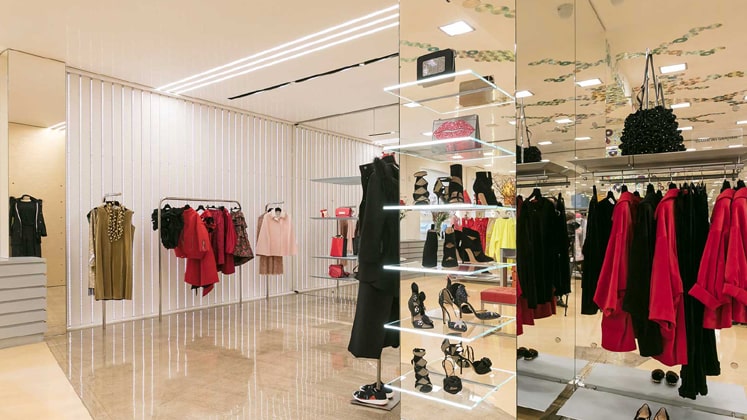
While one is the outlet of Yoyoso, a South Korean fast fashion designer brand, the other is a store of Roar, a newly founded lifestyle brand.
Fakir Apparels, a sister concern of Fakir Group, brought Yoyoso to Bangladesh, in what is the top garment exporter’s first step in the retail landscape. It had signed a deal with Yoyoso back in December, becoming the master franchisee of the company, which has a footprint in 60 countries and more than 2,000 stores.
The first store of Yoyoso Bangladesh was opened on 1 June, right in the middle of the global coronavirus pandemic. “We are receiving an overwhelming response from the people of Dhaka. We had not expected the response to be this great,” Munzarin Zaman, Managing Director, Yoyoso Bangladesh, told the media.
The shop caters to all age groups with products such as toys, digital accessories, cosmetics, skincare, haircare, stationeries, homeware, plates, cutleries, cups, glasses, flasks, trendy handbags, shoulder bags, flip flops, seasonal merchandise and fashion jewellery.
All the products in the shop reportedly came from Yoyoso’s headquarters in Seoul.
Further, when many retailers are cutting jobs and closing stores in an effort to keep afloat, Yoyoso Bangladesh has employed 20 people and provided them with full salary and Eid bonus too!
“Currently, we have one store. We plan to open 10 more stores in coming years depending on the economic recovery,” said Munzarin, who is also a Director of Fakir Apparels and Fakir Group.
Further, to cater to the online customers, Yoyoso Bangladesh has also inked a deal with a logistics company to provide home delivery.
On the ground floor of the same building that houses Yoyoso, is Roar.
“I have a dream to take this Bangladeshi brand to global consumers,” claimed Mahir Haroon, Founder & CEO, Roar.
According to him, big brands sell apparel items that are made in Bangladesh. But these clothes can be sold at a price that is several times lower than what the famous brands charge.
“So, I want to sell the best quality clothing items at a convenient price,” maintained Mahir, adding, “We will be adding more lifestyle items in the near future.”
Even though the entrepreneur had to struggle to throw open the doors in the midst of the pandemic, he ultimately went ahead and did so.
“It was supposed to open a few months ago…,” said Mahir, indicating that had it not been for the COVID-19, customers would have got a chance to shop menswear, womenswear and kidswear including T-shirts, pants, jeans, shorts, loungewear and athleisure from the outlet much earlier.
However, now that it has opened its store in Banani, one can go to the outlet to sample its rich collections or even order online.
“We still encourage home delivery and I am happy to provide jobs to several people during this tough time,” claimed Mahir.
Meanwhile, even as COVID-19 continues to create hurdles for fashion retailers, the upscale boutiques, which have been a trademark of the country offering customised and diverse range of apparels to upwardly mobile clientele, are finding out their own ways of negotiating the challenges to keep afloat.
One such name is Azaaraz, an upscale boutique run by Sultana Nasreen Shumi.
Following the detection of the first COVID-19 case and the announcement of countrywide shutdown from 8 March, she was left with no option but to shut her shop and factory for the time being.
As the shutdown, which was initially supposed to be for 10 days, kept on getting extended, Sultana had to find out ways on how to keep the business running, pay salaries of the 12-odd staff members, while also pay rent of the space.
As her atelier and showroom were housed in the same residential building in Gulshan, which the building authorities declared out of bounds for the non-residents on account of the pandemic, and also that a big chunk of her workers live in Mohammadpur (another part of the city), who found it difficult to commute in such a scenario amidst restrictions, Sultana rented a space in Mohammadpur instead and shifted her atelier there.
Further, to address the issue of the closed showroom, she opened a Facebook page for her boutique, where she put up her creations, whose ticket prices start at Taka 5,000 and go up to Taka 30,000, on display and also took custom orders.
“I never thought that people would respond so much during this hard time. With what I have been able to earn, I have been able to pay the salaries,” said Sultana, who has reportedly recovered around 60 per cent of her sales and is now upbeat about the future.
The boutique has since opened its doors to customers, but only on an appointment basis.
Sarah Karim Couture is another upscale boutique in Gulshan, which shares a similar story as Azaaraz.
The brand now sells items only through digital platforms.
“We have never emphasised online before. I would only put up photos of the photoshoot on Facebook earlier. But now, pictures of every dress are uploaded on Facebook,” Sarah Karim, the owner and designer of the boutique, shared her new-found way to keep the business running.
Like Sultana, she too has been able to cover the salaries and rent and also turn in a small profit. Sarah has also cut down her price tags to tide over these challenging times and let sales flourish.
She is also happy that, given her efforts, she has been able to bring in some clients, who would otherwise shop from overseas destinations. “Those who used to go to Kolkata for shopping are not able to go there now. They are now coming to us and asking us to make clothes for them. As a result, the clientele base is broadening,” Sarah explained.
The efforts put in by these entrepreneurs to keep the business up and running proved once again, no matter the challenges, where there’s a will, there is a way!
Also Read: Bangladesh’s rebound in export earnings in July: An indication of export revival?





 Bharat Tex Special Report 2026