Bangladesh has always been known as a basic garment products manufacturing destination. However, in recent times, many established and emerging destinations are also doing a lot of basics. Vietnam, one of Bangladesh’s competitors, is making rapid progress in this direction. Other emerging hubs such as Myanmar and Ethiopia are also posing a threat to Bangladesh as they are getting a significant chunk of the basic garment orders. Thanks to the Chinese entities, which are now doing large-scale investments in these countries to hold on to the orders moving out of China in face of the US trade embargo imposed on the latter.
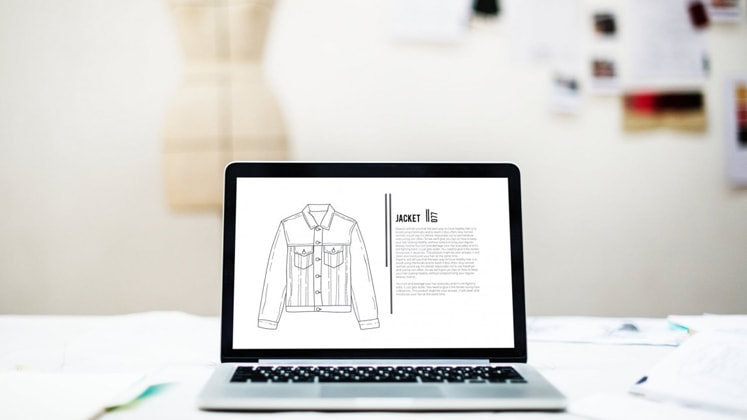
Previously, Bangladesh’s product basket was limited and it did not have an upper hand in manufacturing value-added and fashionable items. However, factory owners have now understood the significance of product diversification, as a lot of factories can be seen investing in their infrastructure to cater to high-end garments such as jackets, ladies dresses, fine-gauge sweaters etc. And these products require fabrics which are not at all easy to handle or sew.
“We are manufacturing jackets and high-fashion jeans with thicker fabrics, especially denim and heavy twill. There are a lot of denim giants in Bangladesh but we have a vision to establish our name as a high-fashion product manufacturer,” told Helal Uddin Ahmed, Chairman, JCL Group to Apparel Resources. The group came into existence nearly 20 years ago and has seen unprecedented growth since then with its 6 sister concerns, Fashion Flash Ltd. being the largest of them.
Helal Uddin further informed that his company felt the need for a new product category because some products have never been made by Bangladesh. It’s worth mentioning here that Bangladesh’s overall RMG exports in FY 2019 stood at US $ 34.13 billion and the share of jacket category was US $ 4.38 billion in that, making 12.83 per cent of the exports. Whereas, T-shirts contributed 20.54 per cent and trousers accommodated 20.33 per cent in the overall exports, the data shows jacket category has good export figures and that can further rise if treated rightly.
“Amongst newest products, ladies skirts and lingerie have already been started by a lot of manufacturers and they are doing well with at least 7 per cent growth every year. While we wanted to make our space in quality denim jackets because normal jackets, padded jackets and fur jackets were previously there, the type of jackets we are producing has always remained an underdeveloped category for exporters,” claimed Helal Uddin, adding that China is already making fashion products and buyers think no other country can cater to the kind of products China is doing. “But, Bangladesh is changing this perception now,” asserted Helal Uddin.
The industry is certainly facing challenges as labour cost is increasing, electricity and gas costs are rising. On the other hand, order quantities from buyers are getting smaller and price margins are being squeezed. In this scenario, the biggest challenge for a factory owner is to survive for a longer period of time as well as remain competitive while catering to small order quantities. Only effective factory planning and technology can help them achieve this.
On the sewing floor, Fashion Flash previously used at least 7 workers to set a pocket in denim jeans but automated jeans pocket setters have of late helped the company reduce at least 5 operators in this process. “Marking is 100 per cent accurate in pocket setters which were not possible manually. Secondly, bottom hem of jeans is a difficult process and we could make just 120 pieces manually with skilled workers, but with technology we can now produce over 2,000 pieces a day,” informed Helal Uddin.
Any high-quality product comes into existence from its design phase which is well observed by the company. Earlier it used to get designs from the buyers’ side but now Fashion Flash has started developing its own designs using technology and its own skills as well as designers.
“In this case, we can save cost as well. We needed more time to work on buyers’ designs previously which is not the case now. Fabric matching, deciding trims and accessories have become easier, and apart from cost, we can minimise product development time too,” stated Helal Uddin.
Endorsing the same, Saad Abdullah, Deputy General Manager (Head of Design & Development), Meghna Knit Composite Ltd., explained that the factories which have in-house design teams have advantage of showing buyers newer products. “The other ones who wait for buyers’ approval, new trends and forecasting will surely lag behind and that’s happening now,” said Saad. Meghna Knit is into manufacturing of high-fashion activewear, ladies tee and lingerie and, Saad claimed, only a few manufacturers in Bangladesh are producing such high-end garments.
Meghna Knit is also riding high on automation, especially in pre-production process. Since order quantities have been squeezed and Meghna Knit is focusing on product variation, the machines that have been installed in the factory can cater to small orders which is the need of the hour. Furthermore, the company has started using 3D simulation which has gained a lot of space in Bangladeshi factories recently. The buyers are located at far off places from manufacturing factories; so if a merchandiser sends sample to them, it takes a number of days (sometimes weeks) for the sample approval and recommendations which involves huge amount of cost and time. After every variation or correction, the pattern master has to modify the pattern according to the buyers’ requirements again and again to see the desired results. Seemingly, the process is an arduous task and this is where automation is necessary.
“If automation is done at the initial stage of product development, then there are less chances of errors. We have just started 3D simulation for ladies tee and activewear with a software provided by Optitex and we are sure to eliminate bottlenecks in sample making process,” explained Saad whose team is also using Gerber Technology’s marker making software to find out fabric consumption.
Another group that is emerging rapidly in fine-gauge sweaters and lingerie manufacturing is Mahdeen Group. When its business started in Bangladesh, the scenario was very different and as such the market demand even now is different. Mahdeen Group started with basics, however it has eventually set a certain image of the country’s manufacturers within the minds of buyers and has ignited a thought among them that companies in Bangladesh are willing to expand and invest in design and create more trendy styles using technology.
The company started with a sweater facility but it has diversified into lingerie manufacturing as well a couple of years back. Though lingerie and intimates as a product category can never experience a slowdown, there are elements and certain ways to produce high-fashion garments like these using automation to match up with the rapidly changing buyers’ mindset. Imtiaz Shuvo, General Manager (Merchandising and Marketing), Mahdeen Group, told Apparel Resources, “Technology is key to see long-term sustainability of the business. Since our products are not basic products, it is imperative for us to use automation both in sweaters and lingerie divisions.”
The situation is quite overwhelming for Mahdeen Group in 2020, but until 2016, only volume orders for basic sweaters were coming from buyers to Mahdeen Group because of cheap labour in the country, and to see exponential growth, the Group had to take cautious but necessary steps before investing blindly in automation.
However, there are reasons why Mahdeen Group was quite sceptical about the use of fully automatic machines previously. The concern with respect to fully automatic machines was that production cost would rise as the whole factory would have to be air-conditioned, which would make the running cost of the factory very high. The management was aware that Shima Seiki and STOLL are giving machines on deferred payments, but at the end of the day, it’s the factory owners who have to pay, and after two years, when they have to pay back, most of them would default if historical data of Bangladesh’s garment manufacturers is anything to go by.
So, Mahdeen’s management decided to install 20 automatic machines initially and gradually increased the number. “Right now, we have around 500 automatic knitting machines,” rued Imtiaz.
Growing their core business, which is sweater manufacturing, by making value-added sweaters such as jacquard and other complex designs, Mahdeen then went ahead to invest in technology and started using the latest STOLL computerised flat knitting machines CMS 502 HP+ which are considered one of the best machines in this segment.
“We are also about to install 400 computerised flat knitting machines provided by Shima Seiki by June which will add a feather in our cap as Mahdeen Group will become a factory where two best of the technologies, Stoll and Shima Seiki, are adopted,” claimed Imtiaz, adding that his company is also negotiating with Shima Seiki to adopt its 3D Design System for virtual prototyping which will eliminate the need for making multiple samples. “We will surely save a lot of time, cost and improve quality and efficiency by investing in 3D virtual prototyping solution,” he further shared.
In the lingerie division, Mahdeen Group is using the auto-cutting machine provided by Gerber Technology and is planning to invest in bonding machines as well by 2020-end since high-end bra needs a lot of quality and the majority of bras in the market are not produced precisely. One of the major issues is that breast hangs over the underbust line, especially in plus size bra. The use of bonding machines and 3D virtual prototyping by Mahdeen Group at the start of 2021 is expected to bring breakthrough changes in the product quality.