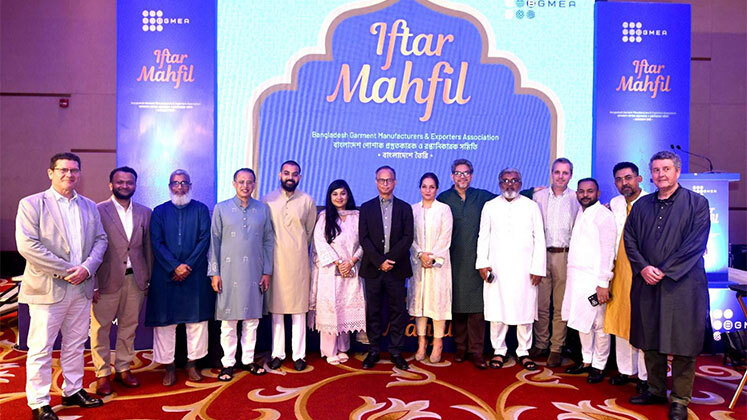
The Bangladesh Garment Manufacturers and Exporters Association (BGMEA) has called for closer collaboration between international brands, development partners and industry stakeholders to address the evolving challenges facing the global apparel supply chain.
The appeal was made during a gathering in Dhaka that brought together representatives from global brands, international organisations, diplomats and development partners. The event was chaired by BGMEA President Mahmud Hasan Khan and attended by a large number of international stakeholders connected to Bangladesh’s garment sector.
Speaking at the event, Khan said Bangladesh’s apparel industry was entering a new phase of development following recent national elections that had restored political stability and strengthened confidence in the country’s business environment. He noted that the industry had set an ambitious target of reaching US $100 billion in apparel exports within the next decade and highlighted the country’s leadership in sustainable manufacturing, with more than 275 LEED-certified green garment factories currently in operation.
Khan emphasised that, amid growing global uncertainty, stronger cooperation between manufacturers, international brands and development partners had become increasingly important. He stated that sustained partnerships with global stakeholders would be essential to drive the next phase of transformation and growth in Bangladesh’s apparel sector.
BGMEA Senior Vice-President Enamul Haque Khan said the industry’s current position had been supported significantly by the continued trust and engagement of international brands. He expressed appreciation for the role played by development partners in helping the sector move towards more sustainable and responsible manufacturing practices.
Representatives of global brands also participated in the discussions. Ziaur Rahman, country head of H&M in Bangladesh, highlighted the importance of maintaining effective dialogue and coordination between industry bodies and the government to address policy-related challenges affecting the garment sector.
The meeting was attended by representatives from major international buyers and retailers including H&M, Decathlon, Bestseller, Tesco, C&A, Carrefour and Mayoral, alongside officials from organisations such as the International Labour Organization (ILO), GIZ, KfW Development Bank, the International Finance Corporation (IFC) and the United Nations Industrial Development Organization (UNIDO). Diplomatic representatives from several embassies and international agencies were also present.