The environmental impact of denim has been a matter of central discussion over the past years, with an increasing number of denim brands aiming to develop stronger sustainability standards to minimise the industry’s environmental impact. On the supply side, more and more fabric mills are increasing usage of recycled and/or biodegradable materials to produce their fabrics.
As brands and supply chain partners seek greater sustainability, the denim industry’s demand for eco-responsible alternatives is growing rapidly. Lenzing has been working closely with such partners to counteract environmentally harmful denim production processes via the botanic origin of its raw materials and responsible production processes.
According to the UN, approximately 2,000 gallons of water go into making one pair of jeans. It’s no secret that the conventional dyeing and washing process is one of the most harmful contributors during the production of denim garments.
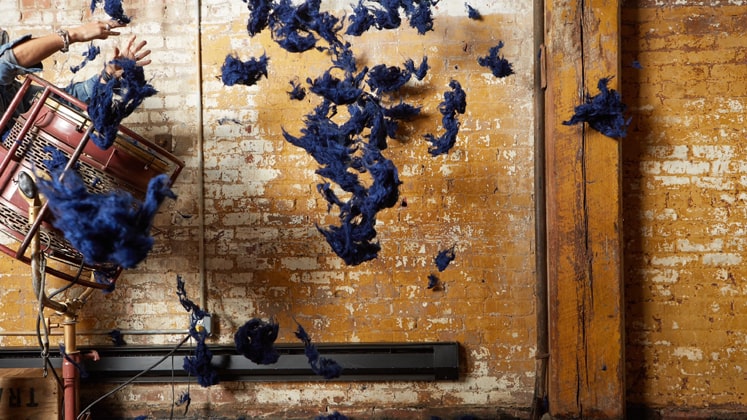
Recognising the need to reduce the ecological footprint of denim, Lenzing introduced TENCEL™ Modal fibre with Indigo Color technology which delivers superior colour fastness with substantial water, chemical and electricity savings, with less wastewater produced and no heat energy used.

“Lenzing has continually innovated new technologies to support brand partners in enhancing sustainability, and given the conscious shift toward eco-friendly denim, we saw this as an opportunity to create a new system that could offer an eco-responsible alternative to denim production,” Tricia Carey, Director of Global Business Development for Denim at Lenzing, told Apparel Resources (AR) in an exclusive interview.
“Our Indigo Color technology was born to combat concerning impacts that conventional denim production practices have on our planet, as well as complement our existing sustainable TENCEL™ branded modal fibre to further reduce the ecological footprint of denim fabrics and garments. While Lenzing is already producing spun dyed fibres in our portfolio, so we considered indigo pigment as an option too,” she added.
Also Read: Creating a big impact: trueBrowns
Produced in Austria, predominantly from beech wood derived from sustainably managed wood sources, this new offering has been designated BioPreferred® by the United States Department of Agriculture (USDA).
“Innovation is at the core of what we do, from sustainable fibre sourcing through industry leading features and production processes, with the ever-present goal of safeguarding our environment,” Florian Heubrandner, Vice President Global Textiles Business at Lenzing AG told AR. “By upending traditional manufacturing processes and implementing our pioneering technology along with renewable and eco-responsible materials, TENCEL™ Modal with Indigo Color technology sets a new benchmark for indigo application and sustainability in the denim industry.”
Indigo Color technology builds upon the strong credentials of TENCEL™ Modal fibres with new benefits. Compared to conventional indigo dyeing, the colour retention of TENCEL™ Modal with Indigo Color technology is superior through dry and wet crocking and rubbing. Despite resistance to home-laundry fading, wash-down effects for denim products can be achieved using commercial laundry techniques.

TENCEL™ Modal fibres with Indigo Color technology are inherently versatile and enable implementation in a range of multi-fibre blends. Compared to water and energy-intensive conventional indigo dyeing, this technology provides indigo coloration with substantial water, chemical and electricity savings, along with less wastewater produced, and no heat energy used. In addition to the above, a specially commissioned indigo pigment from dyestuff manufacturer DyStar® ensures that TENCEL™ Modal with Indigo Color technology can be certified with STANDARD 100 by OEKO-TEX®, guaranteeing ultra-low levels of aniline.
“This specially commissioned indigo pigment is based on more than a decade of our working experiences on Indigo Synthesis in Germany. Twenty-five years ago, we invented the most eco awarded DyStar® Indigo Vat 40 per cent to meet the demand for sustainable manufacturing and production,” Günther Widler, Head of Technology, Denim of DyStar® said.
COMPARISONS BETWEEN TENCEL™ MODAL FIBRE WITH INDIGO COLOR TECHNOLOGY AND CONVENTIONAL DENIM DYEING PROCESSES
The Indigo Color technology is a one-step spun dyeing process that incorporates indigo pigment into TENCEL™ Modal fibres and has a smaller carbon footprint. Based on Lenzing’s testing, while comparing this innovation to conventional powder indigo dyeing and pre-reduced liquid indigo dyeing, the resource savings are significant with:
- Water savings: 99%
- Chemical savings: 80%
- Electricity savings: 99%
- Wastewater savings: 99%
- Heat energy savings: 100%
In general, the higher the percentage of TENCEL™ Modal fibres with Indigo Color technology used in the fabric, the greater the potential savings over traditional range rope dyed indigo yarns.
Aniline is a precursor for synthetic indigo, and aniline impurities remain on fabric after it has been dyed. Oeko-Tex and Bluesign have placed limits on aniline in their standards, and a number of brands include aniline on their restricted substance lists.
COLLABORATIONS WITH THE INDUSTRY
To make the commercial launch of TENCEL™ Modal with Indigo Color technology possible, Lenzing partnered with Adriano Goldschmied, widely regarded as the ‘Godfather of Denim’, along with leading supply chain partners including denim mills such as Candiani and Cone Denim.
Commenting on the collaboration, Alberto Candiani, Global Manager of Candiani, said, “With driving sustainability at our core, we look forward to a fruitful collaboration with the production of this eco-responsible fibre type. TENCEL™ Modal with Indigo Color technology also represents a great product to expand denim’s performances and aesthetics around sustainability itself.”
Steve Maggard, President of Cone Denim, further added, “Lenzing has long been an industry leader in sustainable fibres. With consumers being more eco-conscious, the denim industry has to evolve and innovate in smarter materials.”
Titled the ‘Seed of Joy’, the concept capsule collection features woven, circular and sweater knit fabrics made using the TENCEL™ Modal with Indigo Color technology, in partnership with mills such as Blue Diamond and In The Loop, as well as machinery producer Shima Seiki.
Commenting on the collaboration, Tricia said, “Since I started working for the TENCEL™ brand in 1998, Adriano has always been interested in our TENCEL™ branded fibres. For the past 10 years, Adriano has been one of the leading advocates for the denim industry to lower their environmental impact. So, it was a natural process that we work together on this new denim innovation. It was a great privilege to work with such a legendary designer, his longstanding push for sustainability coupled with his industry experience made the collaboration a truly productive and insightful experience.”

HOW TENCEL™ MODAL FIBRE WITH INDIGO COLOR TECHNOLOGY EXPANDS DENIM FABRICS AND GARMENTS’ PERFORMANCES AND AESTHETICS WHILE BEING ECO-FRIENDLY?
The use of the TENCEL™ Modal fibres with Indigo Color technology provides advantages to the designs compared to traditional denim fabric. The fibres have improved colorfastness compared to conventionally dyed fibres.
With increased colour retention one can achieve a richer blue colour that is also less likely to leak or stain other garments during wash.
FUTURE TRENDS IN DENIM FOR MENSWEAR, WOMENSWEAR AND KIDSWEAR
The denim product is a staple for many people, and as the industry continues to develop different denim designs, cuts and uses, Lenzing is keen to continue to be at the industry forefront to provide the ability to sustainably produce eco-fibres for the denim industry.
On this front, Lenzing has been actively partnering with different designers, brands, influencers and industry tastemakers to achieve the above.
Currently the denim industry is working hand-in-hand with supply chain stakeholders to tackle all the major apparel industry challenges to reduce the environmental impact, as well as address consumer need for greater comfort apparel with joggers and looser fits.
“The use of our new fibres has no design limitations and adds the additional comfort of sustainable consumption for our designers and consumers. Denim is tackling all the major apparel industry challenges to reduce the environmental impact and at the same time, is addressing the need for comfort apparel with joggers and looser fits,” Tricia explained.
KEY OPPORTUNITY AREAS FOR BRANDS AND MANUFACTURERS TO TAP ON BASED ON CURRENT CONSUMER DEMAND
Sustainability is a primary focus for the denim industry which will continue to increase in the long-term, as manufacturing of sustainable denim is occurring, so are consumers indicating a preference for brands that implement eco-sustainability in their denim production.
These consumers are interested, active and engaged in the conversations that are taking place around becoming more eco-friendly as a planet and as such brands need to participate and provide avenues for that conversation.
“Supply chain transparency is also developing rapidly, consumers are deeply interested in knowing exactly how their denim is made and where it comes from. For brands to succeed in this respect, they need to develop comprehensive resources that highlight each step of the process from fibre to shelf,” Tricia highlighted, adding, “Brands should always think of ways to address circularity in their production process, starting with vintage or upcycle concepts. Even textile recycling can happen with fibres like TENCEL™ x REFIBRA™ technology where cotton waste is upcycled to make a new fibre.”
Authenticity is another important factor for brands – instead of making false sustainability claims and greenwashing campaigns, brands should highlight real initiatives and actions they are taking to gain and/or maintain the trust of their consumers.
IMPACT OF COVID-19 ON THE DENIM INDUSTRY AND ITS SUBSEQUENT BOUNCE BACK PLAN
In light of the COVID-19 pandemic, discussions on environmental and social responsibility have become more complex across the denim industry. Currently, many brands are still struggling with conscious consumption and production, and no longer can we measure success simply through production levels or sale numbers. On the operational side, the industry is also facing a series of challenges such as continual social change, enhancing inclusivity and COVID-19 recovery.
Commenting on the same, Tricia said, “While denim imports have decreased, we are now seeing more fashion styles beyond the traditional 5 pockets with truckers, dresses and joggers. Recently, there were also some interesting eco-denim collaborations such as Target X Levis and H&M X Lee.”
She then went on to add, “Denim has stood the test of time and we are certain the industry will continue to evolve using the best available technology and innovation.”
The entire supply network needs to address ways to reduce the environmental impact and improve social standards. Embracing sustainable raw materials is just the beginning – the industry would need to drive more in-depth discussions about broader aspects of sustainability, including transparency of production, waste management, upcycling, recycling, traceability and more.
“The circular economy is another important part of not only our own commitment to the environment, but that of the entire textile industry. The idea that we can overhaul the traditional linear supply chain into one which promotes circularity is our industry’s best chance at reducing reliance on natural resources. As such, we work across many stages of the supply chain to assist with the formation of a holistic circular economy. This begins with our fibres which are sustainably produced, designed to last longer and can be composted once they reach the end of their useful life,” Tricia concluded.