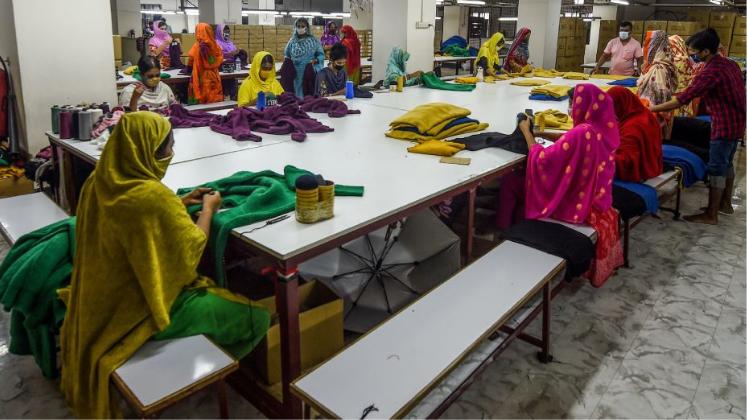
The escalation of tensions between Iran and Israel has raised concerns about garment shipments from Bangladesh. This is adding to the strain on the global supply chain, which is already straining due to the continuing Red Sea situation and the Gaza war.
If the tensions turn into a full-fledged war, local garment exporters fear that the cost of doing business would go up much more, as rising shipping costs and disruptions to oil transportation across the Middle East could result in a spike in worldwide petroleum prices.
Since the Red Sea crisis in October, buyers have been extending the time to ship products by an extra 15 days, thus providers are already being asked to fulfil orders as quickly as feasible.
Before the Red Sea issue, which affects the Suez Canal that connects Asia and Europe, became the centre of the world’s unrest, shipping commodities from Chattogram to European ports typically took thirty days.
The strain has compelled carriers to reroute ships around South Africa’s Cape of Good Hope, causing delays of up to three weeks due to the extra 3,500 kilometres of journey and increased operational costs.
Also, because of the crisis, several clothing retailers and brands are near-shoring and shifting some orders away from Bangladesh to Turkey or Vietnam to avoid disruptions to the supply chain.
The lack of orders coincides with Bangladesh’s largest foreign exchange earning industry trying to recover from the devastation the Covid-19 outbreak and the Russia-Ukraine war caused to the world supply chain.
Since numerous companies compete in the same markets, a shorter lead time has emerged as a critical quality for nations trying to become more competitive in the global garment trade.
International businesses pay the shipping charges, but they also absorb the additional expenses by either directly or indirectly transferring the cost to suppliers, according to exporters.
In more than 95 per cent of cases, buyers pay the freight charge as they do trade on the freight-on-board method. Suppliers bear the burden in less than 5 per cent of shipments when the trade is carried out under the freight-on-cost method.