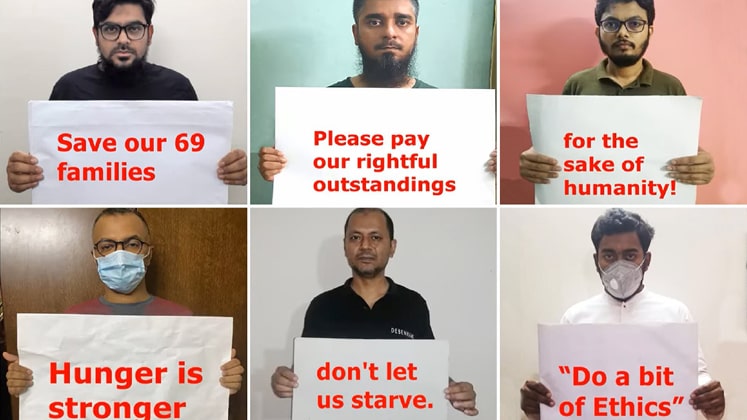
The recent activities of British multinational retailer Debenhams have created quite some stir in the Bangladesh readymade garment industry and brought the focus back on brands and retailers operating in the country for reasons that can be termed ‘controversial’.
Resuming operations after almost a month following the countrywide lockdown imposed by the Government, around 40 supplier factories that cater to the retailer were in for a rude shock when Debenhams allegedly asked for 90 per cent discount on orders placed.
“This is absurd. We are uncertain about receiving payment, as the company has appointed administrators,” maintained Zahangir Alam, Coordinator of Debenhams Vendors Community in Bangladesh and Managing Director of Design Source.
The struggling British department store – which is currently in what it describes as a ‘light touch’ administration and has appointed restructuring firm FRP Advisory to protect it from legal action from creditors – also owes around US $ 66 million to its Bangladesh vendors, of which, around US $ 40 million worth goods were lying with different factories while US $ 26 million worth apparel products are reportedly stuck up in various UK ports.
As the industry was slowly soaking in these unfortunate developments, which came as a big shocker following the large-scale order cancellations by many Western buyers, emerged the news that not stopping at asking for a 90 per cent discount from vendors, Debenhams went a step ahead to try and save its sinking ship, and that too at a significant human cost.
The retailer, which opened its liaison office in Dhaka in 2013, laid off all its 69 employees rather abruptly and at such trying times, forcing many to question its ethical values and business principles.
“We were verbally intimated of the move on 6 April, subsequent to which we received official communication through e-mails on 15 April that our services were no longer required and that we have been terminated from the job,” claimed a senior merchandising official of Debenhams’ Bangladesh liaison office, while speaking to Apparel Resources. Already grappling with the disastrous impacts of the COVID-19, Debenhams’ move came as a bolt from the blue for the concerned official, who is more worried about his pending dues and staring at an uncertain future with a family to take care of in these difficult times. The story is not much different for some of the 69 ex-Debenhams employees of Dhaka Liaison Office that Apparel Resources managed to speak to.
“The activities of the retailers/brands and how they operate in Bangladesh, especially foreign companies, should be under scrutiny to ensure employees are not deprived of their livelihoods,” said a senior member of the Bangladesh Garment Buying House Association (BGBA), an entity that has now taken up this issue on various platforms to ensure that the 69 employees of Debenhams are not abandoned.
The BGBA’s move gains even more significance in light of many other retailers operating in Bangladesh, reportedly considering to cut their manpower as well.
“Our clothing, predominantly readymade garments products’ main goal is European countries largely due to the highly advantageous trade terms granted by the EU, but in this pandemic situation, we are worried about our business, job security of employees working with liaison office or retailer’s office of foreign brands as well as its impact on the economy of Bangladesh. So, we seek your dialogue and exhortations with these liaison office and retailer’s office of foreign brands to retain their employees will help this worst situation prevailing here…,” wrote Kazi Iftequer Hossain, President of BGBA in a letter to Rensje Teerink, Ambassador and Head of Delegation, Delegation of the European Union to Bangladesh.
“We are working behind the scene with concerned ministries, European Union, Bangladesh Investment Development Authority (BIDA) and the Ministry of Textiles and Jute to fix a policy to ensure that brands respect the labour laws of the country,” further shared the concerned official of the BGBA.
As per the International Labour Organisation (ILO), a foreign entity operating in a particular country needs to abide by law of the land, especially the labour law, maintained the BGBA official adding brands which trick not to pay the suppliers, workers and its employees, will not be able to sustain in this industry nor should any country entertain such kinds of brands and retailers.
It may be mentioned here that as per the latest reports, a host of brands and retailers, including names like JC Penney, Victoria’s Secret, Sears, J. Crew and many others have either reportedly filed for bankruptcy or are planning to do so, which has brought the focus back on hundreds of employees that are engaged in the many liaison and branch offices in Dhaka, who may have to face similar consequences as that of Debenhams if adequate corrective measures are not put in place soon.