One after another, retail behemoths are going kaput! The global outbreak of the coronavirus pandemic is leaving behind a trail of devastation, in terms of lives lost and economic catastrophes that were never seen before.
As consumer spending on clothes has touched an all-time low, followed by large-scale store closures and extensive lockdowns, there seem no escape routes left for the brands and retailers to salvage their sinking ships. The result – increasing number of retail players are filing for bankruptcy, and thereby raising worries amongst sourcing hubs like Bangladesh, the economy of which depends significantly on apparel manufacturing and exports.
To start with, on 13 April, True Religion Apparel, the denim retailer filed for Chapter 11 bankruptcy for the second time in less than 3 years. Established in 2002 by Kym Gold and Jeff Lubell in California, the American clothing company focusing on premium denim has had to face stiff competition from the discounters and has been struggling for quite some time now. And now after COVID-19 hitting hard the retail landscape, True Religion underlined that it would’ve preferred to wait out the financial instability and stay-at-home restrictions but could not afford to do so, in its court filing.
The company’s largest lenders, ABL and Term Loan, are providing more capital to help with its restructuring. True Religion said it had assets and liabilities ranging from US $ 100 million to US $ 500 million, according to the filing. For the time being, the company plans to focus on its e-commerce till stores are reopened once again.
Then followed J. Crew – the American multi-brand, multi-channel, specialty retailer that offers wide range of men’s, women’s and children’s apparel and accessories, including denims, swimwear, loungewear, outerwear, sweaters, dresses, etc.– which filed for bankruptcy on 4 May.
Crew’s filing for bankruptcy made it the first big name from the US retail sector to have fallen victim to the COVID-19 pandemic.
Under the terms of the filing, its main creditors are set to take control of the Group in exchange for cancelling debts of US $ 1.65 billion. However, its 500 stores have been closed by the pandemic and some will not re-open even though the firm has not yet disclosed how many outlets would be closed down permanently.
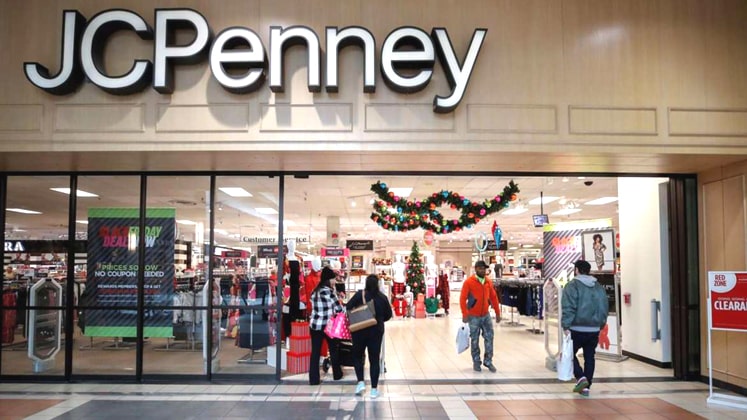
Even as garment manufacturers across the world were slowly coming into terms with these closures, JCPenney — American department store chain — filed for bankruptcy making it the latest in the list of retail giants to see its downfall due to the coronavirus crisis. The company blamed the worldwide spread of the deadly disease as the reason behind filing for bankruptcy.
“Until this pandemic struck, we had made significant progress rebuilding our company under our Plan for Renewal strategy and our efforts had already begun to pay off,” underlined Jill Soltau, CEO, JCPenney, who went on to add that the retail behemoth is in the process of implementing court-supervised financial restructuring to make a turnaround which would help it live up to its 100-year-old legacy and serve its customers better.
With a workforce of massive 85,000, JCPenney’s filing for bankruptcy made it one amongst US’s largest retailer to do so in recent times.
Seen from Bangladesh’s perspective, these developments are nothing short of ominous. Already reeling under large-scale order cancellations by global buyers and apparel exports dwindling by almost 85 per cent in April, exporters are now gearing up for tougher days ahead.
JCPenney filing for bankruptcy, in particular, which follows the Debenhams fiasco — Debenhams allegedly asked its around 40 vendors in Bangladesh for 90 per cent discount on orders placed and further owes around US $ 66 million to these vendors — has emerged as a major concern not only because the retailers source quite a significant volume of its requirements from Bangladesh but also the fact that since it filed for protection from bankruptcy, it will set the priorities in payment now. And usually when a company seeks bankruptcy, it pays the arrears to the employees, house rents on priority basis and gives priority in payment to the directors, which, however, is not the case as far as paying dues to the suppliers is concerned.
“I hope JCPenney will pay me on time as I am their long-time supplier,” underlined AK Azad, Managing Director, Ha-Meem, while speaking to the media. The company supplies garment items worth around US $ 25 million to JCPenney yearly.
Abdus Salam Murshedy, Managing Director, Envoy Group, said, “Sometimes the situation turns so bad that the buyer does not reply to our mails. This is a very bad time for us.”
JCPenney filing for bankruptcy has also come as a big blow to many fabric mills that supply raw materials to the vendors which cater to the American retailer.
“With bankruptcies, we are often left to the courts to settle our cases and it drags on for months and years,” Dr. Rubana Huq, President of Bangladesh Garment Manufacturers and Exporters Association (BGMEA), explained the repercussions of the current situation.
Given the situation at hand, it is but certain that it would take some more time before the dust settles down and things get a bit clearer for Bangladesh garment makers to chalk out their course of action, going ahead.