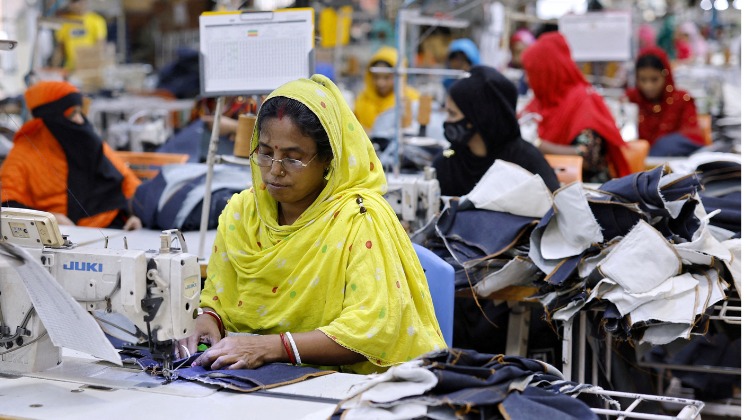
Bangladesh’s ready-made garment (RMG) sector could generate export earnings exceeding US $ 120 billion by 2030 if effective climate adaptation measures are implemented, according to a new study by Cornell University’s Global Labor Institute.
The research estimates that with appropriate climate resilience investments, Bangladesh’s apparel exports could reach US $ 122.01 billion by the end of the decade. In contrast, failure to address climate-related risks could limit export earnings to US $ 95.35 billion, representing a loss of nearly 21.85% of the sector’s full potential.
The long-term projections are even more pronounced. By 2050, the study suggests that comprehensive climate adaptation strategies could help garment export earnings rise to as much as US $ 1,038.22 billion. Without such measures, exports could stagnate at US $ 328.11 billion, significantly undermining the industry’s long-term growth prospects.
The research highlights that rising temperatures, heavier rainfall and frequent flooding are already having adverse effects on productivity and employment across the garment sector. With climate adaptation in place, employment in the RMG industry could reach around 4.83 million workers by 2030. Without intervention, the sector could lose approximately 250,000 jobs over the same period.
To mitigate these risks, the researchers recommend targeted investments in factory cooling systems, stronger occupational health protections, paid leave and medical benefits for workers, and the introduction of mandatory climate-resilient standards throughout the industry.
The study concludes that climate adaptation is no longer optional for Bangladesh’s garment sector. Strengthening resilience to climate shocks is now critical to preserving global competitiveness and ensuring the long-term sustainability of the industry in an increasingly climate-conscious global marketplace, the Global Labor Institute noted.