“When I first came to Bangladesh in 2012, it immediately struck me that it is a good place to start a business of my own,” says Anurag S Chauhan, Managing Director, Noize Jeans. Originally, Ghazipur-based Salek Textiles was providing Anurag’s India-based trading company with denim fabric since 2010. He would further source the garmenting from India and distribute the final product under his own label ‘Noize Jeans’ in India. It was in 2012 that Anurag got into a joint venture agreement with Salek and since then, the enterprise has grown many folds to become an exporter and a retailer with an international presence. In an interesting tete-a-tete with Apparel Online, Anurag talks about the Indian market and future of denim market in Bangladesh as an expat turned insider…
The joint venture proposed that a garmenting unit must be set up in Bangladesh. Consequently, the competence of Salek in fabrics, Noize Jeans’ consumer base in India and the benefits of in-house garment production capacities were brought under one umbrella, facilitating vertically integration of Noize Jeans in an impressively short period of time.
The thrust for Anurag was always on fit, fabric and wash, and the joint venture gave him an opportunity in all these areas. Anurag seized the opportunity and the first step he took was to steer clear of China-inspired manpower and machine-intensive production systems from the garmenting unit. “Bangladesh has duplicated China’s systems of producing one pair of denim using 64 machines. Such a system is dependent on cheap factory space and disciplined manpower and both of these components are very expensive in Bangladesh,” explains Anurag. In order to set-up a factory that did not repeat these fallacies, Anurag visited Italian factories where his opinion of fully automated factories was reinforced. “Clearly, it was a onetime investment with high savings in the long run,” he explains. The company has specialized sewing machines from Vibemac, Juki and Brother.
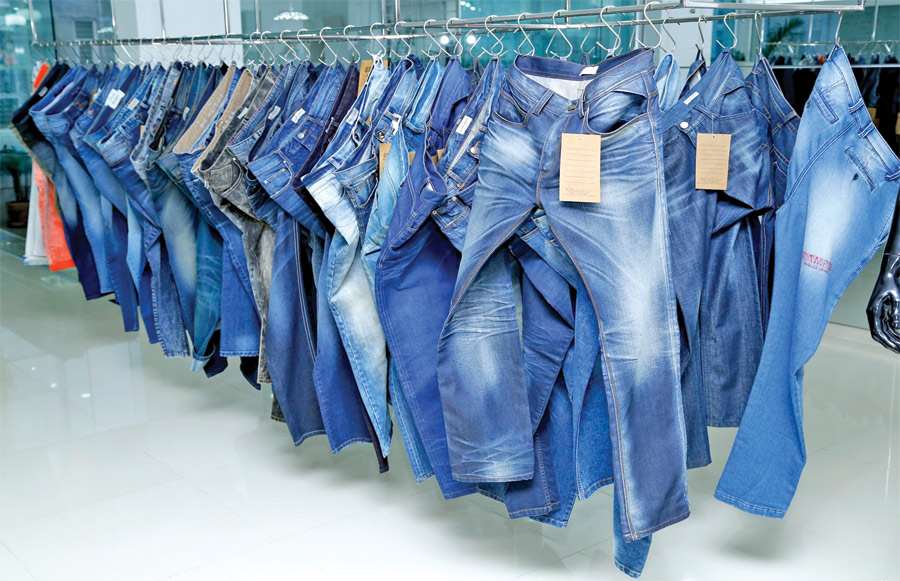
Currently, out of the 4,00,000 pieces manufactured per month, only 20,000 pieces are meant for the in-house brand – Noize Jeans. The rest caters to buyers across Spain, Australia, Dubai and India like Inditex, Mango, Just Jeans, RnB, Basics, Max and will soon be manufacturing for Splash as well. “Usually, the orders for Noize Jeans are clubbed with large volume orders,” reveals Anurag, on how he has managed to keep the production for Noize Jeans profitable despite the small quantities. Anurag’s academic background in textile engineering and production management of apparels continues to guide the product development operations of the company. “We often make our own recommendations to the buyers and they appreciate the technical inputs that they receive from us,” he avers.
Catering to India, a relatively new export destination for Bangladesh, in those days was much like a treasure hunt without a map. “India’s retail sector is quite unorganized. The companies still do not know how to plan their style and quantity requirements in advance and rely primarily on Bollywood trends for it,” he elaborates about the current market of India. Another challenge that Noize had to face was that working for Indian market meant no sizing standards were available. However, since Noize’s target audience is already accustomed to international fits, Anurag chose to continue with the international patterns.
“Everything is getting into comfort fits, and in denims this means that everything is getting into stretch. For men, the skinny style is coming into fashion; and for ladies, the boyfriend jeans, which is baggy, is coming back. Six months down the line, in international market this is what you will be seeing, not so sure about India though,” predicts Anurag.
Apart from the Indian business, Noize Jeans has reaped significant gains in other destinations as well with its value-added denims. The last three years had been about basic denims for Bangladesh because most of the manufacturers were catering to Walmart, JCP, Sears, Target, KMart etc., making the industry realize that working with basics and high volumes is a rat race worth a few cents here and there. “We have brought the skills required to do value-added jeans from Italy, Sri Lanka and Turkey. We invested in the infrastructure because we know that with a good wash we can sell a US $ 7 product for US $ 12,” explains Anurag. He however warns against turning the business entirely towards value-added for the productivity offered by these runs as high productivity is crucial for timely return on investment of automats.
Anurag is optimistic that the denim business is set to soar in the next two years. “Denim is a huge field worthy of exploration. It is even sold for US $ 5,000 a pair. So there is a lot you can do with it. Wait till a new style comes in the market and we will again see denim everywhere,” he concludes.