Knit apparels has been and continues to be a growth category for Bangladesh. Despite the slowdown in apparel consumption and exports globally, Bangladesh’s knit apparel exports have increased by 61% in value, from 2009-2010 to 2012-2013. The same trend is evident in the knit apparel exports from January to June 2014 – Knit apparel exports to Europe increased by 16% in value and to the US it increased by 15% in value. This upward movement in the value of the products highlights that the knit apparel manufacturers are not just adding capacities but are also adding value to the garments through printing, embroidery, washing and finishing to the end product. Apparel Online interacted with some of the leading knit apparel manufacturers and exporters of the country.

Today the industry unanimously agrees that vertical integration has not only helped the companies with on-time shipment and faster turnaround times but also paved the path for R&D in product development, moving up the value chain and having control over the lifecycle of a garment from yarn to fabric. With a turnover of US $ 200 million, 3,500+ sewing machines and 120 knitting machines, Epyllion Group is one such company that has witnessed phenomenal growth by focusing on kidswear. The company has in-house knitting, fabric dyeing, accessories manufacturing, in-house testing facility accredited by third-party testing agencies and adding 50 knitting machines along with yarn dyeing capabilities. With an investment of US $ 14 million, Epyllion Group has also commenced production of its state-of-the-art accessory manufacturing unit in Narayanganj, which would manufacture everything from polybags, cartons and labels to elastics. “With a vertically integrated setup you can experiment with various fabrics and accessories and present your own developments to the buyers. All this coupled with a strong washing, embroidery and printing setup, make us a one-stop-shop knits apparel vendor,” says Reazuddin Al-Mamoon, Managing Director, Epyllion Group. The Group has been majorly working with the European markets for buyers like M&S, H&M, G-Star and C&A.
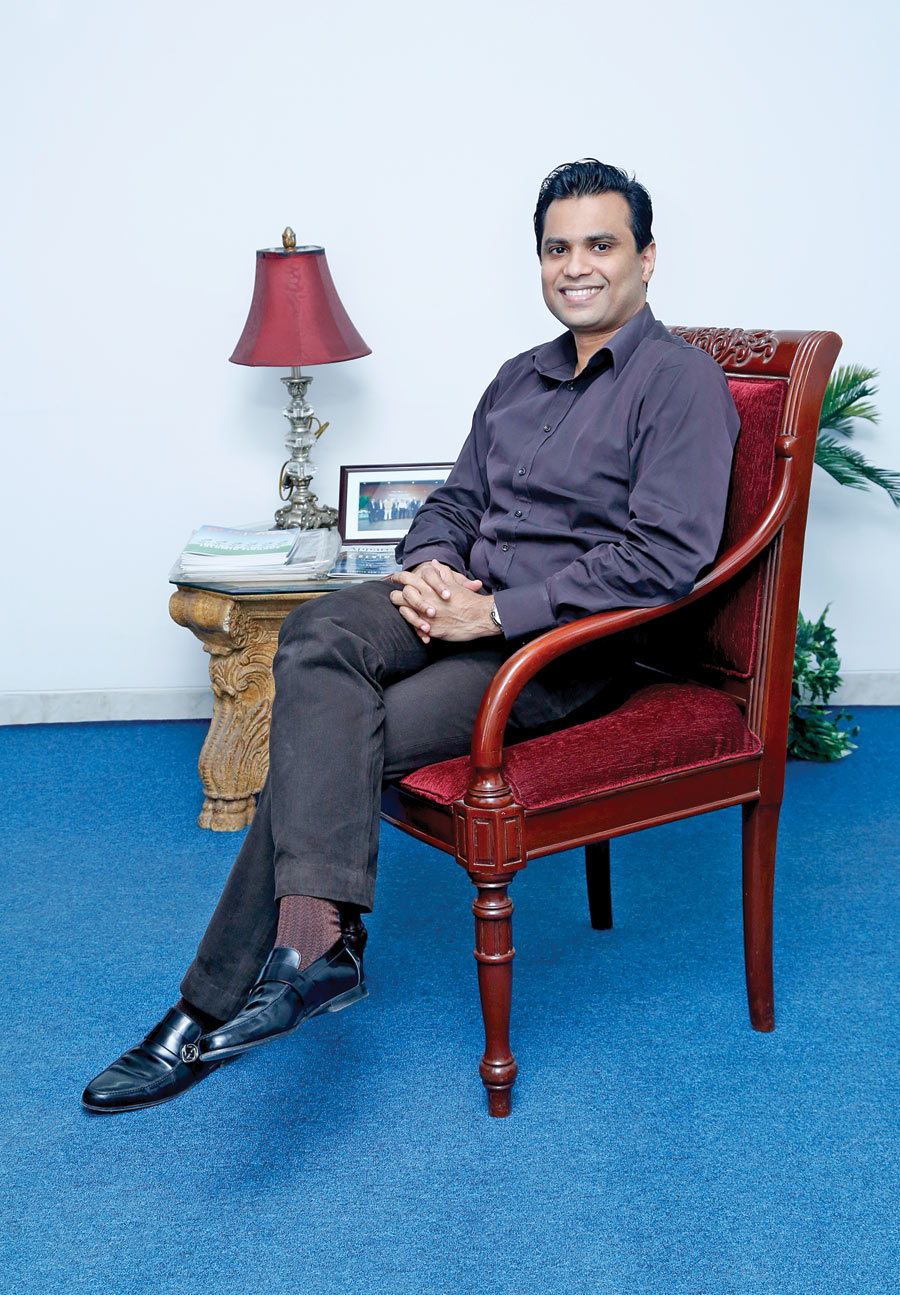
Part of the US $ 130 million Saiham Group of Industries, Saiham Knit Composite has also been able to move up the value chain due to strong spinning and knitting capabilities. Contributing US $ 24 million annually to the group turnover, Saiham Knit Composite is looking at US $ 30 million by next year and majorly working with buyers like Mothercare, M&S and H&M. “Besides working with regular fibres such as spandex, viscose, cotton and polyester, we are also developing a new bamboo jersey fabric, which is completely new for Bangladesh,” asserts Syed Shafqat Ahmed, Managing Director, Saiham Knit Composite, who is also looking at acquiring capabilities for manufacturing synthetic sportswear fabrics, which is China’s forte as of now.
With a combined capacity of 1,50,000 spindles, Saiham Group manufactures 82 tonnes of yarn per day, of which 5 tonnes is consumed by the company’s textiles mills with 19 knitting machines for supplying fabric to the sewing unit comprising 26 sewing lines with 650 sewing machines. “With a comprehensive spinning setup, not only we are insured against the varying yarn prices but also protected from the strikes in the country, as everything is in-house, our supply chain is not disrupted,” adds Shafqat. The company recently added 60,000 spindles to its spinning setup and plans to increase its sewing capacity to 32 sewing lines.

Buyers prefer sustainable factories
Both Epyllion Group and Saiham Knit Composite have USGBC LEED certified green factories. Saiham’s 26-line factory is a silver rate green facility and Epyllion’s 15-line facility has applied for the green certification. With both the factories established in 2014 only, the business done by both the knit apparel companies with the UK-based retailor Marks & Spencer has drastically increased since then. “Our growth with M&S has been 100% in the last one year and the company is still asking for more,” agrees Reazuddin. Adding on to the same, Shafqat states, “M&S has been a great support towards our green factory as with a sustainable and compliant facility we are able to align ourselves with the buyer’s initiatives such as Plan A, which emphasizes on cutting waste, saving energy, fair trade and welfare of the environment.” Reducing the carbon emissions, water consumption and energy consumption have been the focus areas for both the companies.
Falling in the footsteps of Epyllion and Saiham is Meghna Knit Composite, part of the industrial conglomerate Meghna Group. Contributing US $ 50 million to the group turnover of US $ 500 million, Meghna Knit Composite has 32 sewing lines, 9 tonnes per day knitting capacity and 23 tonnes per day fabric processing capacity along with in-house printing and embroidery. With its focus on sustainable operations and value addition, Meghna has meticulously added fabric dyeing and processing machines from Fong’s, Thies, Scalvos, Navis Tubetex and Lafer. “The most immediate benefit of such machines is improved fabric performance in terms of shrinkage, hand feel and colour fastness, but a long-term advantage is the reduced water consumption and chemical discharge due to which we need not increase the capacity of our ETP, which is a huge cost saving,” asserts Saif Ullah Saif, Director – Operations, Meghna Knit Composite. The company’s major market is Europe with buyers such as Perry Ellis, Pick N’ Carry, H&M, Tesco, C&A and Next.
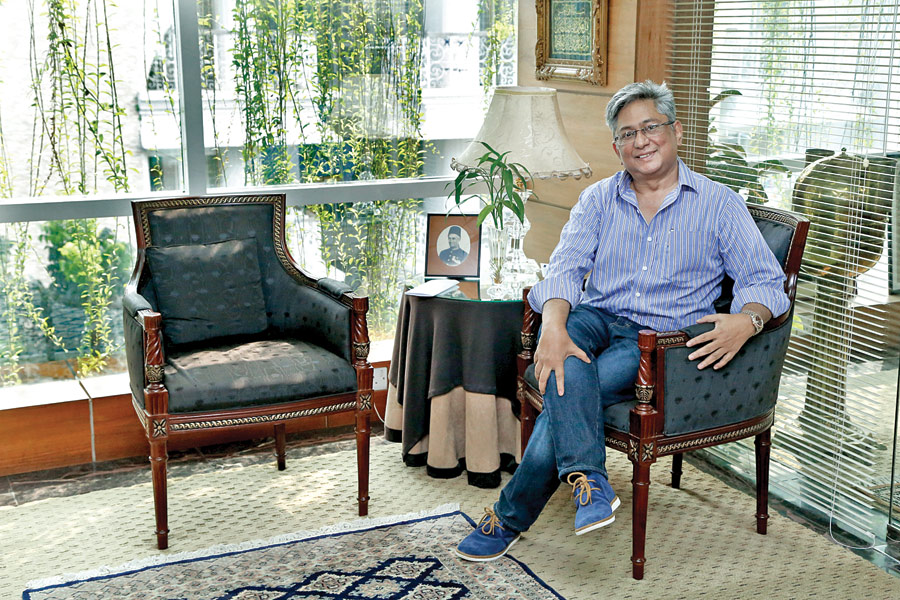
The expansion plans of Meghna include addition of 11 tonnes daily knitting capacity and 28 sewing lines as a part of a new green factory for manufacturing knits and lingerie products. Of these 28 sewing lines, 10 would be dedicated to lingerie and 18 would be dedicated to knits. Another unit with 24 sewing lines for knits would be commissioned by the end of 2014. “When buyers source knits, they prefer sourcing the fabric and garment from the same company; hence all our expansions are for the existing customers only. On an average, the sourcing of our buyers has increased by 35% this year, and till the time our expansions are commissioned their sourcing from us would increase by 70%,” shares Md. Monjur Hasan, Senior GM – Marketing & Merchandising, Meghna Knit Composite. Although the company is not looking for any new buyers, discussions are going on with Decathlon and Inditex for booking capacities in the upcoming facilities.
Both Epyllion Group and Saiham Knit Composite have USGBC LEED certified green factories. Both the factories were established in 2014 only, and the business done by both the knit apparel companies with the UK-based retailor Marks & Spencer has significantly increased since then.
Although not a green factory, another leading knit apparel manufacturer Echotex has been awarded the National Green Award by the Metropolitan Chamber of Commerce and Industry of Bangladesh for its zero discharge ETP. Established in a joint venture with UK-based buying house Echo Sourcing, Echotex has an annual turnover of US $ 80 million, 2,100 sewing machines and a daily dyeing capacity of 20 tonnes. “Our fabric dyeing plant utilizes the latest dyeing technology, consuming only 45,000 to 50,000 litres of water per tonne of fabric, which makes our plant more than four times as efficient as an average dyeing plant in Bangladesh in terms of water consumption,” avers Md. Bin Quasem, Managing Director of Echotex. The company has also saved water equivalent to three months of the company’s water consumption by rain water harvesting and steam recycling. “With such savings, we have been able to provide free lunch to our 7,000 employees every day, and even pay our sewing operators 25% more than the industry average,” adds Quasem. Echotex is majorly working with European buyers such as New Look, Debenhams, Primark, Peacock and Fat Face.
Besides using BCI cotton and recycled polyester for making fabrics, Echotex has looked at creating a niche in printing and has capabilities for screen, sublimation and digital printing. “Rotary printing was not an option for us as it pollutes the environment, that is why we went for digital printing and we succeeded in convincing our buyers to pay us the price for digitally printed products, what they are paying in India or China,” shares Quasem. Echotex has invested US $ 4 million in digital printers and is being assisted by its UK-based partners Echo Sourcing for design development. “We want to achieve the target of US $ 100 million two years down the line, for which we will rely on our niche in printing along with already existing washing capabilities,” says Quasem.
Using Fast React for the past 4 years, Epyllion Group has improved its on-time production start performance by 41% and on-time delivery performance of both the garment factories and fabric mills by 58%. Now the on-time delivery rate of the company is 95% and the on-time production start rate is 85%.
Planning is the differentiator
Planning, scheduling and controlling are the key aspects which define the success of a vertically integrated setup and the situation becomes much more complex when everything from the yarn to the fabric to the garment is to be approved from the buyers and then shipped on time. Realising the same, Epyllion and Meghna are using Fast React planning and scheduling software solutions. “Our planning department works with Fast React and we are actually able to ship 20 days before the delivery date. But not every buyer takes early shipment, so we inform them in advance and buyers like H&M are happy to take shipments before the defined delivery dates,” boasts Saif from Meghna, who believes in transparent communication within the organization regarding capacity utilization and production for successful planning.
Using Fast React for the past 4 years, Epyllion’s Group has improved its on-time production start performance by 41% and on-time delivery performance of both the garment factories and fabric mills by 58%. Now the on-time delivery rate of the company is 95% and the on-time production start rate is 85%. Even with Fast React, Reazuddin Al-Mamoon of Epyllion Group maintains a secretariat of four people, who update him on daily basis regarding the performance of the organization not only in terms of on-time delivery, capacity utilization etc. but also in areas of buyer ratings. “I call my secretariat ‘BP’ which stands for both Business Planning and Blood Pressure, and they help me in intuitive decision making and trouble shooting. Since the people in my secretariat are not responsible for production or quality, their sole job is to do unbiased reporting to me,” shares Reazuddin, but points out that the country has to go a long way in terms of developing its middle management for handling multi-million dollar businesses.