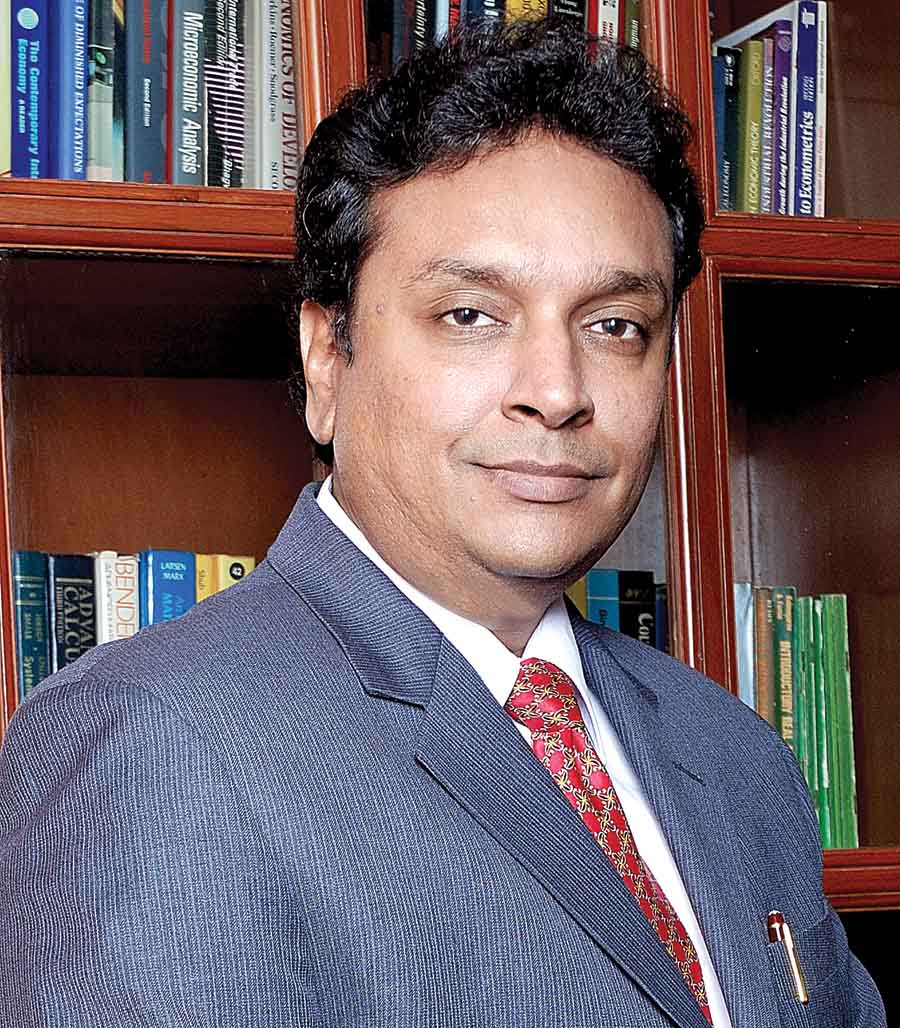
 India has different types of markets in different zones. Out of this, knitting of manmade fibres is more predominant in the western region in warp, as well as weft or circular knitting. A.T.E. is uniquely positioned to cater to both these segments of knitting where it represents Karl Mayer, Germany, for warp knitting and Tayu, China, for circular knitting. Confirming that currently there are immense investments happening both, in the warp as well as weft knitting sectors, Vikas Sharan, Vice President, Knitting, Synthetics, Non-Wovens & Carpets, A.T.E. Enterprises Private Limited talks to Apparel Online on various aspects of knitting technology including switching over from cotton to synthetic in circular knitting…
AO Is it difficult to change over from cotton to manmade in knitting?
In warp knitting you do not have much of a choice, but to go in for synthetic filaments. However, for circular knitting, one can choose to go in for either cotton, blends, spun or filaments. It is not difficult to switch over from cotton to synthetic in circular knitting, barring some small changes to be done for taking care of static generation like shifting from say, a tube creel to an open ended one. Yes, the abrasion is more in case of synthetics and this takes its toll on the needle life.
AO Can a cotton knitting machine be converted into a synthetic knitting machine with some customisation?
Yes, like as I said above for circular knitting. You can also change the gauge of the machine by keeping extra cylinders in order to have different varieties of fabrics. The diameter however, has to be maintained the same for a particular machine. For example a 34” dia machine can have gauges between say 8 to 60”, but in the same diameter. For each gauge, one needs to have a separate cylinder and in some cases the needles and sinkers need to be changed too.
AO Is the technology expensive?
Warp knitting is a relatively expensive technology when compared to circular knitting technology, requiring more climatically controlled atmosphere due to very high working speeds. Circular knitting technology is quite common and can be set in normal atmospheric conditions. However, for getting consistency in terms of productivity and heat generation control all year round, it also needs acclimatisation. But again, it is not a necessity.
Thanks to the shrinkage of technology in circular knitting due to the China factor, today even jacquard machines are becoming available at much lesser prices, thereby triggering a demand, which was hitherto quite cautious while making machine purchases. Hence, making different designs of fabric will become easier and better.
It is interesting to note that warp knitting process is getting speedier, crossing the 3000 RPM mark, while also incorporating features like embroidery effects on the fabric being knitted in one of the machine models, thereby adding value. 3D spacer fabrics which are made with two layers of fabric separated by a monofilament can have a space of up to 50 mm and are being used in the automotive industry, mattresses as well as for acoustic purposes.




 Bharat Tex Special Report 2026