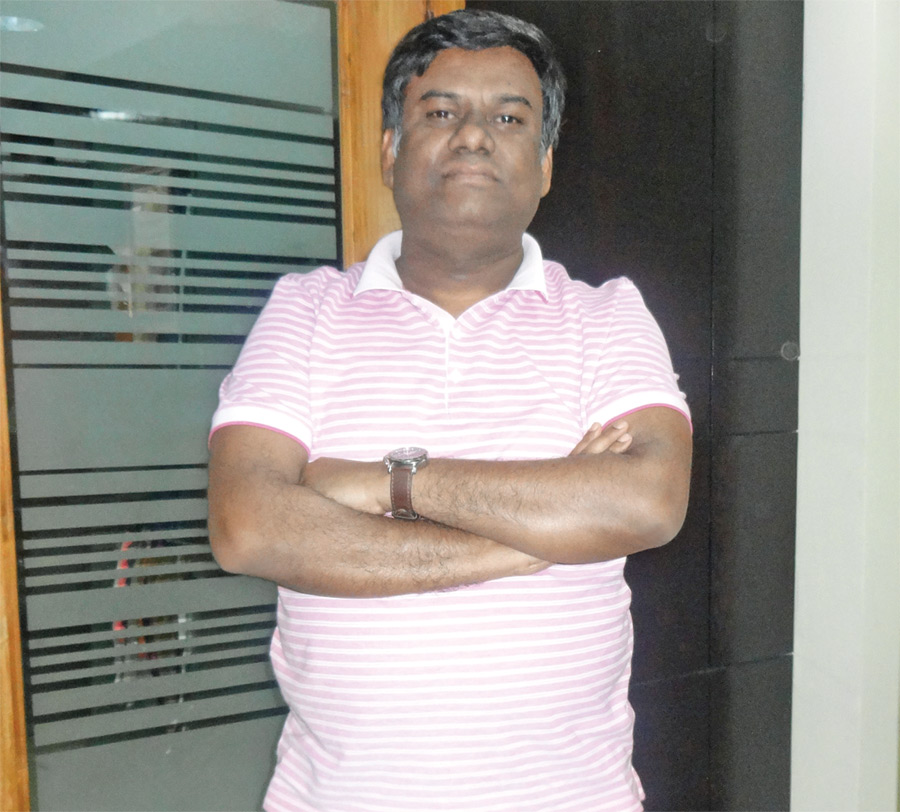
The Bangladesh apparel industry is becoming increasingly fluid; manufacturers who earlier focused on a single product category are now expanding their capabilities to offer more than one product and that too without incurring additional infrastructural costs. This trend is catching up as buyers prefer to do business with manufacturers who can be their single point of source. A.B. Siddique Khan, Managing Director, Rio Fashion Wear, is also following this strategy to increase his company’s business. “Buyers have become flexible with their orders; they may place orders for bottoms and then ask whether we can provide jackets as well. So it makes sense not to concentrate on any one particular product category. In fact, it is the need of the hour to be flexible in manufacturing and have the capability to produce different products,” says Siddique while confirming the trend.
Rio’s current product range that comprises of 70% bottoms and 30% tops, will now include fleece jackets and kidswear. What’s more, the new garments will be made at the existing sewing lines by simply changing the attachments as and when required, though some lines will remain dedicated to making only bottoms and tops. “A total changeover of the product say, from bottoms to tops, can take up to 8 hours or more because bottoms being heavier, the needle plate has to be changed. Since we cannot immediately stop what is already running in the line, the switchover has to be made gradually by changing the attachments in the input area,” explains Siddique who is involved in product sampling and costing, and in the initial production phase, including adding more machines if required.
He agrees that making different products on the same lines will bring new challenges and the workers will have to have the requisite skills as well. “My workers are multi-skilled and can work with different products, so if I am making bottoms in my line, I can immediately switchover to tops. But yes, some of my lines are dedicated to bottoms and some to tops, but the rest have been kept flexible,” explains Siddique, whose aim is also to increase the company’s profitability, is looking at areas where he can reduce the overheads. Having introduced auto thread trimmers in every line, it made sense to reduce the number of helpers (for trimming) in every line. “We have strategically placed 10-15 auto trimmer machines per line in our standard line of 55 machines. No doubt, these machines are expensive but the reality is that we now need a lesser number of helpers. We have a maximum of 15 helpers which we plan to reduce to 10,” he says. He justifies this in view of rising labour wages. The helper’s job is cutting or trimming the threads in line, but with 10-15 auto thread trimmers in each line, there is less need for manual trimming. With a leaner workforce, he would free up more space on the floor and save on resources such as water and electricity consumed by the workers. He informs that the remaining helpers in the factory would be upgraded to assistant operators.
However, removing helpers was not so easy for Siddique, especially with operators fearing that their workload would increase and their production would come down. “It was a real challenge for me. I had to deal with resistance from the operators who felt that they would be required to do the work of the helpers also. There used to be 25 to 30 helpers in a line, but when the numbers went down suddenly, they felt that output would also go down. I and my production team had to assure them that if they worked a little more, they would also be paid more. It’s all in the mind really, and I had to change their mindset,” he says.
Rio Fashion Wear that started its garmenting business post the quota regime in 2005 with four lines of 200 sewing machines, has grown substantially over the years and now houses over 1,100 machines. With a turnover of US $ 30 million in 2014, Siddique says that they are looking at a growth rate of 6% in terms of value in 2015, and informs that to meet the company’s increasing business plans, they are considering setting up a new manufacturing unit outside Dhaka.