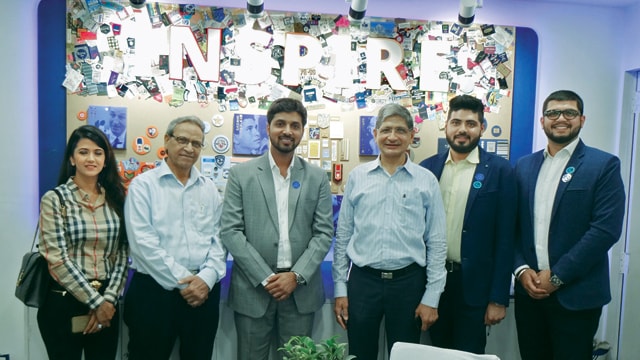
The second edition of the Delhi Chapter of F&A Show, an established name, and which has already acclaimed recognition in Bangalore, was well-received by the visitors, though many exhibitors shared that big names from the export segment were missing. Yet, overall, both the participants and visitors were happy with the experience. Among the products that drew attention were new options in knitted fabric and increased possibilities in local sourcing of accessories like labels, tapes, buttons and interlinings. The fact that most of the participants were eager to project their commitment to ‘Make in India’, only added to the thrust on innovation and quality to ensure that garment manufacturers and buying offices source products from local companies.
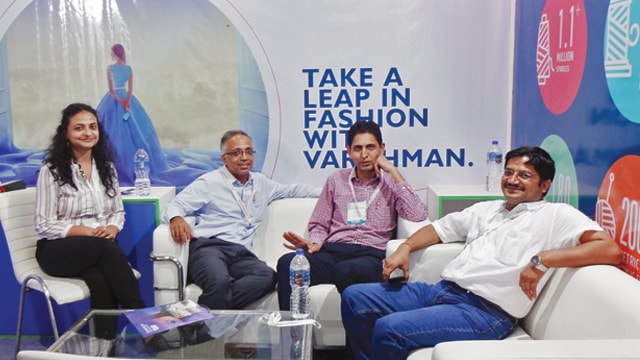
Innovation is without doubt the biggest buzzword for the textile supply chain today and every player is putting fresh thrust on the area to survive. The trend was seen not only with huge companies like Vardhman and Reliance, but also with smaller, niche companies. “The products may look similar because of the category, but the differentiation that comes through R&D makes every product unique,” argued Siddharth Jain, Director, Velcord Textiles, a Mumbai-based company specializing in corduroy and velveteen fabrics. With latest technologies, the fabrics are manufactured for conventional as well as high-end fashionwear and include several combinations of weaves, weights and fibre blends, after which many finishing techniques give an exclusive look and feel. “We strive to produce superior quality fabrics through extensive in-house product development. Our constant endeavour remains to progressively raise our pre-set bar to satisfy and exceed our customer’s expectations,” added Siddharth.
Indeed the quest for higher benchmarks is pushing the industry to new heights. “The need to differentiate has never been so strong and we have moved beyond double yarn blends to multi-yarn blends using many diverse categories like cotton, modal, tencil, lycra, and other specialized yarn to create unique fabrics,” shared NK Agarwal, Director, Duratex India. The Mumbai-based company is a vertical set-up from weaving to garmenting and has recently added fabric for womenswear tops that are woven, but have the feel of knitting, a product that was a major attraction at the booth. The current focus of the company is also on garmenting and the next generation has recently entered the online space with an in-house brand – Urban Scottish – for men’s shirts. “Since we are already strong in fabric, I wanted to add value by converting the same into garments. Now we are looking to add bottoms also to our garmenting profile,” averred Nikhil Agarwal, Director at Duratex Retail.
The event showcased wide range of products – from yarn to fabrics to accessories. Some core products were fine yarn dyed shirting, wool, polyester-wool, polyester-viscose suiting; pure and blended linen; fine high-end silks; fashion dress materials in prints and solids; embroidered; a wide range in denims; corduroys, cotton twills and drills.
Garmenting seems to be the direction for many of the next generation directors at fabric companies. Akshay Jain, Director, Sangam Weavers shared that having attained a reputation of being an innovative producer of knitted fabric with different blends, constructions and finishes, the company is now focusing on promoting its knitted garments which were introduced 5 years ago to the company’s profile and is already manufacturing for brands like Color Plus and Raymonds, and is also available through online shopping. “There is so much creativity happening at the fabric stage that we decided to get into garmenting to take this creativity right on to the end user,” reasoned Akshay. The amazing range of fabrics on display caught the attention of many buying houses and exporters.
The textile supply chain is being innovated right from the yarn stage and companies with specialized yarns like Raysil and Asahi Bemberg are in great demand. “Everyone is looking for better hand-feel, lustre, drapability in garments and that is only possible by using specialized yarns with properties which can enhance the basic yarns,” argued Shailendra Pandey, Joint President (Sales & Marketing), Indian Rayon, the producers of Raysil fashion yarns from the house of Aditya Birla Nuvo Limited. At the event, the company met many manufacturers from the Northern region and merchandisers from buying offices, and the response was good. The concentration of the company today, is on creating a network of partners to use Raysil so that more garments of the same can be introduced into the market, generating bigger demand. As of now, Surat is the biggest market for Raysil, accounting for over 50% of market share for the product.
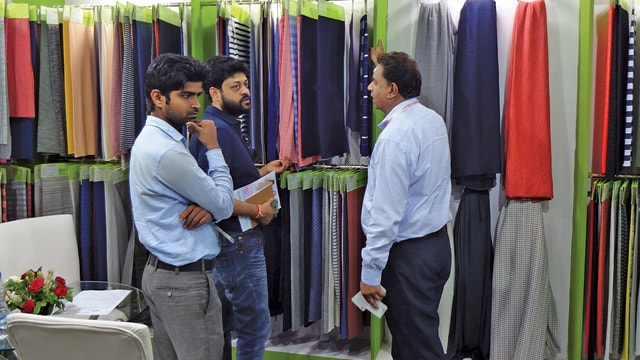
In fact, weavers in Surat are very proactive in experimenting with specialized yarn and many companies in the segment are targeting the market with vigour. The city is also the biggest market for Asahi Bemberg, a regenerated cellulose fibre derived from cotton manufactured by Asahi Kasei Corporation, Japan. Since Bemberg originates in the natural cotton plant and is reborn with the infusion of human technology, it features both the gentleness of natural fibres and the functionality of man-made fibres. “The soft hand-feel, lustre, breathability, moisture absorption and natural properties of Bemberg make it an attractive option for weavers looking for yarn in categories like womenswear and sportswear,” said Hideto Tanimoto, General Manager, Cupro Division, Asahi Kasei Corporation. Tanimoto adds that the raw material for Bemberg is mostly sourced from India and re-engineered into both staple and filament fibres for a wide range of applications. India also happens to be one of the biggest markets for the fibre, accounting for one-third of the global market share. Moving ahead, Tanimoto sees more growth as the textile chain is exploring newer options for differentiation.
Accessories follow the innovation theme…
In the accessory segment, the attempt to offer something new was equally prevalent, whether the product was an elastic, lace, button, thread or interlining. “The days are gone when standard products were made. The new generation of owners, designers and merchandisers are very well aware of trends in the market and we get such detailed spec sheets with uncompromising specifications in elongation, width, colour fastness, print, weave/knit type, etc. and there is no room for any mistake. Our job is to ensure that all these parameters are met to perfection,” shared Sunil Mody, Director, Lion Tapes. The company has a production capacity of 6,00,000 metres per day in 1 inch width elastic and is flexible in product requirement though they prefer to work in bulk and offer smaller quantities mostly to prime customers. Having an in-house lab, all products are tested for buyer norms and then sent for validation to third-party testing companies like Intertek and Bureau Veritas. The high-quality elastics from the company have earned them a global nomination from Jockey and they are also the biggest suppliers of elastics to FCUK brand in India.
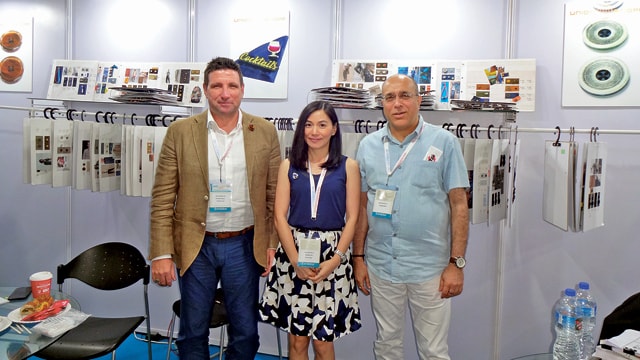
The demand for innovation, however, does not supersede the need for competitive price. Eberhard Ganns, MD and Bianca Chai, General Manager, Union Knopf (HK) Ltd. were very vocal on the ironic relation between quest for newness and quality versus price pressures. “The domestic market is our main focus because the exporters already work with us through global nominations, and we find that though everyone wants the best, many are still not ready to pay the price,” said Bianca. Eberhard added that the struggle between cost-cutting and enhancing brand value is not new, but “we have a clear strategy to remain in the high-end niche segment and not cannibalise our own worth by trying to service all customers at every price point.” According to the company, an innovative button manufacturer from Germany, the latest trend is towards buttons that go well with athleisurewear and casualwear that double up as workwear, an extension of the athleisurewear trend. As a market leader in design and material innovations, Union Knopf presents trend collections twice a year, having buttons and trims for men, women as well as unisex buttons.
Another company which has earned reputation of high-end offerings, Sharman Udyog, witnessed heavy visitation from buying offices. The woven labels offered by the company are manufactured by latest European technologies and have sharp colour and picture quality in every piece. “We have always invested in best of technologies and training to get results that are hard for other companies/manufacturers to produce. Even though we are among the market leaders, consistency of quality is still the biggest challenge because weaving in a small product like label is very complex and requires high skill levels,” said Hira Lal Jain, Director, Sharman Udyog. He added that constant development of new concepts and responsiveness to new techniques and ideas has always kept the company ahead.
Talreja Textile Industries, manufacturers of 100% cotton fusible interlinings received many new enquiries for its wide range of Talco brand interlinings. Varun Chhabria, VP Operations of the Mumbai-based company was happy with the visitor profile, as they met many new buying houses. He shared that of late they have upgraded their products to service the premium brands. “We are looking to work with both the domestic and international brands. While we are already well placed in the domestic scenario, we are communicating to the international brands that we have all the right certifications in quality and sustainability to be a preferred supplier, besides which we are cost-effective too compared to global brands in interlinings,” shared Varun.
While Coats was promoting their latest venture, Permess – a range of interlinings for garment industry in selected markets, and Indian manufacturers of accessories, like Elegant Buttons and Nilesh Ribbons, were happy that manufacturers are now looking at local companies for many items which earlier were being imported. Shell buttons and fancy laces/ribbons, respectively from the two companies, are receiving good demand from both local brands and buying offices.
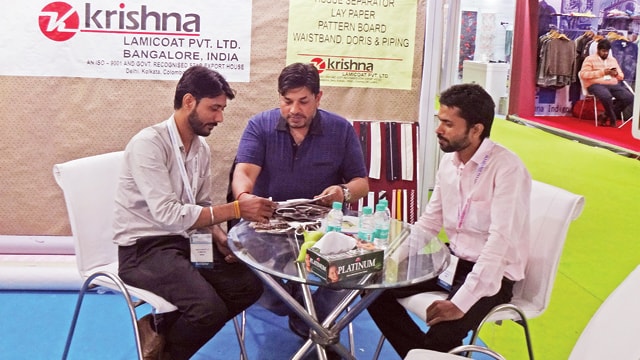
In the meanwhile, Krishna Lamicoat of Bangalore was promoting its recycled paper bags for packaging and hand-out purposes. “Nidhi Dua, Country Head from M&S was very much impressed with our paper bags and we are hopeful that the company will explore ways to support these products, which are also a part of a bigger CSR effort to help women be independent by earning their own livelihood,” said Ashok Chhajer, Director, Krishna Lamicoat.





 Bharat Tex Special Report 2026