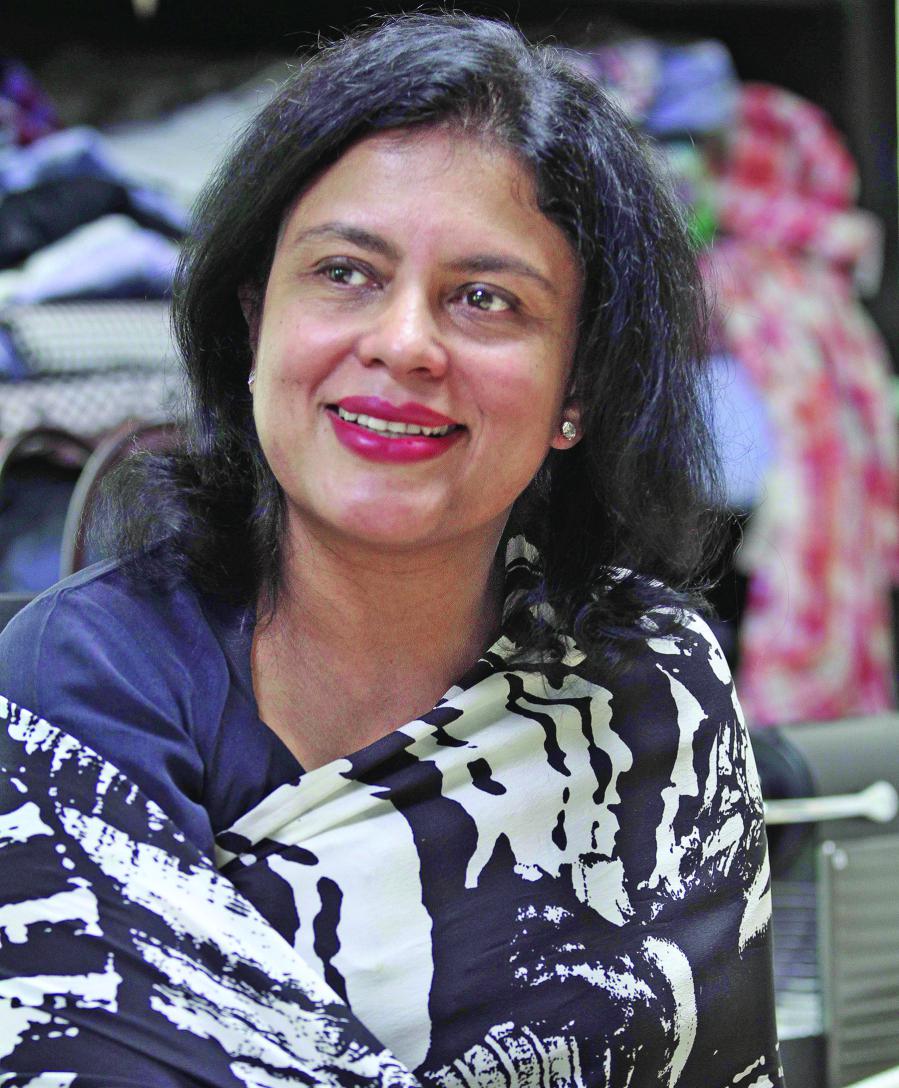
It’s not every day that one comes across a person of Rubana Huq’s calibre and character. The multifaceted Managing Director of Mohammadi Group is an entrepreneur, writer, philanthropist, wife and mother, all rolled into one. Her modesty and simplicity however belie her achievements. Apart from being a successful industrialist, Rubana is also a well known figure in the literary circle of the country. Her prolific and insightful writings have earned her the coveted SAARC literary award in 2008. She also holds the rare distinction of being selected by BBC for its 100-women conference, from across the globe, for two consecutive years and subsequently tasked with mentoring a not-so-privileged young Cambodian woman on which the channel has also made a short film. Currently, Rubana is pursuing her doctoral degree in English literature from Jadavpur University, Kolkata. However, what puts her in a different league as an entrepreneur is her people-centric approach to business. “My workers are my biggest assets,” she says adding, “Much more than business, it’s the proximity with the workers, which motivates and keeps me going.”
Starting her career as a banker, Rubana had to take over the mantle of the group from her husband Anisul Huq – a well known businessman of the country – when he decided to pursue life as a politician. He served BGMEA at different positions besides being the President of the Federation of Bangladesh Chamber of Commerce and Industries (FBCCI), the apex trade body of the country and currently the Mayor of Dhaka North City Corporation. Says Rubana: “I did not come into the company by virtue of being the Chairman’s wife…, I had to earn my position amidst many odds; it’s been a continuous endeavour to deliver and prove myself, even to my husband who, I wasn’t sure, was taking me seriously then.”
In the last 19 years, the group under Rubana’s dynamic leadership has grown and diversified into real estate, power generation, media, IT and software, besides strengthening its core business of garment manufacturing. “We started with one factory and today we have eight. The ninth one is going to start operations very soon,” says Rubana dwelling on the apparel side of her business which has an annual turnover of around US $ 70-80 million, employing over 8,000 people and catering to buyers such as H&M, C&A, Zara, Esprit, Sears, Walmart, Target Stores to name a few. The upcoming Gazipur-located production unit, which would cater to woven garments, is a LEED-certified green building.
Driven by her concern for the well-being and livelihood of the workforce, Rubana kept away from implementing automation in her garment manufacturing units. “It has its advantages for sure; the sweater sector perhaps needs it more than others… I am all for technology that gives us leverage over efficiency and processes. For me it makes sense to be in the business as so many people are involved in it. I don’t want to leave them out in the lurch for few cents more,” maintains Rubana whose idea of compliance surpasses the regular structural integrity, fire and electrical safety. “It’s much more than that… For me real compliance comes with bridge-building and intimacy with the workers besides remedying our work practices.”
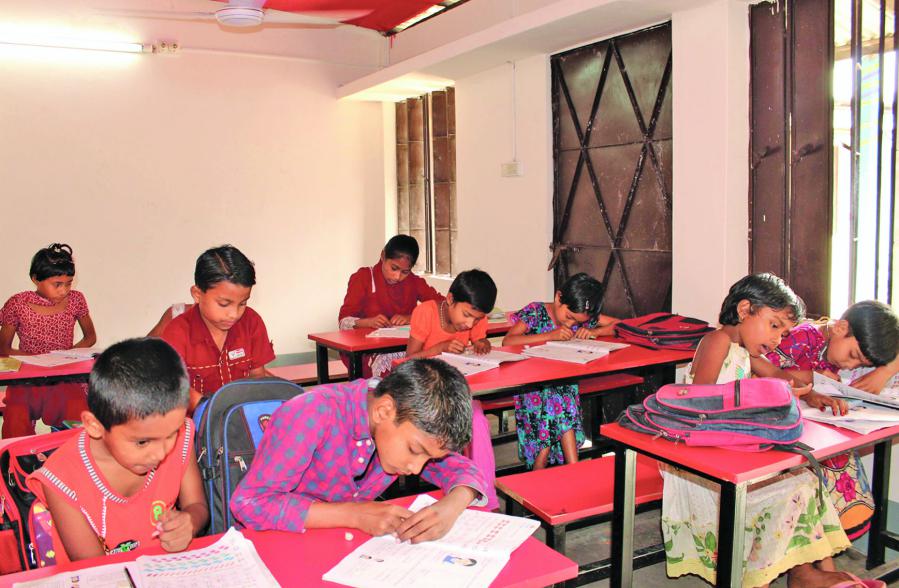
Rubana has initiated a slew of measures to improve the livelihood index of the workers and their family members through education and skill-building initiatives. She has tied up with an NGO and the Asian University for Women (AUW), Chittagong, to help uplift the socioeconomic status of the women workers through learning. “I have interviewed around 80 women workers and selected five out of them who were keen on pursuing higher studies to continue their education with AUW,” maintains Rubana. Food, lodging and study material requirements being taken care of by the university, Mohammadi Group would continue to offer them their basic salaries during the period to take care of other necessities. Post-graduate, Rubana plans to upgrade them to managerial levels in the group. “Mid-management is the problem area of the industry by and large. Through this initiative if I am able to address the issue to even a small extent, it will be a life-changing initiative,” says Rubana and adding, “I cannot change the whole world or the entire apparel sector but even if I can change the lives of a handful of people also, it would be an achievement.”
Mohammadi Group has initiated a host of measures to improve the livelihood index of the workers and their family members through education and skill-building initiatives.
Not limiting herself to the welfare of the employees only, the group’s MD has taken up the onus to educate their children also to enable them build a better future. To start with, she has roped in an NGO to implement a novel educational initiative for those at the pre-school level. “This new model of education does not require any paper, pencil or books; it’s a visual learning process. NGO Kajoli is helping us implement the project… We have already done it in one factory and planning to introduce it in others soon,” says Rubana, whose another brainchild Sharafer Pathshala, aimed at providing free education to workers’ kids, has been a huge success as well.
Besides education, the group has also embarked upon a mission to provide better housing facilities to its workers. The unique rent-toown concept, involving the global development network UNDP, would help relocate a large number of workers and their families in the upcoming 600-strong housing units, which the architects are designing with inputs from the workers to tailor-make the houses as per their necessity and requirements.
All these efforts initiated by Rubana have earned her rich dividends as well. If on the one hand the attrition has come down to a meagre 1 per cent, efficiency levels of the workers (75:25 men-women ratio in woven and approximately 50:50 in knit) has also improved a great deal. Having started measuring the efficiency of the workers around 2008-09, Rubana has also initiated exhaustive training programmes, especially for the sewing operators whose efficiency levels stand at a modest 47 per cent, to raise it by at least 65 per cent by 2016.
Irrespective of the efforts, Rubana believes it’s still some way to go to uplift the status of the industry’s women workers who, regardless of the overwhelming numbers, are still being stereotyped and prevented from moving up the hierarchy. So, along with developing their overall standing through education, skill upgradation and in-house training programmes to don bigger roles in workplace, Mohammadi Group is also aiming at attaining all-inclusive sustainability – social, environmental and healthy financials.