Institute of Textile Technology at the German University – RWTH Aachen University (ITA) has opened a ‘Dream2Lab2Fab’ Research Centre in Germany with cooperation from its Korean partners – Korea Institute of Industrial Technology (KITECH) and the Sungkyunkwan University (SKKU). The partnership has been undertaken with the intent of apprehending serial production of smart textiles in cooperation with small- and medium-sized enterprises (SME) from both Germany and Korea. For this purpose, approximately US $ 21.2 million will be invested in research centres in both Germany and Korea.
ITA, as part of RWTH Aachen University, holds expertise in automated textile production technology while the Korean partners bring in their know-how in textile materials, consumer electronics and digitalization. Additionally, the Korean Universities are setting up a new centre in Korea in the first half of 2017.
Also Read – Global smart textiles for wearable technology market to grow at rapid pace
Dream2Lab2Fab is based on Industry 4.0, the interconnection of industrial production with modern information and communication technology. Intelligent, cross-linked systems enable widely self-organised production and allow a direct communication and cooperation between people, machines, facilities, logistics and products. Thereby, making the manufacturing processes more flexible allowing production of both customised as well as series goods.
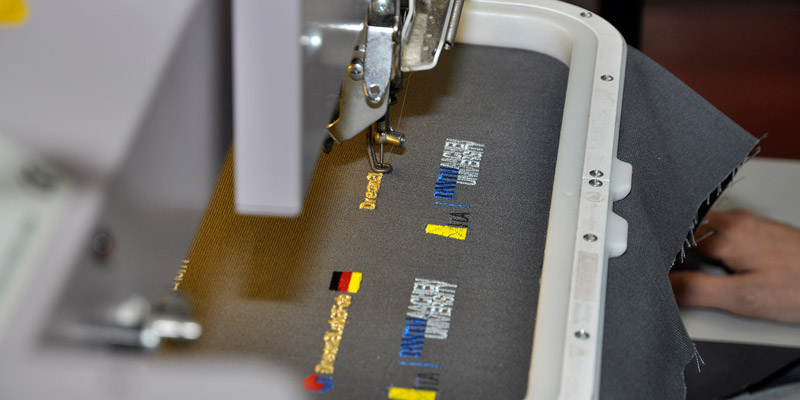
At the opening ceremony, fabric constructions and machines were presented, which underlined the possibility of a flexible mass production, such as, automatic placement of textiles with electronic components, the unification of digital and functional print, embroidery technology for smart textiles (applying electronic features by using embroidery technology with conductive yarns).
In addition, a range of smart textile solutions was on display, including an interactive light-pillow – a light-pillow with programmable LED chips, which can display any colour, text or pattern on the pillow via WLAN. Also presented was an interactive curtain that opens by contact, and heating textiles, which can be heated by electrically conductive fibres and current supply.
Choosing smart textiles according to the market forecast, this fabric segment is expected to be on the order of about US $ 12 billion in 2020, with a growth rate of about 20 per cent. This creates a huge potential for medium-sized companies from both countries to develop new business models and create new jobs.