A veteran in his own rights, MD of Ananta Group, Inamul Haq Khan, shares his perspective on various issues with Apparel Resources
The financial year 2016-17 in particular has not been a very remarkable one for the Bangladesh apparel industry! Registering overwhelming growth over the past years, and with target of US $ 50 billion by 2021 looming large, the country faltered disappointingly in 2016-17 to record the lowest ever growth in the last 15 years; a meagre 0.20 per cent to be precise, which does not reflect well on the part of such a huge player that Bangladesh is, considering it is the second largest garment exporter globally.
Taking this topic as the backdrop, Apparel Resources had an exclusive discussion with Inamul Haq Khan (Bablu), Managing Director of the US $ 120 million-turnover Ananta Group, and one of the flag-bearers of the industry, to understand his views and perspectives on the industry.
“There’s no denying that the industry has graduated to another level,but this progression has not been as fast as it should have been. We started our journey in the early ’80s and it’s been almost 30-35 years now, yet we’re not at the level that we ought to have been. This is a big concern…,” concedes Inamul worriedly.
He further goes on to add that despite many state-of-the-art and mega-investment green factories coming up in the last few years with potentials to give a definite boost to the industry’s growth, there are many who are struggling today to even garner any extra incentive from the buyers or other stakeholders. The huge investment made towards remediation by other factories amidst falling profit margins is further adding to the woes of the apparel manufacturers.
As per Khan’s perspective, there are a host of reasons responsible for the slow growth of the industry. Lack of foresight is definitely one amongst these! “Personally, I think we lack in our vision, whether it is lack of visionary people, visionary plans or visionary directions…,” delves deeper, the MD of the business conglomerate, explaining why this fledgling show lately has not come as a big surprise to him.
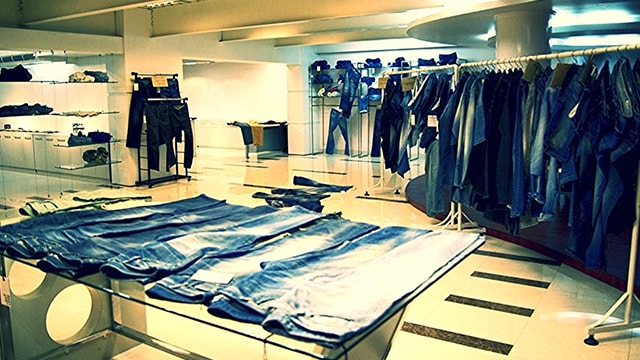
Ananta has names like GAP, George, H&M, Joe Fresh, Walmart, Next, LC Waikiki, Mango, Lin Fung, CIA. Hering, etc., amongst its clientele, which it caters to in various product categories but primarily in woven bottoms along with shirts, jackets, kidswear and dresses. It has four cut-to-pack production units and two fully-compliant washing plants to meet its clients’ demands timely and effectively.
“Two years back, we added another 21-line factory in Konabari, Gazipur area for denim and non-denim products with a production capacity of 4,50,000 pieces per month. The buyers are the same for this unit as well except for a few new names like Mango and True Religion from USA,” briefs Sajed Karim, Deputy Managing Director of Ananta Garments Ltd., adding, “Out of our total production, H&M accounts for around 45%, GAP 25%, followed by others, including George (UK), with which we’ve been doing business for a decade now.”
Ananta also produces leather products from its Tejgaon-based unit Ananta Leather Collections Ltd., exporting ladies’ handbags to Japan and the European market.
However, referring to the several impediments that obstruct the progress of the Bangladesh industry, Inamul feels that technology absorption, policy support and capacity building in terms of trained manpower are to be blamed in equal measures. “We have not only failed to invest enough on new technologies, but also lack sufficient technical institutes to help in capacity building,” he rues.
Though appreciative of the present Government which he considers pro-business and also credits for controlling the infamous bandh culture in the country to a great extent, he looks forward to it for a lot more backing and support nonetheless.
“We anticipate more support…Considering the existing scenario, one needs to use all the weapons in the armoury including business connections, diplomatic channels and regional connections to ensure regular order flow,” says Khan, citing example of the neighbouring country, i.e. India.
“The Indian Government is emphasizing heavily on apparels; it is supporting the industry wholeheartedly. From what I have heard, the Indian Government is also offering tax relaxation and even paying the workers’ wages partially if one sets up a unit in certain areas/belts, which we in Bangladesh, can’t even think of,” states Khan, who caters majorly to European and USA markets, in the proportion of 70:30.
Despite the challenges, there are some silver linings to look up to. “Recently Bangladesh has undertaken a plan to set up special economic zones across the country, which is a very good move and is expected to give a big boost up to the industry,” underlines Khan. The Government’s initiative to make two vital land and sea ports operational 24×7 is also a positive thing to happen for the industry. As Khan emphasizes positively, “This step is working well for Benapole Port but not so much for the Chittagong Port, which is still hamstrung by infrastructural and bureaucratic issues causing severe congestions and unwanted delays.”
CHALLENGES
• Progression made by the industry has not been as fast as it should have been
• Lack of foresight and vision
• Lack of technology absorption, policy support and capacity building
• Insufficient investment in new technologies
• Uncertain market conditions and fluctuating global economy
Shonman, a joint initiative of BGMEA, Dhaka Chamber of Commerce and Industries and the Government towards factory inspection and remediation is the latest amongst the slew of positive developments that Khan is pinning his hopes on. “Accord and Alliance have done a good job. They have empowered us and taught us a lot. Now it’s up to us to keep up the good work, and Shonman is a big step in that direction,” he asserts.
Uncertain market conditions coupled with a fluctuating global economy has put the brands and retailers of the country already under a lot of stress, who are now looking at all possible avenues to cut cost. In such a scenario, incurring expenses on maintaining platforms like Accord and Alliance makes little sense to the buyers.
“Buyers have realized that the main work has already been done and it’s really not worth spending money on entities by extending their tenures further… I am not saying that such spending are directly impacting our margins but they are a huge pressure on the buyers as they are sharing the expenditure which is inconsistent with the market share that they are holding…,” says Khan. He however signs off on a positive note stating that it would not take long for Bangladesh to come back on track again considering its competence, expertise and abundant, affordable labour.





 Bharat Tex Special Report 2026