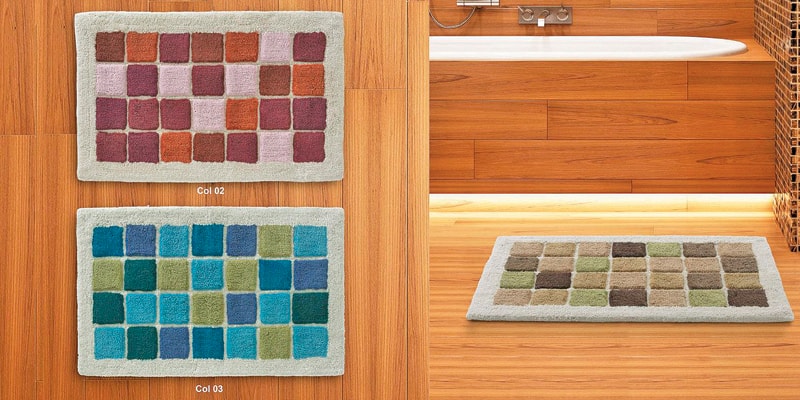
Most of the home furnishing hubs of India are facing the heat of the slowdown in the international markets and which has been the condition for the last few years. The companies which are totally into export are more affected, but those that are into domestic business suffered as well. Panipat, which is equally strong in domestic as well as export market, too is facing a similar situation. Yet, there are some upfront companies which are mainly into export that have taken effective steps to survive and they are happy as their business has been steady.
 Most of the exporters with whom Apparel Online talked to admit that business is down and there is no feedback from buyers that indicates of any improvement in the near future. Small- and medium-level exporters that are mainly depending on Europe are majorly affected by the market conditions, though they concede that sentiments are down across the world, including India’s traditional markets. Some exporters are quite disappointed as they claim that they left no stone unturned to survive, but with no results. They feel that none of their efforts have brought in any kind of positivity as there is no demand from their buyers and there is no option but to wait and watch. “We have put in a lot of effort and investment into product development, marketing initiatives and kept the margins as low as possible, but there is no way out, we don’t know what else can be done,” bemoans Sidharth Kohli of Sidhartha Overseas. Similarly, Jolly Taneja, Partner of Rug Tex too says that as of now, wait and watch is the only way forward. According to him price pressure is the biggest bottleneck. Rug Tex offers complete range of home segment products. Rajat Grover of Grover International adds, “We can further work/negotiate on price but there should be orders first.” There are exporters like Rajeev Garg of RKH Handicrafts who argues, “There are a lot of difficulties, but growth is also there. We have to think and work in a way which can support buyers to create demand.”
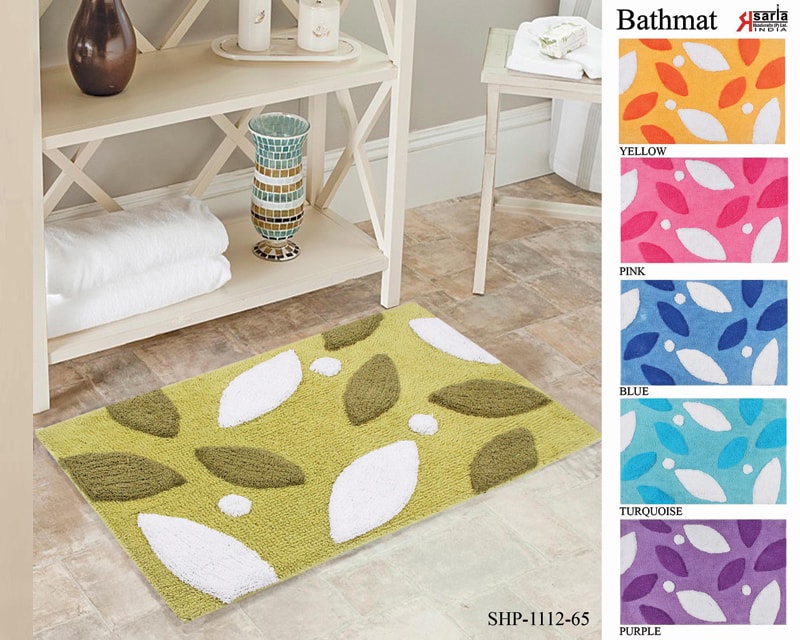
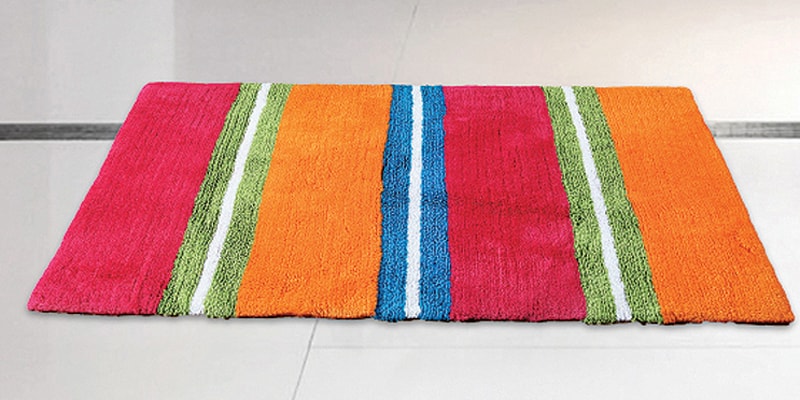 Exporters that have been successful in maintaining their last year’s level of business are satisfied. Though they have taken similar kinds of efforts as many others, they have also been able to find the right strategy and are facing the current scenario very positively. One such company is Sarla Handicrafts that is manufacturing rugs and bathmats as its major product category; the company has worked on multi fronts to survive and has succeeded too. Maneesh Aggarwal, Director of the company shared, “Yes there is an impact on the market but we have taken steps and benefited too. We added outdoor mats, terry towels and increased bedding lines in our products’ basket. Not only we, but our buyers too, got the benefit of this initiative as they were not doing these products earlier. But now they have added these products and received good response from their customers. Furthermore, we are planning to add more products in these categories. Secondly, we increased focus on economical product range, as due to price pressure basic products are more in demand rather than value-added ones. Our products are from medium to low range.” Apart from these measures the company has also added few new buyers in the US and Europe, though it was not easy, but the companys consistent effort paid dividends.
- Orders have dwindled considerably
- Some exporters taking proactive measures to survive
Another pro-active company, Grover International is planning to go for a unit to manufacture machine made carpets as per European standards. The unit is expected to be fully operational in next 6 months. “Automation is going on in Panipat as it is one of the tools to reduce the running/operational cost. One can see that the number of shuttle less looms has increased a lot in Panipat, especially in the last few years.” Currently Rajat’s company is offering mats, rugs, cushion/pillow covers and handmade carpets.
As far as buyers are concerned, most of the exporters stated that any kind of buyers, be it wholesalers, importers or retailers, all have suffered equally and it can’t be said that a particular segment has been impacted more than the other. “I feel that buyers are now not reliable as they themselves are insecure. Like earlier, most of the wholesalers were buying based on their own choice, but now they buy only preapproved samples, and that too only confirmed quantity of their further retail store customers. While earlier such buyers were buying a lot in anticipation that this piece should sell more, but now they are very cautious,” opines Rajeev.
 While earlier retailers used to share his one year sourcing planning/idea but now the business is shipment to shipment only. Rajeev further adds that due to this changing scenario, more frequent travel is required to meet and negotiate with the buyers where one has to invest his time, resources and energy, further squeezing the margins. His company, RKH Handicrafts works on low cost products, which can be produced in bulk and in high speed by using advance machines. Automation is however also a concern for him, as he is uncertain of whether he will be able to sell the huge lot of products that is produced. So automation is taking little time at planning stage. As of now the company has machines of 8 and 16 needles while advance machines have more than 10 times production compared to these machines.
Blanket is one of the items which is dominating and continuously growing in Panipat, but mainly for the domestic market. Industry insiders feel that if the city improves on the quality of blanket manufacturing, there is enough scope in its exports also. It can be a new avenue for Panipat’s exporters.
However, not everyone agrees that automation is a solution. “I don’t think that much automation is required as handmade and hand-feel is the niche or strength in most of our products”, avers Rahul Mahindru, Proprietor, Jagdish Exports who further added that business is just satisfactory. The company is mainly into floor covering.
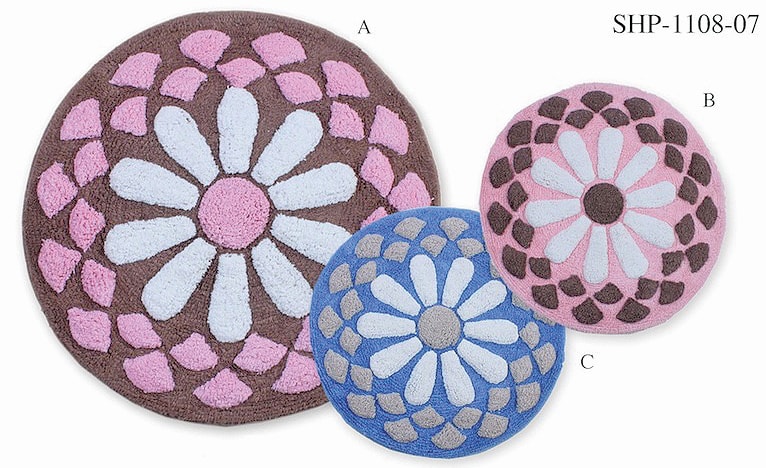 One of the major shifts happening in Panipat is that some of the exporters have changed recently the long prevailing use of 100 per cent cotton and are now using blends of polyester, wool and viscose etc. in their products. Such exporters are happy with this initiative while some prefer to stick with 100 per cent cotton and will continue with it as they feel strongly that buyers still prefer India due to natural products and strength of cotton. The companies that have increased the use of polyester are witnessing themselves competitive as compared to China. RKH Handicrafts is now using many blends and claims to have reduced by 20 per cent the cost of its product due to these initiatives, while Sarla Handicrafts is working majorly on cotton with little mix of polyester. More use of blends give more option in product development too.