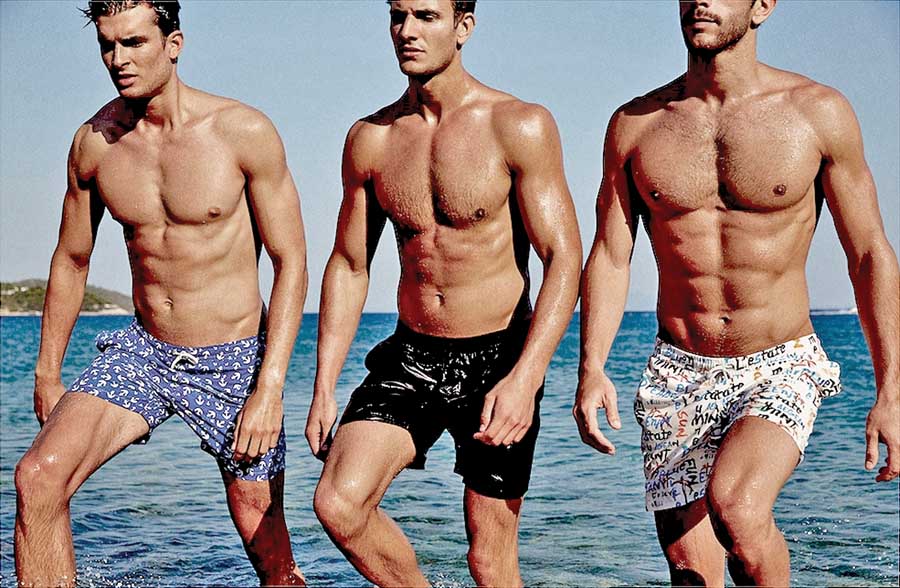
 The primary reason for entry of fashion into men’s swimwear is because more men are sporting silhouettes, including ones that reveal body shape as sports brands are becoming more fashionable while fashion brands are getting more sports functional. Growing emphasis on health and well being and increasing interest among the aging baby boomers towards staying fit is also driving sales in the market. The aging-but-active population in the US, Japan, Europe and emerging markets such as Asia and Latin America are presenting attractive opportunities for swimwear manufacturers. “When Mr Porter first launched, there were only two or three swimwear brands. If you look now, there are maybe 10 exclusive brands, besides the multi-product brands. It is definitely a growing market,” informs Max Leese, Co-Founder & Chief Executive of Frescobol Carioca, a British lifestyle brand inspired by Brazilian beach culture.

As men’s swimwear continuously grows in popularity, it is giving rise to new transitional shorts suitable for wearing both in water and at the dinner table, attracting a new consumer demographics and leading to new entrants in comparison to being earlier dominated by surfwear manufacturers targeting teenagers. Today, a new wave of swimwear labels is tapping the demographic of affluent professionals such as Orlebar Brown, a modern tailored swimwear company, which is stocked in Selfridges, Harrods, Mr Porter, Bergdorf Goodman and Barneys New York. The company’s success has been linked to its ability to identify, target and market to the kind of affluent professionals who are comfortable spending over US $ 200 for a pair of swimming trunks. “It all started back in 2007 when I was on holiday with friends in Rajasthan, I looked around the pool and the women looked great but the men didn’t. They were just there in the usual board shorts and boxer shorts, nothing you could wear to lunch afterwards. This is when I came up with the idea of a short that you can swim in, but not a swim short,” reveals Adam Brown, Founder, Orlebar Brown.
Currently brands and designers such as Burberry, Tommy Hilfiger, O’Neill, Speedo, D&G, True Religion, Quiksilver, Surfside, Hurley, Topman, Scotch & Soda, Fred Perry, Jack Spade, Patagonia, Zara, Billabong, Polo Ralph Lauren, Emporio Armani, Salvatore Ferragamo, Rip Curl, etc. are catering to men’s swimwear using styles such as varied colours with animal prints, matching pastels and fine-detailed patterns. Also, footballer David Beckham’s widely acclaimed H&M bodywear range has evolved to incorporate swimwear for the first time featuring tailored board shorts, swim shorts and trunks in variety of colours. The collection includes trunks and swim shorts in solid hues, while the longer board shorts are available in a two-tone colour-block and graphic check. “The success of my Bodywear collection at H&M has been fantastic, so I’m thrilled to be introducing these great swimwear pieces ready for the summer. We’ve worked hard to create new classics for men, with great fit, comfort and also style,” said David Beckham at its launch recently.
The way men regard swimwear has changed over the years and the product is increasingly moving from beachwear into the casual clothing category giving rise to a wave of brands. With conventional men becoming more conscious about their looks, brands and designers alike are expanding product options, leading to increased business. No longer restricted to lengthy board shorts and graphics, the men’s swimwear market is growing with new brands entering to what was once a relatively static marketplace.
In terms of sale, Brazil represents the largest market for swimwear as growth in this country is driven by easy accessibility to a wide range of innovative products, in varied price segments. Nonetheless, China is the fastest growing market for swimwear and beachwear, both in terms of value and volume sales, exhibiting a CAGR of 13.1 per cent in terms of dollar sales. Growing acceptance of swimwear as fashion attire, increasing consumer disposable income, and growing influence of western culture are some of the major factors spurring growth in various markets. According to the recently published report by Global Industry Analysts, Inc., “the developed countries are expected to witness steady demand for sports swimwear, while developing regions will be driven by the growing demand for leisure swimwear. Apart from Brazil, the United States is amongst the largest market worldwide with growth led by strong demand from aging baby boomers.”
Earlier, trendier and fashionable swimwear was only restricted to women, but off late men swimwear market is seeing a surge of brands and designers coming up with varied trends, styles and designs, leading to rise in men looking at swimwear as comfort clothing not restricted to pools and beaches alone.