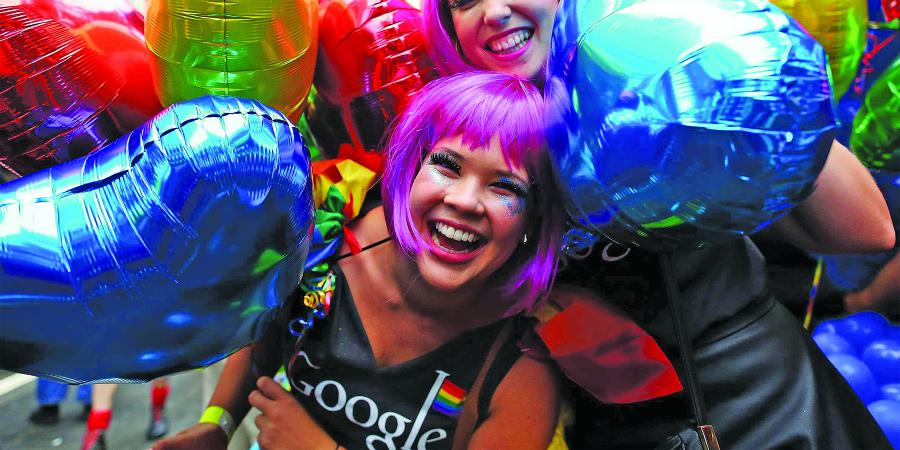
Time and again retailers are looking for ideas to tap new segment of consumers and are incessantly pondering over who is the next big consumer in retail, so that they can direct their growth strategies, innovations and media campaigns towards these groups. While millennials still rule the roost, a new segment of consumers are coming up, which is urging many retailers to tweak their products towards their requirements. Not surprising, it is the LGBT consumer, whose average retail spending is increasing year on year and who is also really interested in fashion.
[bleft]LGBT CONSUMER STATISTICS
LGBT spend 35 per cent more on online purchases, including 122 per cent more on snacks, 73 per cent more on household cleaners, 69 per cent more on coffee, and 67 per cent more on medication.
This community is 72 per cent more likely than straight consumers to have made a purchase at a bookstore; 55 per cent more likely to have bought something at a beverage store; 35 per cent more likely for convenience stores; 32 per cent more likely for pet stores and, 28 per cent more likely for electronics stores.
LGBT households spent 48 per cent more on wine, 35 per cent more on liquor, and 27 per cent more on beer, as well as 36 per cent more on pet care and 20 per cent more on pet food.
LGBT consumers are also avid consumers of entertainment and media: in 2014, they were 23 per cent more likely than straight counterparts to buy tickets to music festivals and 26 per cent more likely to subscribe to a streaming music service. On an average, they spent 66 per cent more on digital albums.
According to the recently released findings of Nielsen Company, the Consumer Global Information and Measurement Organisation, LGBT consumers spend more than their non-LGBT peers both at brick and mortar retail stores and online. Also, LGBT consumers in the US spent an average of US $ 4,135 at retail establishments in 2014, 7 per cent more than non-LGBT consumers, largely due to the fact that they made 10 per cent more visits to retail establishments over the course of the year. A separate study from Witeck Communications estimated that the US LGBT community’s total spending power was US $ 884 billion in 2014. “The LGBT community is a significant contributor to the US economy today and savvy retailers should plan their shelf space accordingly. By knowing what this group is looking for and how much of it they’re buying, retailers and manufacturers will be better equipped to develop and promote products that meet its needs and desires,” states the Nielsen report.
As many market estimates put the buying power of the LGBT community over many other consumer categories, retailers are realizing that they may need to adjust their plans to accommodate this segment, or at least make sure that their campaigns are targeting this segment. Nonetheless, many brands have been slow to pick up on the impact of the gay and lesbian consumer on their sales, as some are content to let their general market messages do the job of reaching everyone, and see no reason to pay special attention to LGBT consumers. But others from Apple to Target to JC Penney are becoming more interested in these consumer categories and are trying ways to cosy up to a community that by one estimate is as much as 16 million strong and has almost double the disposable income of the average American. “We are committed to being a store for all Americans. Our marketing reflects the diversity of today’s families,” informs Kate Coultas, Spokeswoman, JC Penney, who has been more aggressive than other large retailers in courting the LGBT consumers.
Meanwhile, Target began selling greeting cards for same-sex couples, such as a wedding congratulations card emblazoned with ‘Mr. & Mr.’ Apart from this, they have a line of gay-pride T-shirts, which was sold out in less than a month. “The retailer supports inclusivity and diversity in every aspect of business and has a long history of supporting the [gay] community,” reveals Molly Snydersaid, Spokeswoman, Target. Not to be left behind, Macy’s Inc. uses gay-friendly graphics in some of its windows during Gay Pride. “We have for many years supported pride parades in many cities,” informs Jim Sluzewski, Macy’s spokesman.
This story first appeared in the Apparel Online India, September 1st Issue. SUBSCRIBE TODAY
This move by retailers to capture this market segment is not happening in a vacuum, but is supported by the greater acceptance of the community in all walks of life. The government allows gays to serve openly in the military, ending its ‘don’t ask, don’t tell’ policy and the same-sex marriage has been legal nationwide since June 2015. With this move, the advertisers are coming out of their closets and openly courting the LGBT consumers. Omaid Hiwaizi, Chief Strategy Officer at WPP-owned ad-agency Geometry claims, “Society is changing. If brands want to be relevant to Generation Z, for whom sexuality is not an issue, their advertising should reflect that. If you want to be seen as bold and forwardthinking, why wouldn’t you? In fact, retailers that are willing to be brave, stand to gain early competitive advantage for their brands by showing them to be gay-friendly.”
Continuously, a shift is being witnessed in the attitude of many brands that are acquiring a new sensitivity and marketing to this particular consumer group. Though marketing to this group is important, retailers also have to ensure to get it right so as not to offend them. With billions in spending at stake, it’s more important than ever for brands, even those who have no interest in marketing to LGBT, to become sensitive to these issues as this loyal group of consumers is ready to reward brands that really speak their language.
THE SPENDING POWER OF LGBT HOUSEHOLDS VS THE AMERICAN GENERAL HOUSEHOLDS
According to Prudential 2012 survey of more than 1,000 LGBT respondents, they have 23 per cent higher median household income and 24 per cent more equity in their homes.
According to Community Marketing Inc. Survey, of 13,000 Gay and Lesbian Americans in 2012, 26 per cent of gay men say they will pay more for top quality brands, 30 per cent have taken a major vacation in the past year and 40 per cent bought a new smart phone last year.